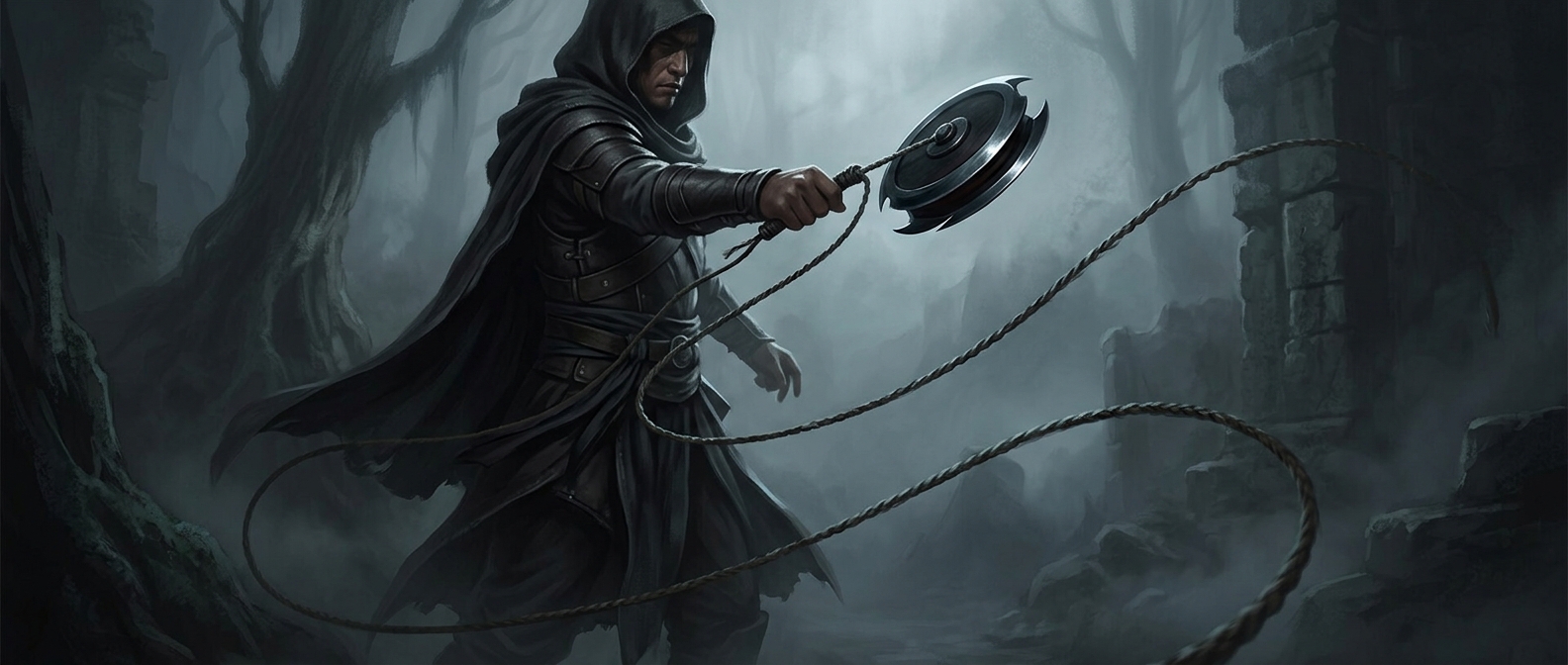
A swinging weight can strike from a distance
A rock tied to a flexible line could be swung in a circle and released—or allowed to sweep into a target. As it moves, the line stays taut, and the rock carries momentum into a blow. That makes the hunting-weapon story mechanically plausible: a hunter could keep some distance from an animal while bringing a heavy object toward it.
But plausibility is not proof. A stone on a vine would be hard to aim, and a missed swing could leave the hunter struggling to recover the weight and line. Without solid historical evidence, the idea is best treated as a possible use of a swinging weight, not a settled account of where the yo-yo came from.
The resemblance has limits
A modern yo-yo is built to roll along its string and return to the hand. That repeated motion depends on the toy’s shape, axle and string—features that do not follow automatically from tying a rock to a vine. The weapon story describes a broad physical trick, swinging a weight on a line; it does not establish that hunters used a device that worked like a toy yo-yo.
The distinction is worth keeping: a simple tool can resemble a later toy in motion without proving a direct line of invention. The memorable image may be possible, but the history remains uncertain.