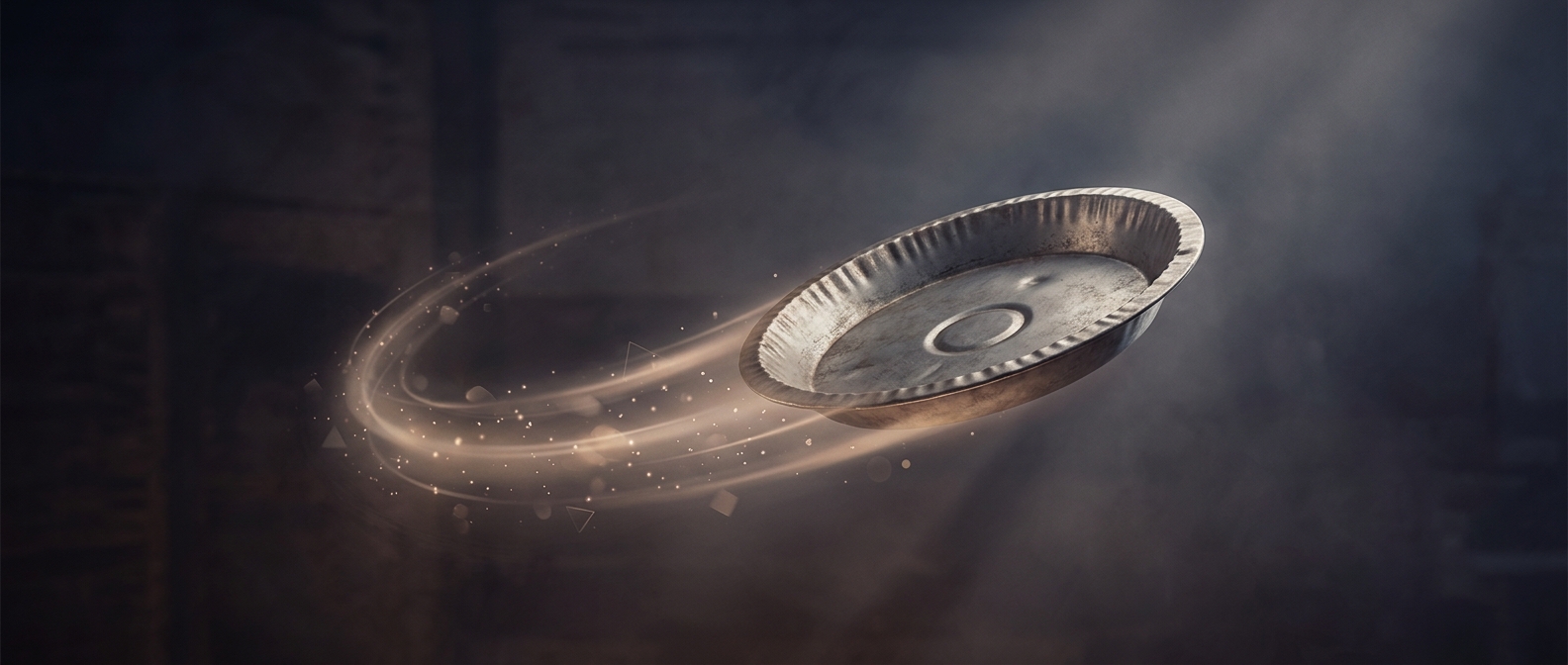
How a pie tin became a flying disc
An empty pie tin was an inviting object to toss: broad, shallow, and light enough to sail when thrown with a spin. The spinning motion helped keep it stable, much as a spinning top resists tipping. If the thrower angled the tin slightly upward, air pushing against its underside could help it stay aloft.
Students tossing the tins learned quickly that the fun could catch bystanders off guard. Calling out “Frisbie” served as a warning as well as a name for the familiar flying object. The tins were not designed for flight, though: metal could dent, and their weight and shape made their behavior less predictable.
Rebuilding the flight in plastic
An inventor later recreated the idea as a purpose-made plastic disc. Plastic made it possible to form a smooth, lightweight shape that could flex without behaving like a disposable metal tin. A raised rim also gives a thrower a place to grip and helps the disc keep its shape as it spins through the air.
The key was not simply making a lighter tin. A flying disc needs a balanced shape and a clean release: spin steadies it, while its shallow profile and slight upward tilt let it generate lift. The pie tin supplied the basic idea; the plastic design made that improvised toss into an object people could throw repeatedly and deliberately.