One flat blade, several jobs
A Roman flat bronze implement could serve in the kitchen or at a dressing table because both tasks called for the same basic action: lifting, spreading, or mixing a small amount of material. Its broad, thin end could move food in a vessel or help apply cosmetics; the tool’s usefulness came less from a specialized mechanism than from a shape suited to controlled contact with a surface.
Bronze made that shape practical. The metal could be worked into a relatively thin blade while remaining sturdy enough for repeated handling. Unlike a wooden tool, it would not absorb liquids in the same way, though metal also conducts heat—an important limitation near a fire. A cook would need to handle the implement by its grip rather than treat it as an insulating utensil.
A tool family, not one unchanged design
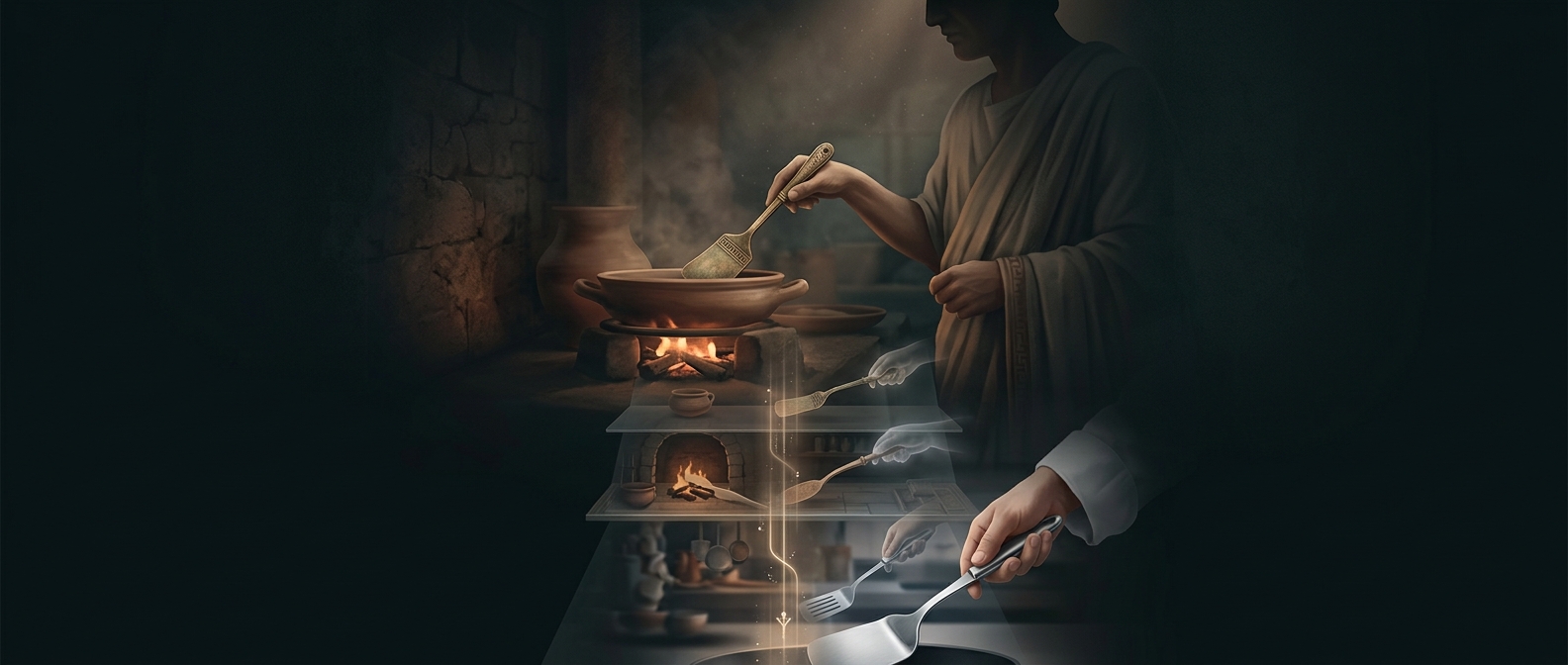
“Spatula” today can mean a flexible scraper, a broad turner for flipping food, or a small cosmetic applicator. Ancient tools should not be assumed to match any one of those modern designs exactly. The lasting idea is simpler: a flat-ended implement can be adapted to whatever needs to be spread, stirred, lifted, or scraped.
That versatility helps explain the tool’s long life. As materials and specialized kitchen equipment changed, the useful flat blade remained easy to remake for new tasks. The familiar spatula is less a single invention passed down unchanged than a durable solution to a recurring problem: how to move something delicate without using your fingers.