How silence turns into apparent agreement
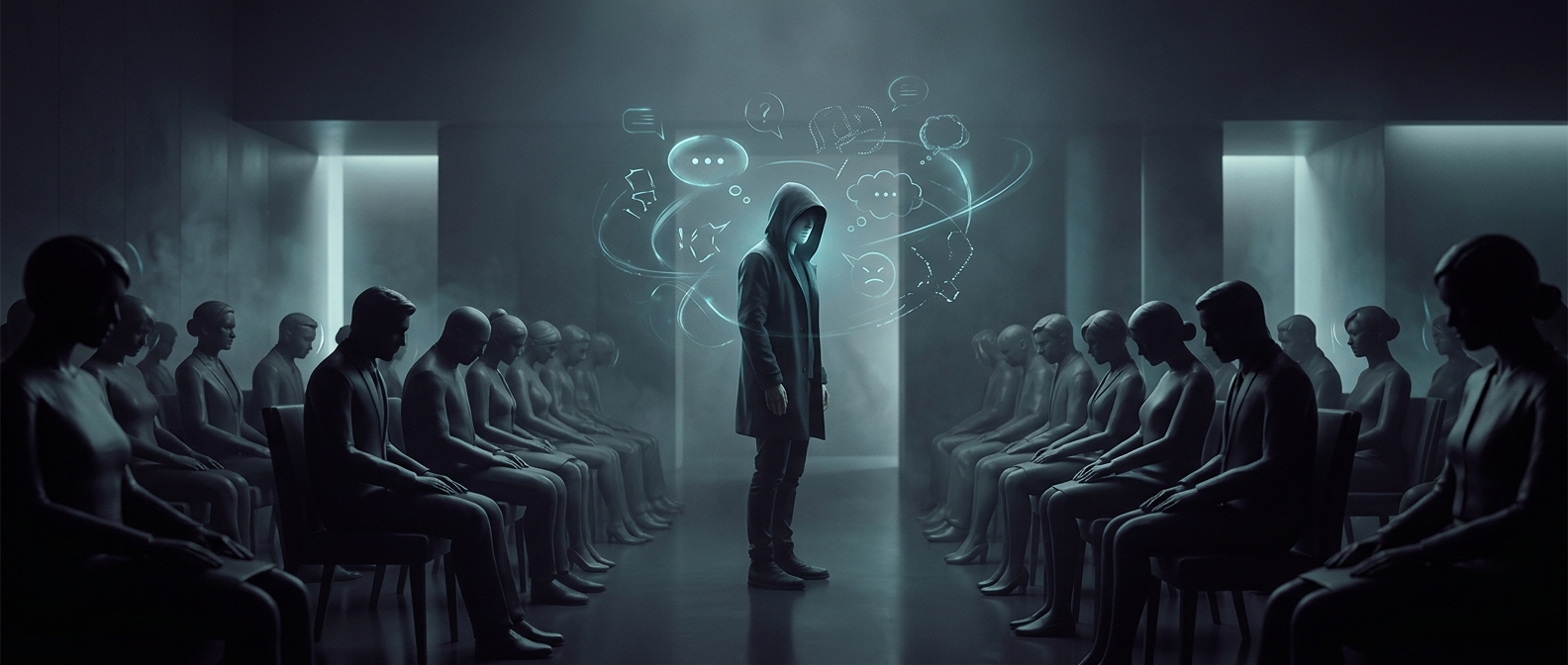
Imagine a meeting where a proposal draws no objections. One person has reservations but stays quiet, figuring the others must support it. Someone else reads that silence the same way and keeps their own doubts to themselves. Each person treats the room’s visible behavior as evidence about what others think, even though that behavior may conceal private disagreement.
Psychologists call this pattern pluralistic ignorance: people privately reject or question a norm while mistakenly believing that most others accept it. It is not simply a group changing everyone’s mind. The mismatch is between what people privately think and what they believe the group thinks.
Why the signal gets stronger
The loop can reinforce itself. A person who sees no dissent concludes that dissent would be unusual or socially costly. They stay silent, removing one more chance for anyone else to discover that doubts are shared. The resulting quiet then looks like further evidence of consensus.
This is why silence can function like a fake vote. It records who chose not to speak, not necessarily who agrees. In some situations, people may also hold back because they fear embarrassment or conflict; when others do the same, those private reasons are invisible.
Making disagreement visible
A group can mistake a lack of objections for support and proceed without learning what members actually think. The remedy is not to assume that every quiet person disagrees, but to create ways for people to express uncertainty or dissent without having to be the first to challenge the room—such as inviting written feedback before discussion.
Once one person voices a reservation, others may recognize that their view is not isolated. What looked like unanimous agreement can then dissolve quickly, revealing that the consensus was partly an effect of everyone watching everyone else.