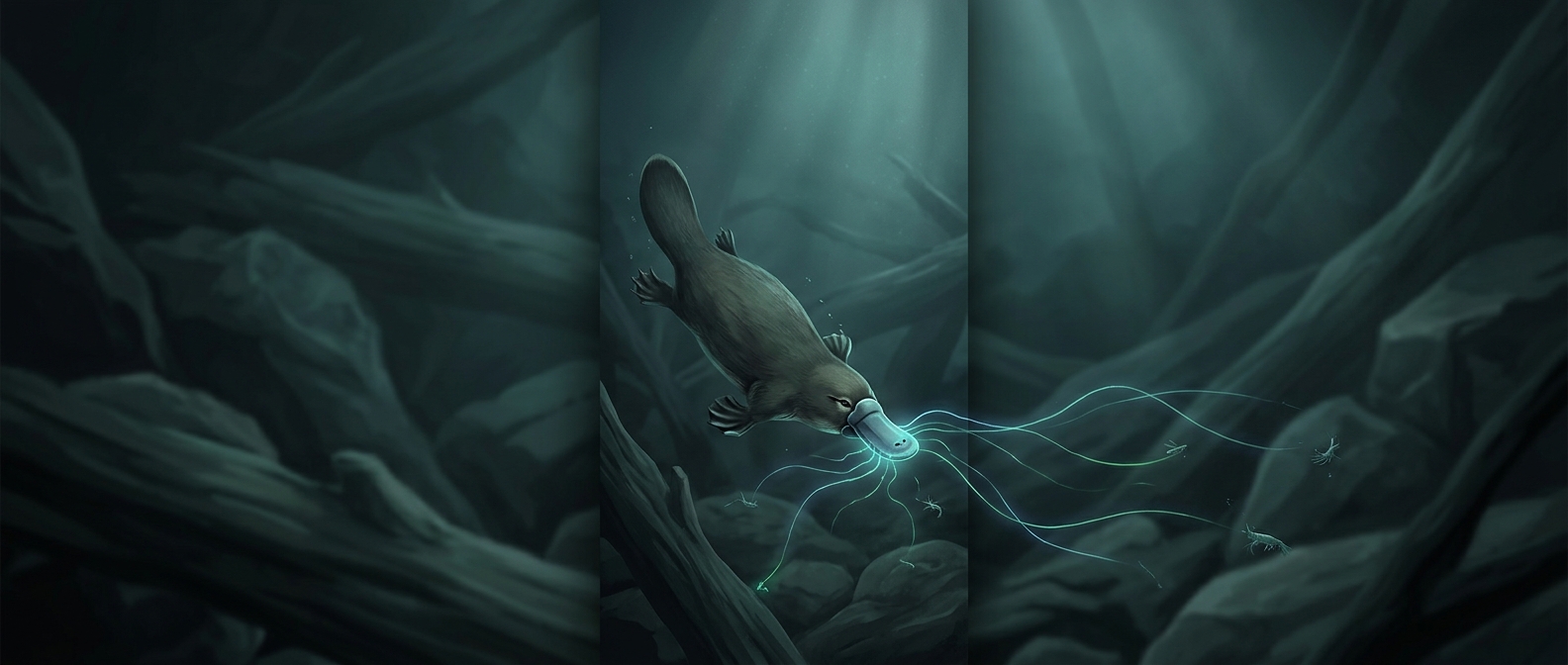
How a Platypus Finds Prey in Murky Water
A platypus does not need a clear view of the streambed to hunt. When it dives, it closes its eyes and ears, then sweeps its broad bill from side to side through the water and sediment. The bill’s skin is packed with sensors that pick up different kinds of information, including faint electrical signals from nearby prey.
Turning Muscle Signals Into a Location
Those electrical fields are produced when an animal’s muscles and nerves activate. A small aquatic creature such as a shrimp or insect larva may be hard to see or feel in cloudy water, but its activity still creates tiny changes in the surrounding electric field. Sensitive receptors in the platypus’s bill detect those changes.
The platypus also senses water movement with touch receptors in its bill. Combining the two signals helps it work out where prey is: electrical sensing indicates that something is active nearby, while the pattern of movement across the bill helps pinpoint its direction. As the platypus sweeps its bill, it can close in on the source rather than searching by sight.
A Sensor That Also Probes
The bill is therefore more than a shovel for stirring up the bottom. It functions as a close-range sensory surface, gathering information as the animal explores. This is especially useful in the dim, muddy habitats where visibility is poor and prey may be buried or concealed.
Once the platypus locates a target, it catches it with its bill and stores food in cheek pouches, then surfaces to chew. With its eyes shut underwater, it is effectively navigating by signals its prey cannot hide simply by blending into the mud.