The room was part of Kinect’s interface
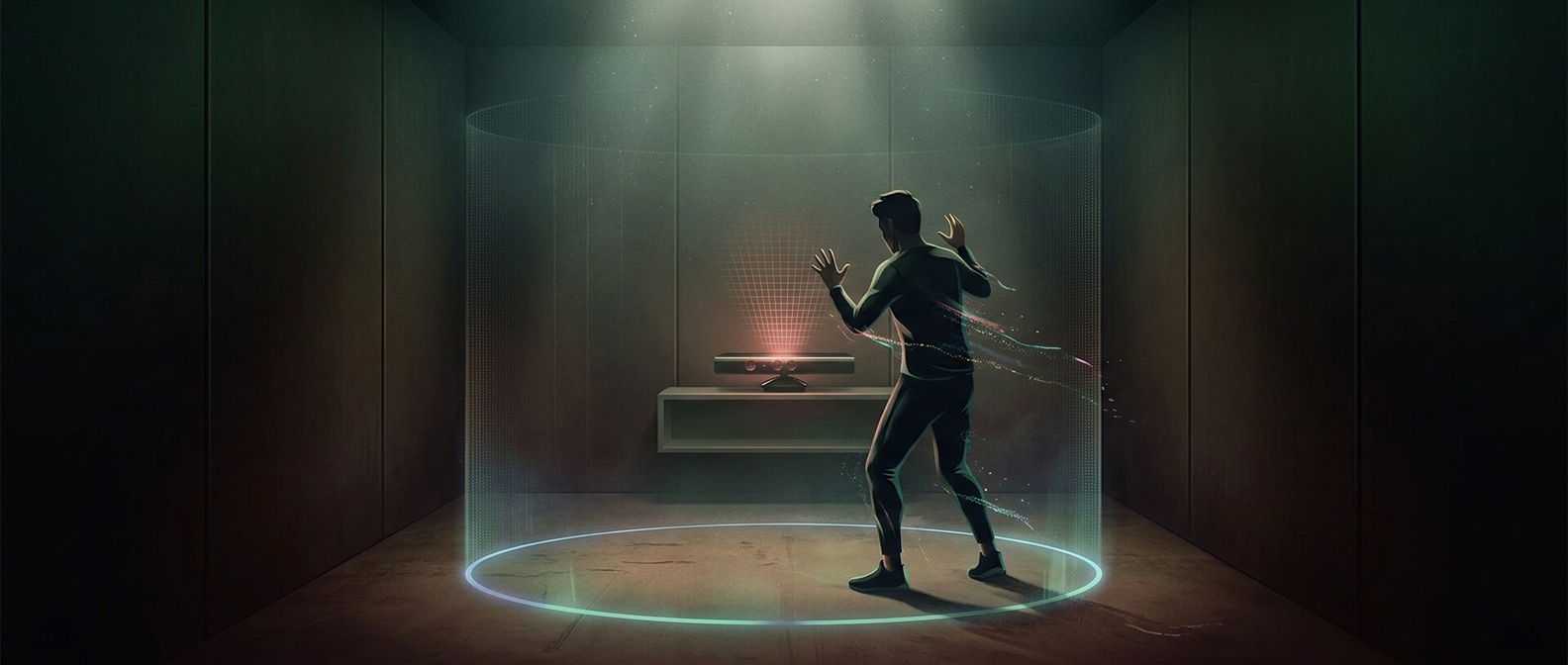
Kinect promised control without a handheld controller: its camera watched a player’s body and translated movements into commands. To do that, it had to see enough of the person to estimate a moving skeleton—roughly where the head, shoulders, elbows, hips, knees, and feet were. The sensor projected infrared light and measured how it bounced back, creating a depth map rather than an ordinary picture.
That method made placement matter. The player had to stand far enough away for the sensor to capture the whole body, yet close enough for it to distinguish the body from the room. A narrow viewing angle, a coffee table, or another person crossing the scene could hide important body parts. In a spacious living room, stepping back was a simple fix. In a cramped apartment, it might mean backing into furniture or out of the sensor’s view.
A controller-free game needs physical space
The constraint shaped the games, too. A traditional controller lets someone play while seated and nearly motionless; Kinect games often asked players to raise their arms, step, or move their bodies. The camera needed clear sightlines, and the player needed room to make those movements safely. A setup that worked in a store demo or an open family room could be awkward beside a sofa, TV stand, and narrow walkway.
Kinect’s central design tradeoff was therefore not just about sensor accuracy. Removing the controller shifted part of the required hardware into the room itself. For households without a clear patch of floor, the advertised freedom from a controller could become an extra setup requirement—and a reason the system was impractical to use.