Why controller rumble uses more battery
Inside a rumbling controller, a small motor spins a weight mounted off-center. Because the weight is uneven, its rotation makes the motor—and the controller around it—shake. The game can vary the rumble by switching the motor on and off or changing how strongly it runs, turning those vibrations into feedback for impacts, engine noise, or other events.
The cost of feeling the action
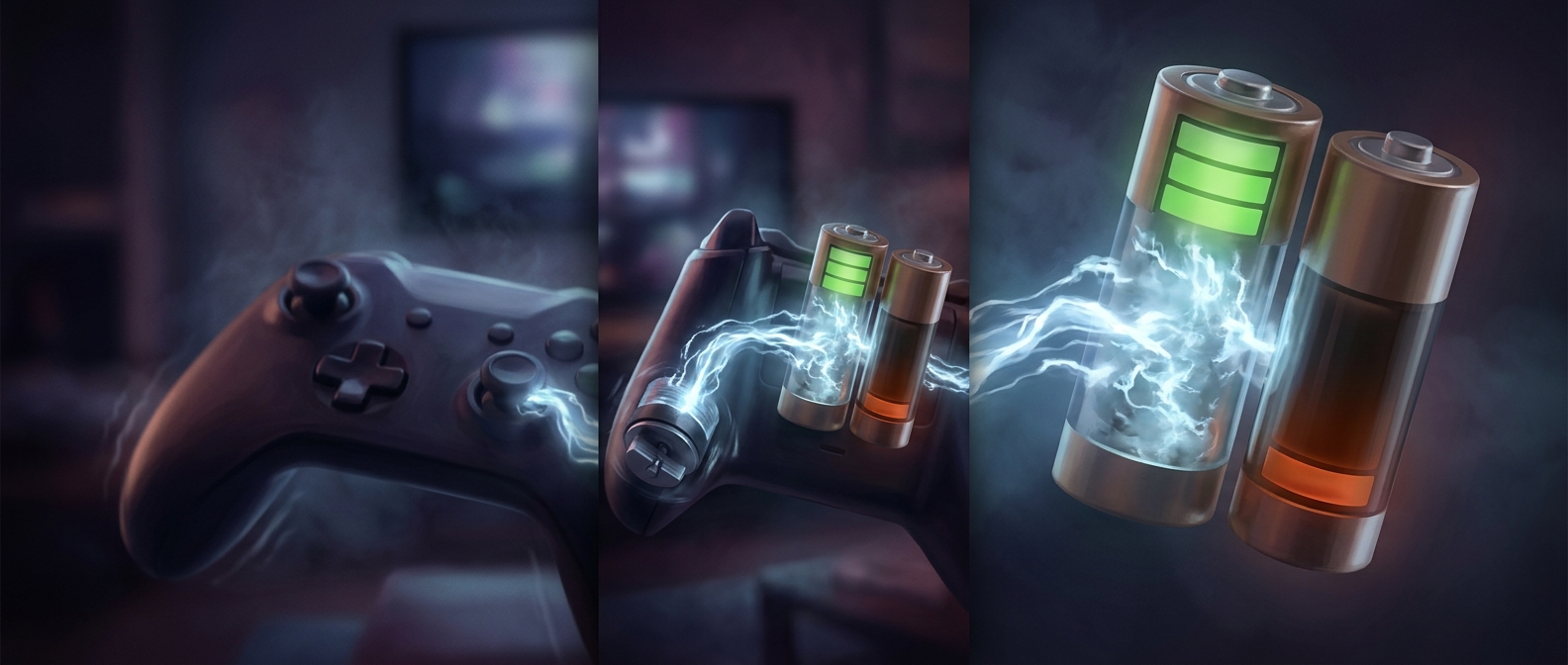
That motor needs electrical power to keep spinning. When rumble is active, the batteries must supply power to it as well as to the controller’s other electronics. More frequent or stronger vibration means the motor runs more, so battery life can be shorter than with rumble disabled; the difference depends on how a game uses the feature and on the controller and batteries.
The tradeoff is tactile feedback versus play time. Turning down or switching off vibration can conserve power, but it also removes the small physical cues that make an explosion or a collision feel different from an ordinary button press.