A memory card that could meet another one
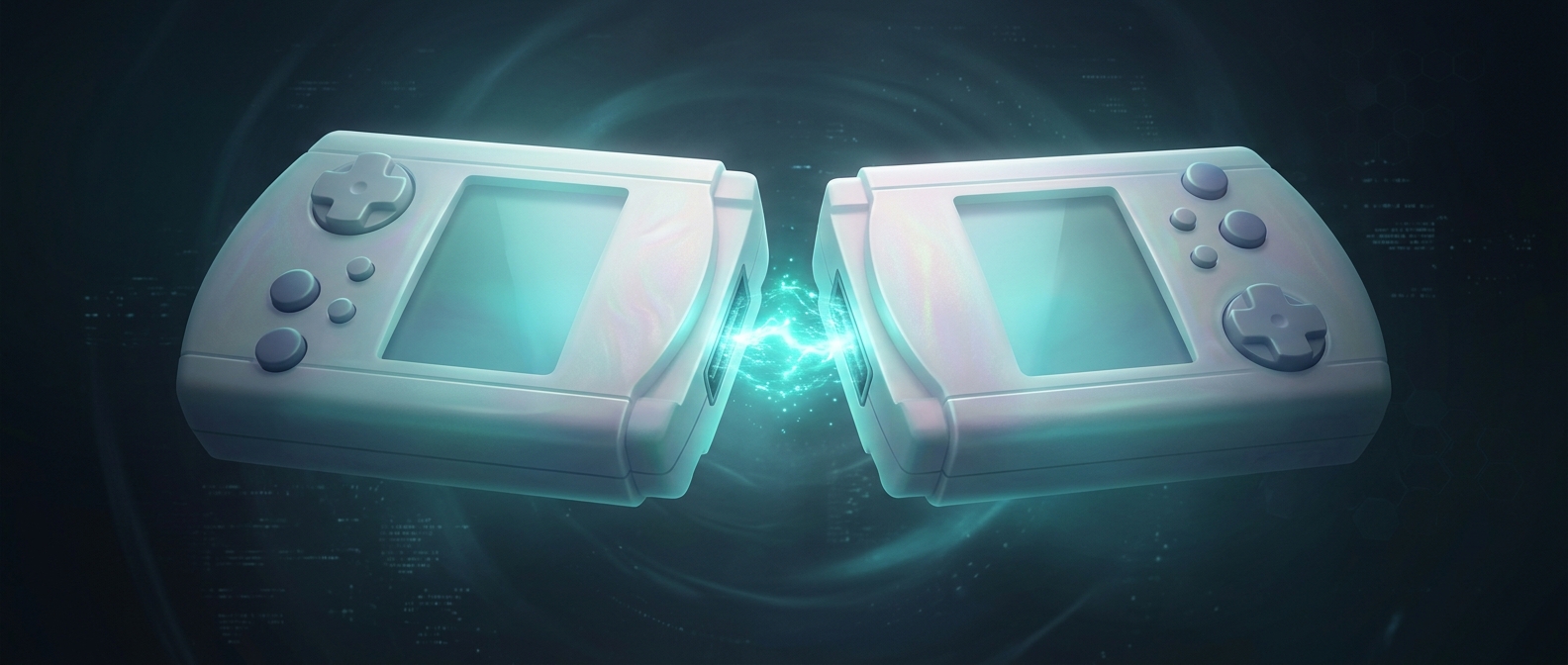
The Dreamcast’s Visual Memory Unit, or VMU, was more than a place to save games. It had a small screen and buttons of its own, plus connectors that let two VMUs plug together. That made it possible to move compatible game data directly between cards, without routing the exchange through the Dreamcast.
The game decided what could be shared
A connection did not make every save file freely transferable. The game had to support an exchange and define what it meant: players might pass along a character, an item, or other game-specific data. The VMUs handled the physical link; the software determined what traveled across it and how the receiving game could use it.
That distinction gave the memory card a social role. Instead of needing to bring a console to a friend’s house, a player could carry a small piece of a game and connect it to someone else’s VMU. The card was both portable storage and a simple way for games to let players trade.