Cardboard Became Part of the Controller
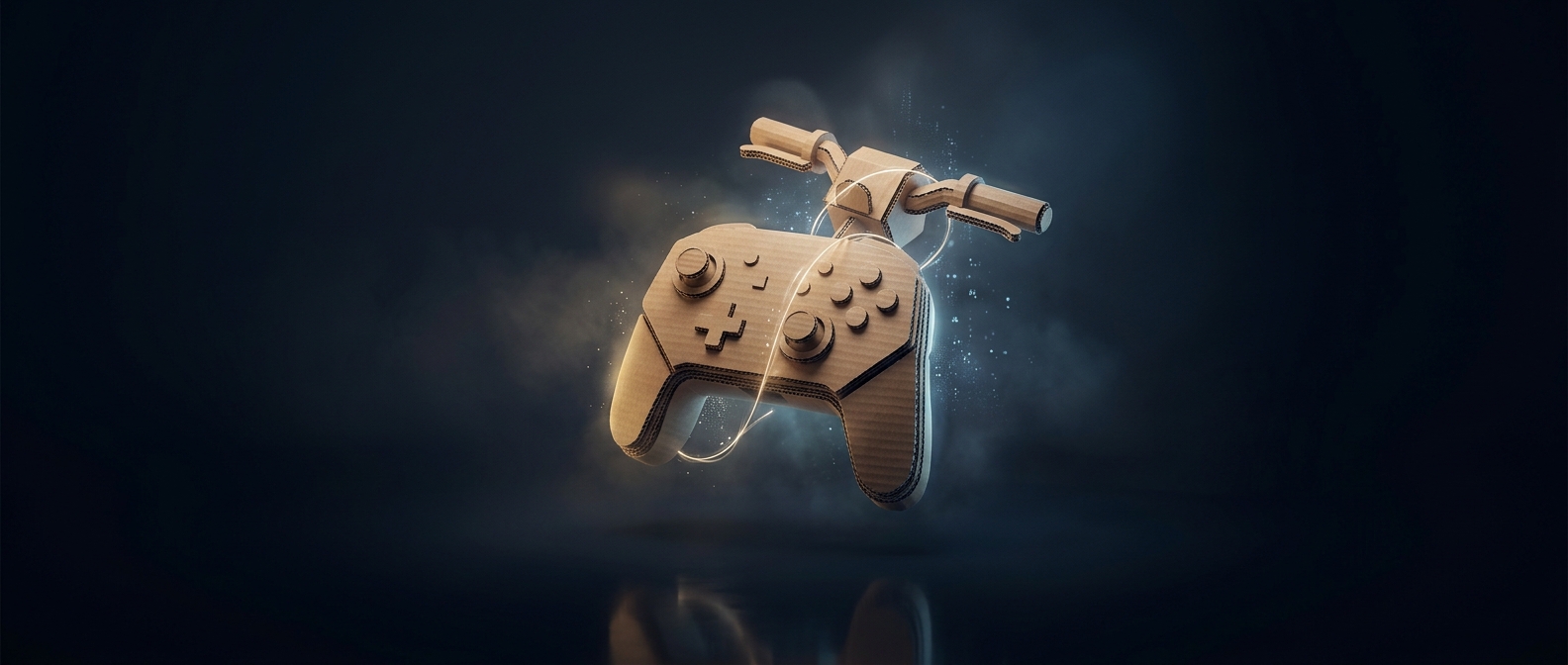
Nintendo Labo’s cardboard pieces were not just props around a Switch game. Once folded, they held the console or its detachable Joy-Con controllers in positions that made the hardware useful in new ways. A Joy-Con’s motion sensors could register a tilt or movement; its infrared camera could detect reflective marks inside some builds. The game then translated those signals into actions on screen.
That arrangement let a folded wheel act like a steering control, for example, without adding a conventional electronic steering wheel. The cardboard gave the player something substantial to grip and move, while the Joy-Con supplied the sensing.
The Build Was Part of the Design
The sheets arrived flat, with shapes and folds that guided players through making each accessory. This kept the kits relatively simple: the unusual controller was created by arranging familiar pieces of cardboard around electronics already in the Switch, rather than by packing a separate motorized device into every box.
The folding also made construction visible. Players could see how a flap, slot, or reflective strip helped a movement register, then alter the object or rebuild it. Making the accessory was therefore part of learning how the game’s controls worked—not a step to get past before play began.
A Tradeoff You Could Hold
Cardboard made elaborate, custom-shaped controls possible at low complexity, but it was less durable than plastic and depended on careful folding. Its value was not that it replaced a standard controller for every game. It let a simple movement—turning a wheel, pulling a string, or shifting a wearable frame—become a physical interface the player could understand by looking at it.