Why ytterbium can stop at +2
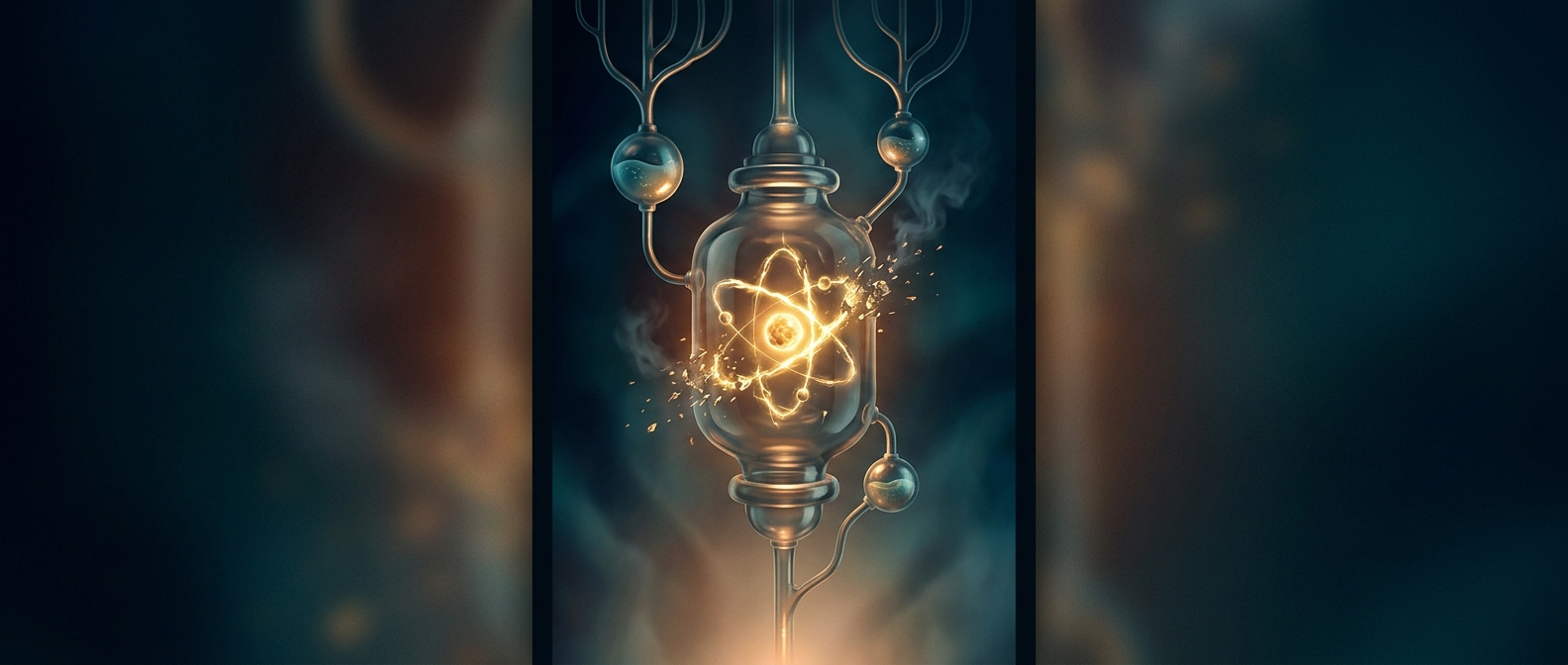
An atom’s chemical behavior depends heavily on its outer electrons: the electrons it can lose, gain, or share when it reacts. Lanthanides—the elements from lanthanum through lutetium—typically form ions by losing three electrons. Ytterbium has another comparatively accessible route: it can lose two and become a positively charged ion, Yb²⁺.
The key is ytterbium’s electron arrangement. Its electrons occupy several layers and sublevels, and removing two leaves a particularly stable arrangement in the inner part of the atom. Removing a third requires taking an electron from that more stable set, so the two-electron state can be favored in suitable compounds. In plain terms, the third electron is harder to give up than the first two.
A resemblance, not a change of family
Calcium and other alkaline-earth metals commonly form +2 ions by losing the two electrons in their outermost layer. Ytterbium reaches the same charge through a different electron arrangement. That shared charge can make the elements resemble one another in some chemical settings, but it does not make ytterbium an alkaline-earth metal: its position and broader chemistry remain those of a lanthanide.
Ytterbium can also form +3 ions, the more typical charge across the lanthanides. Which state appears depends on the chemical environment—what other atoms are present and how strongly they stabilize each possible ion. Its unusual feature is not that it always acts like calcium, but that its two-electron option is unusually accessible for a lanthanide.