The rim becomes a measuring line
A cup gives the eye a ready-made scale. Its rim marks the boundary between “inside” and “outside,” so when liquid bulges over that edge or runs down the sides, the spill reads as evidence that the cup has reached capacity. The drink is no longer perceived only as a pool of liquid; its visible footprint now includes the overflow.
That footprint can make a serving seem more substantial than its volume alone would suggest. A small cup provides a compact frame, and the spill occupies a larger share of that frame. The eye registers the conspicuous contrast—liquid against rim, then liquid beyond rim—more readily than it calculates how much liquid is actually present.
Why the same spill feels different
In a larger cup, the same amount of overflow can look like a minor trace beside a much bigger container. In a small one, it appears to dominate the scene. The comparison is relative: viewers judge the liquid against the cup surrounding it, not against an invisible measuring vessel.
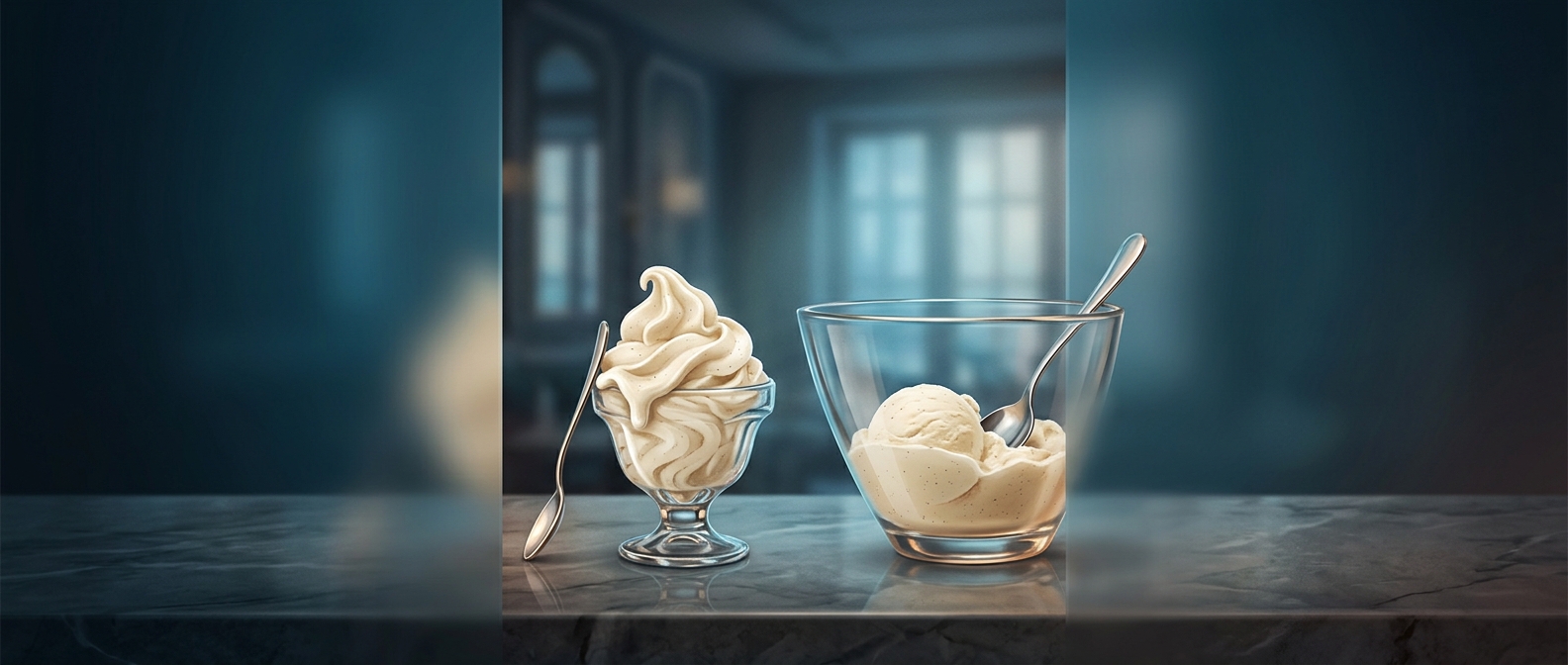
This is why a brim-full espresso cup or a dessert cup with a glossy spill can look unusually generous. The overflow supplies a visual cue of abundance, even though it does not add much to the serving. A few drops crossing the rim can change the impression from “a small portion” to “more than the cup could hold”—a striking impression created by the boundary, not necessarily by extra liquid.