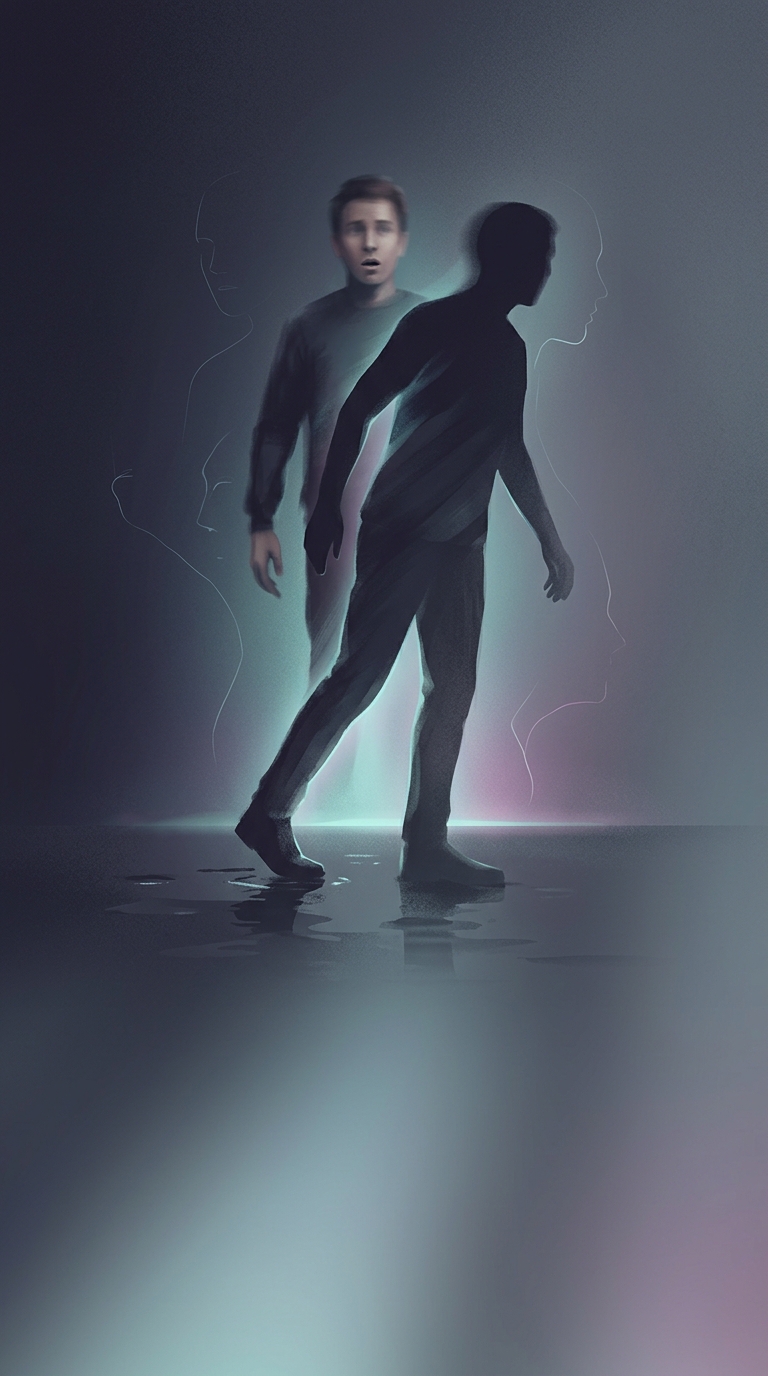
Why a Person Swap Can Slip Past Your Attention
You might not notice—especially if your attention is on the conversation rather than on carefully tracking the speaker’s appearance. Vision feels like a continuous recording, but the brain does not preserve every detail of every moment. It builds a useful working picture from what matters for the task at hand.
That limitation is called change blindness: a noticeable change can go undetected when attention is elsewhere or the change happens during a brief interruption. In a conversation, you may be concentrating on the stranger’s words, planning your reply, or watching their gestures. If something briefly blocks your view or draws your eyes away, the interruption can make it harder to compare the person before and after.
The Brain Fills In Continuity
Most of the time, assuming that the person in front of you remains the same is a sensible shortcut. People move, turn, and shift expression; the brain treats those changes as part of one continuing scene instead of rechecking every feature from scratch. When attention is occupied, it may retain the gist—someone is speaking to me—without a precise record of clothing, face, or build.
A swap is more likely to register if you are looking directly at the person, if the interruption is obvious, or if the replacement differs in a feature you were already attending to. A very different voice, a sudden change in height, or a mismatch in the conversation can all make the discontinuity harder to miss. Noticing is therefore not a simple test of eyesight: it depends on what your attention selected and what changed.
What the Moment Reveals
Failing to notice would not mean you saw nothing. You could remember the conversation accurately while missing a change in the speaker’s identity, because those are different details competing for limited attention. The unsettling part is that a coherent experience can feel complete even when the brain has quietly filled gaps in the scene.