Why a Needed Six Can Change the Throw
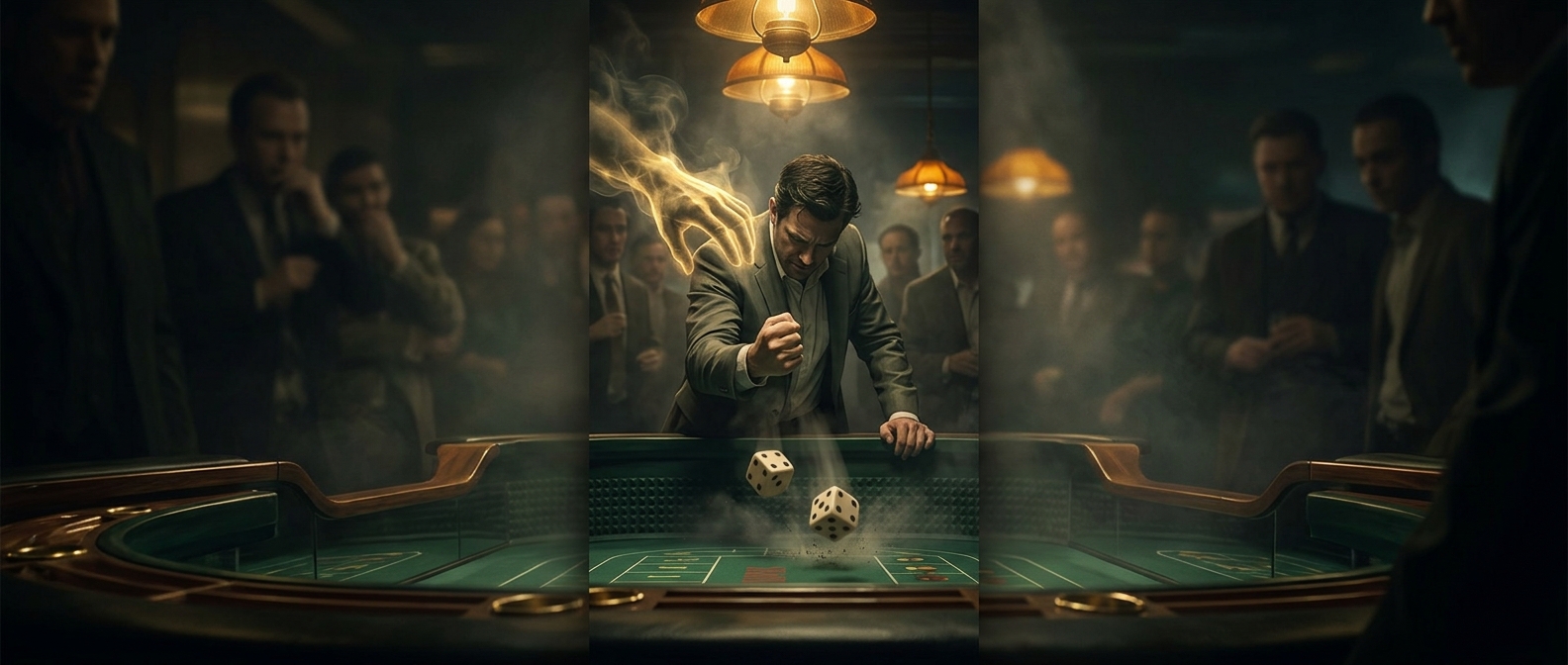
A player who needs a six may feel an urge to make the dice travel farther. That intention can shape the throwing motion before the player consciously decides to use more force: the arm accelerates, the wrist snaps harder, or the hand follows through more emphatically. The movement reflects the goal, even though the goal itself gives the dice no special way to land on six.
The Body Tries to Help
This is a small example of how intention can leak into movement. When people picture an action—sending something farther, for instance—their bodies can begin adjusting the muscles involved, sometimes without deliberate planning. In a game, that adjustment may feel like useful control because the player can control the throw’s force and direction.
But control over the motion is not the same as control over the result. A harder throw can change how dice move and bounce, yet it cannot make them respond to what the player needs. Once the dice are tumbling, a forceful gesture is no guarantee of a particular face.
Why the Urge Feels Convincing
The pressure of the moment makes the distinction easy to blur. When a six would rescue a turn or decide a bet, a stronger throw feels like doing something rather than simply waiting on chance. That sense of agency can encourage a player to put more of the desired outcome into the motion.
The memorable part is that the need may show up in the arm before it shows up as a conscious strategy: the player tries to throw a six, but what the body can reliably deliver is only a harder throw.