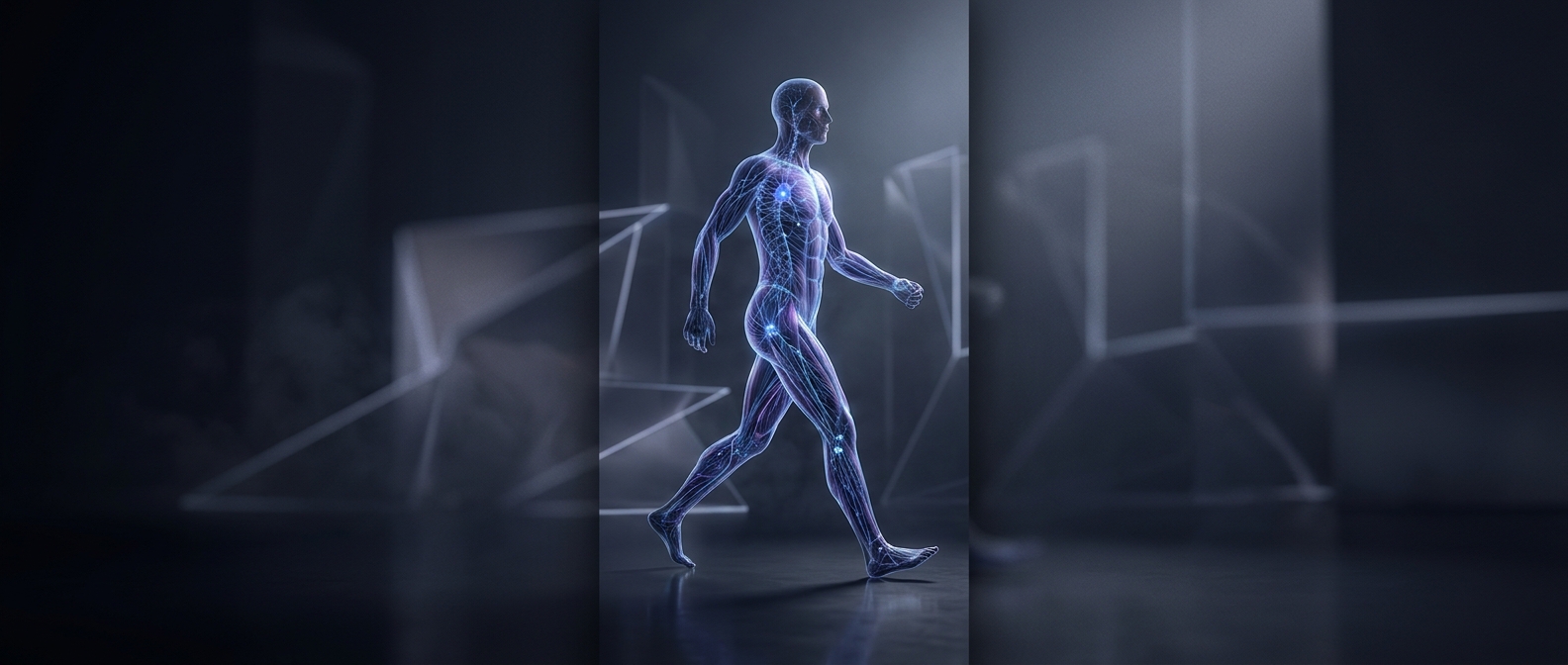
Walking is a controlled fall—and recovery
As you move forward, your body’s center of mass shifts beyond the foot supporting you. The next foot has to arrive in time to take your weight. Walking muscles therefore do more than propel a leg: they regulate how quickly the body moves, keep the pelvis from tipping, and steady the ankle as the ground pushes back.
The muscles work in overlapping phases. While one leg swings forward, muscles in the other leg help support and propel the body. Around the instant the swinging foot lands, activity shifts: the landing leg’s muscles absorb impact and prevent the knee and ankle from giving way, while the other leg begins to lift.
Stability depends on small adjustments
Many muscles make their contribution by holding joints steady rather than creating a conspicuous movement. Muscles in the trunk and hips limit unwanted sway; muscles in the foot and lower leg make fine corrections as pressure shifts across the sole. Sensors in muscles and joints continually report position and stretch to the nervous system, which adjusts muscle activity as the surface or your balance changes.
That coordination is why a step can look effortless while remaining responsive. A curb, a loose patch of gravel, or a slight loss of balance can demand a different pattern of muscle activity before you consciously think through the movement. The visible swing of the leg is only the obvious part: each landing also has to leave the body stable enough to take the next step.