Why a long day awake can resemble intoxication
After about 18 hours without sleep, performance on some attention and reaction-time tests can be impaired to a degree comparable to a blood alcohol concentration of 0.05%. At 24 hours, the comparison can reach 0.10%. These are useful ways to convey the scale of impairment—not a claim that sleep loss and alcohol affect every brain function in exactly the same way.
The brain starts missing moments
As wakefulness stretches on, the drive to sleep builds. The brain has a harder time sustaining attention, and responses become slower and less reliable. A tired person may still feel capable, but that feeling does not ensure that their performance is intact. In driving, machinery use, or other tasks that demand continuous focus, a brief lapse can matter more than a generally sluggish pace.
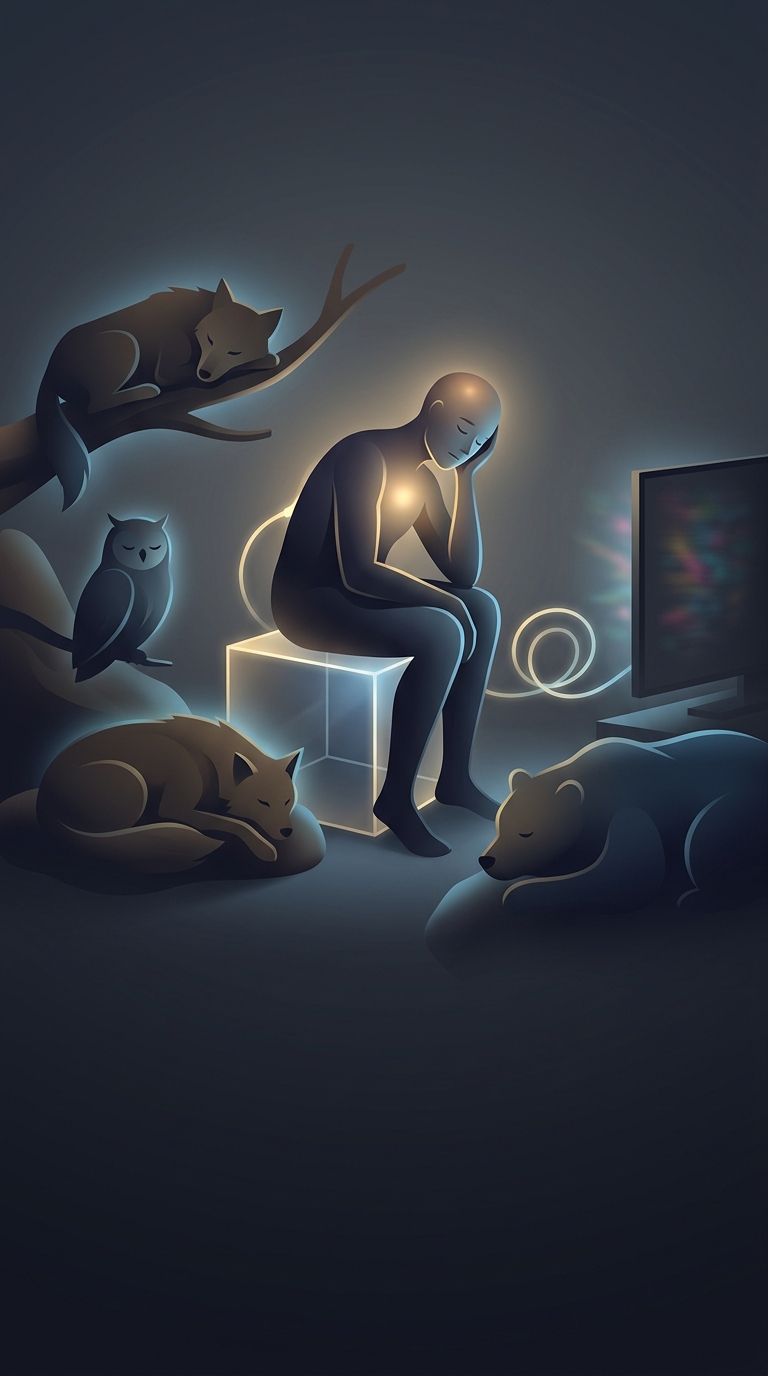
One possible lapse is a microsleep: a brief, involuntary episode in which the brain momentarily disengages from the outside world. A person may stare ahead or keep their eyes open, yet fail to register what is happening. These episodes can last only seconds, and people may not notice them or remember the gap afterward.
Why the comparison matters
Alcohol and sleep deprivation are different, but both can undermine the attention and quick judgment needed to respond safely. The practical danger of staying awake is that impairment can arrive quietly: someone may continue a familiar task while their brain is no longer reliably tracking it. A few seconds without awareness at the wheel can mean traveling a substantial distance without truly seeing the road.