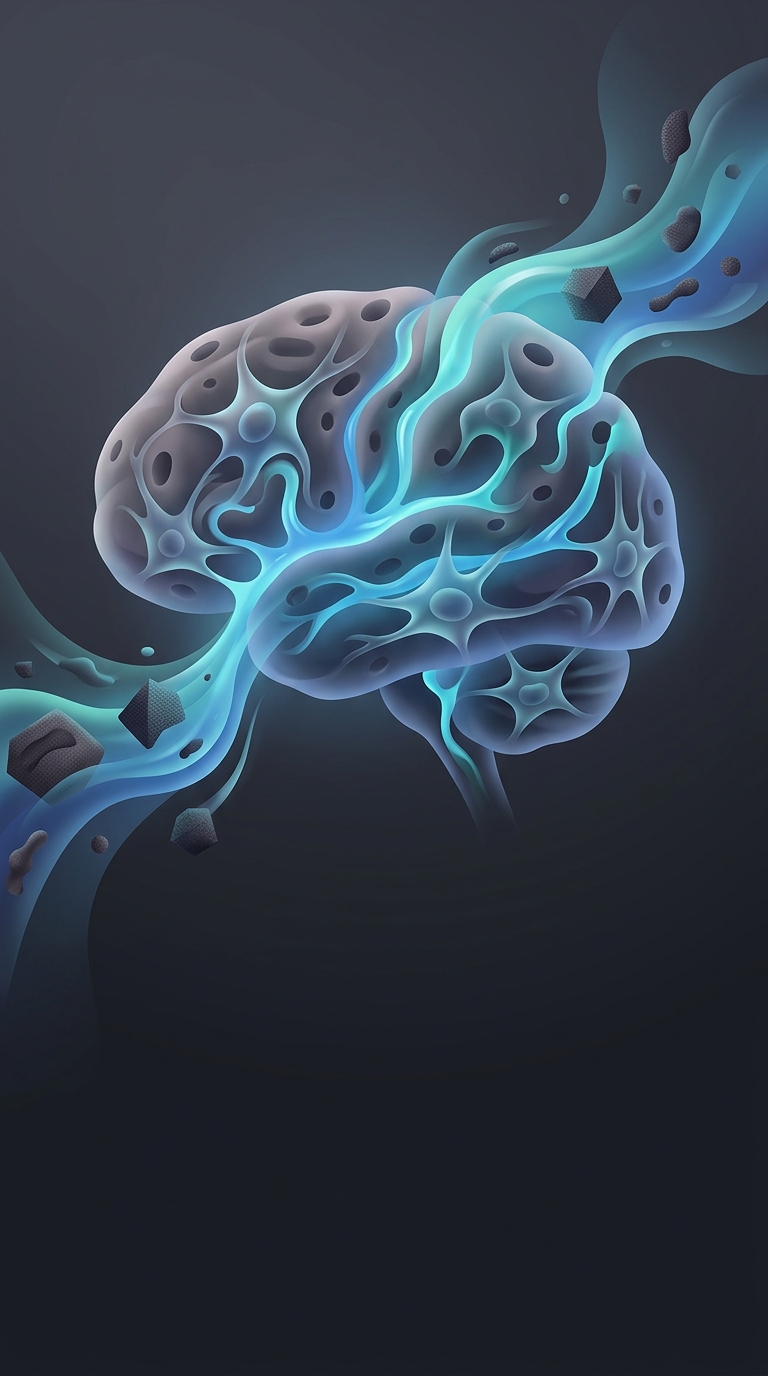
How fluid reaches the brain’s waste
Cerebrospinal fluid (CSF) is the clear liquid that surrounds the brain and spinal cord. During sleep, it can move from spaces around blood vessels into the brain’s tissue, where it exchanges with fluid between brain cells. That flow helps carry dissolved waste back out toward routes that drain from the brain. Researchers often call this pathway the glymphatic system—a network of fluid movement that supports the brain’s cleanup.
One waste product it can transport is amyloid beta, a protein that can build up in the brain. The process is not a stream rinsing every cell clean; it is an exchange of fluids through narrow spaces around and between structures in brain tissue.
Why sleep changes the flow
In animal studies, the spaces between brain cells become roomier during sleep, leaving more space for fluid to circulate. Changes in brain activity and blood-vessel movement also appear to help drive the flow. The result is a stronger opportunity for CSF to enter tissue and carry waste away than during wakefulness.
Scientists are still working out how much this pathway contributes to waste removal in people and exactly how its parts are regulated. But the basic idea helps explain why sleep is more than a pause in daytime activity: it changes the physical conditions inside the brain. A night of sleep gives fluid more room to move through the brain’s tissue and transport some of the waste produced there.