Why Halo’s reticle seems to cling to opponents
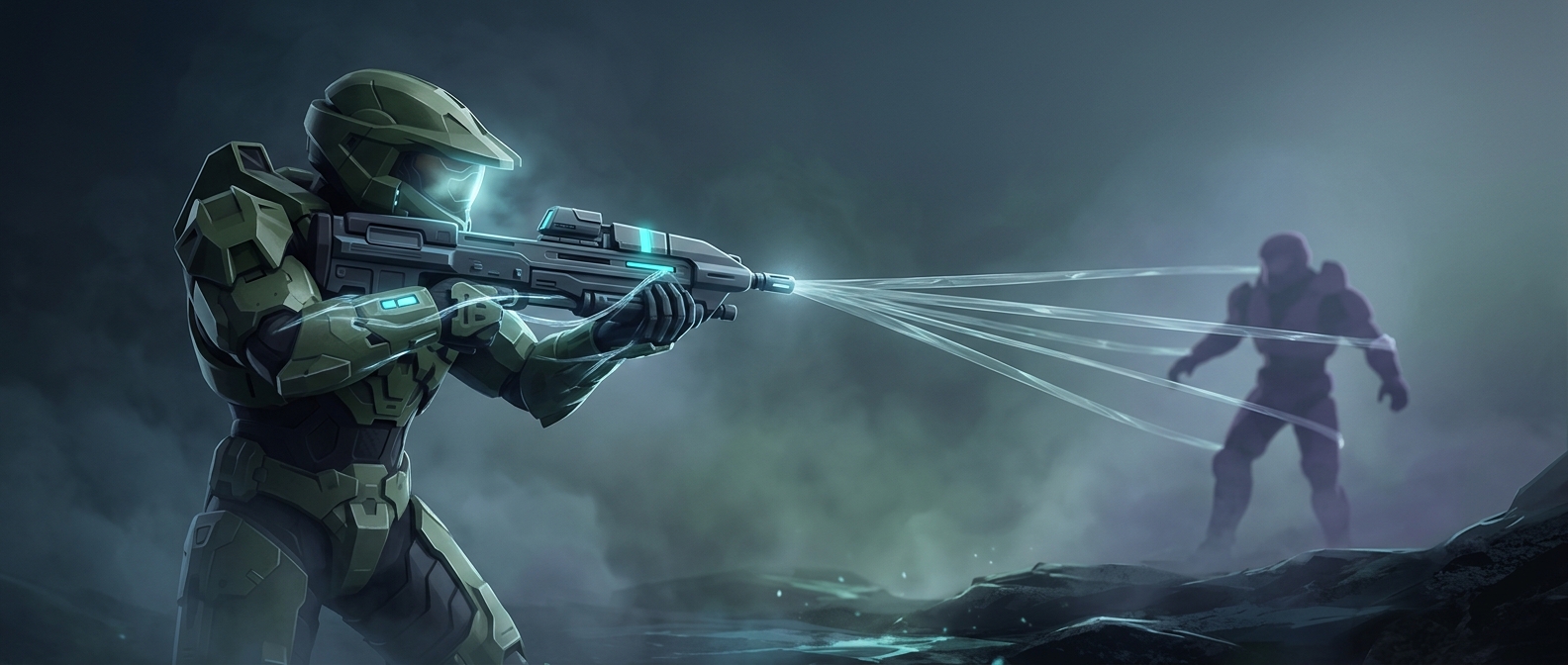
A thumbstick does not point directly at a spot the way a mouse does. It tells the game how quickly to move the view, and small thumb movements can make precise tracking difficult—especially when both players are moving quickly. Halo’s aim assist helps bridge that gap: as the reticle passes over an opponent, the game can make it harder to sweep past them, slowing or softening the aim movement around the target.
That “stickiness” is not the game aiming independently. The player still has to steer, lead a moving opponent when necessary, and keep the reticle in the right area. Assistance makes those inputs more forgiving, rather than replacing them.
Why it matters in a sniper duel
When two players strafe in opposite directions, their apparent positions can change rapidly. Without help, a tiny overcorrection may send the reticle past the target; correcting back can cost the moment needed to fire. Aim assist gives controller players a little more room for error, so the contest depends less on making perfectly fine thumbstick adjustments under pressure.
The tradeoff is that a reticle that settles readily can also make tracking feel unusually easy. Halo’s multiplayer balance therefore depends on aim assist being strong enough to make dual-stick combat practical without making positioning and timing irrelevant. In a close duel, the assist may help keep a shot lined up—but the player still has to choose when to take it.