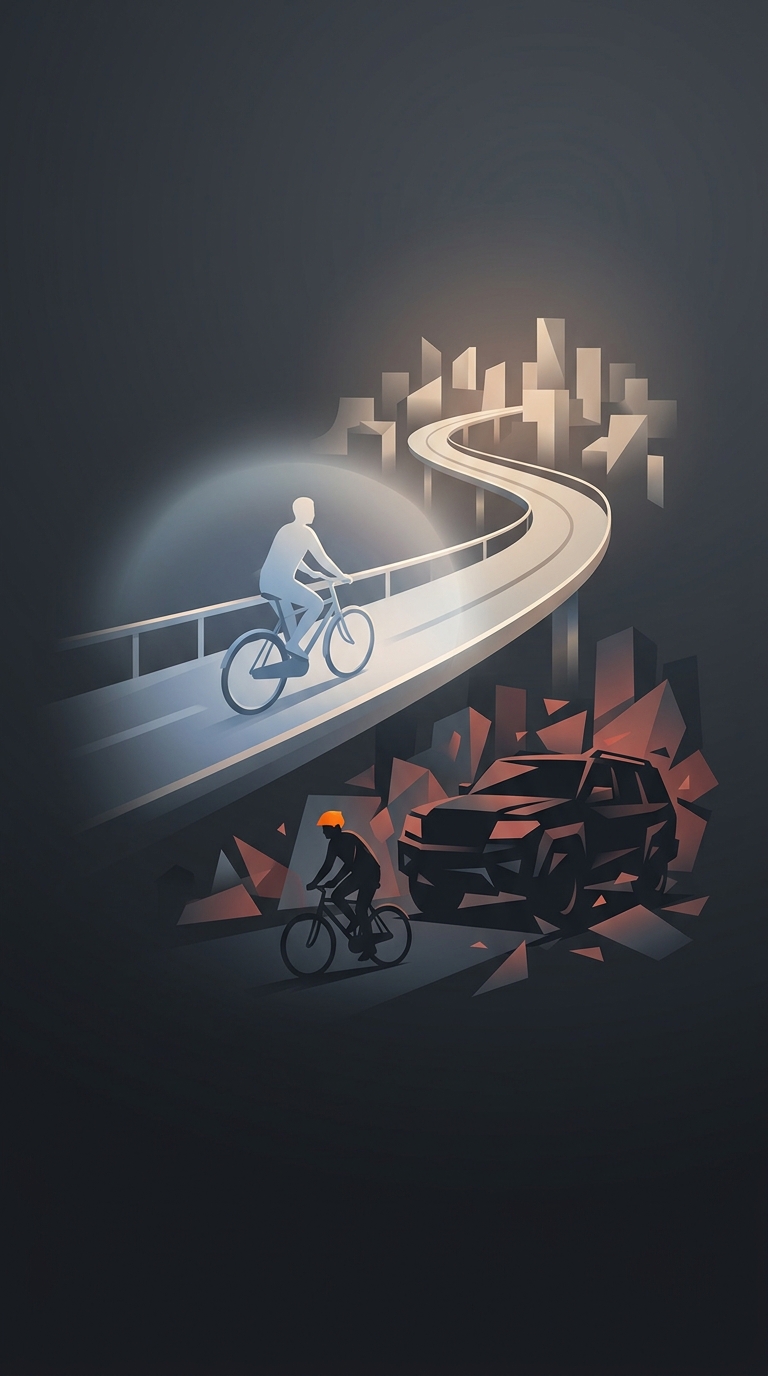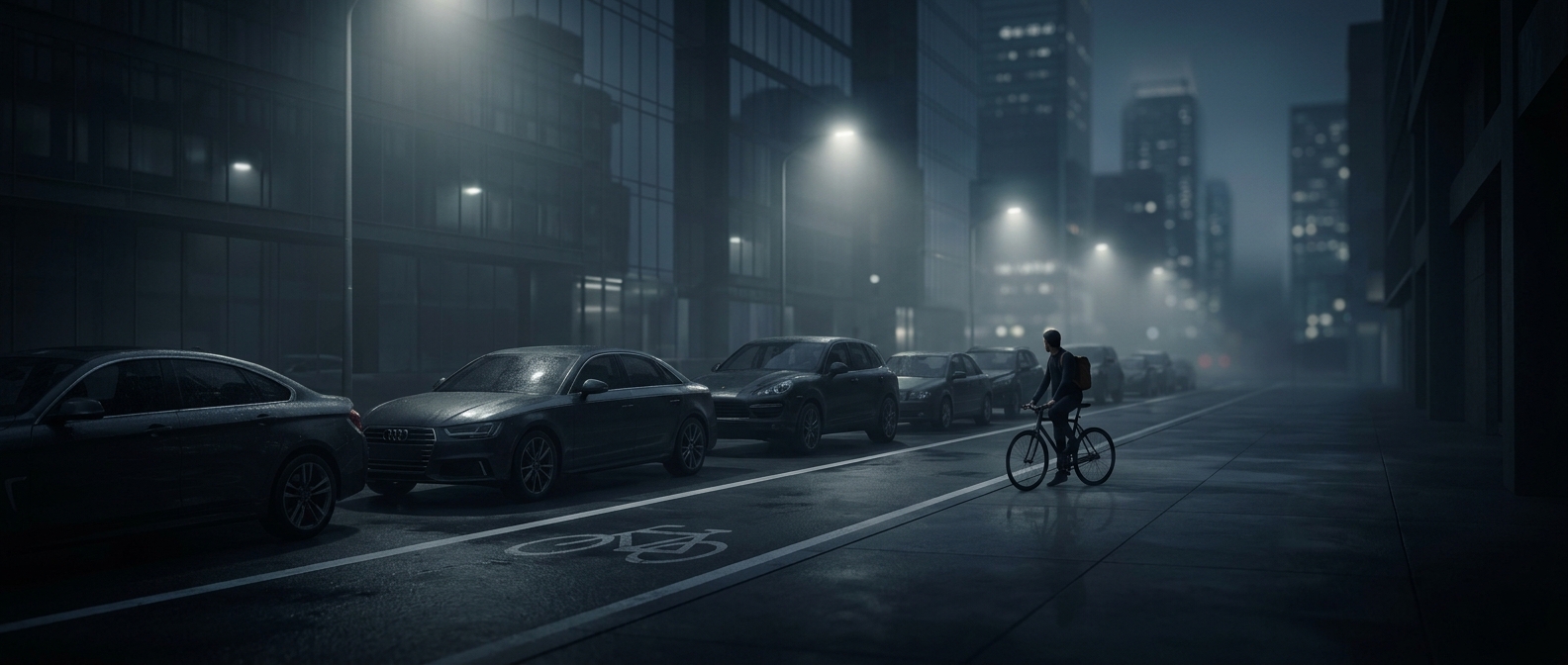
The curb is the pressure point
A delivery has to connect a vehicle to a building: someone must carry a package from the street to a doorway. The curb is the shortest link, but it is also where buses stop, people get picked up, cars park, and cyclists pass. When a street provides no practical place to pause, a driver may use the nearest open space—even if that space is a bike lane.
The conflict is not simply between a driver and a rider. It is a sign that several essential uses of the street have been assigned to the same narrow strip of pavement.
Why a quick stop can matter
Loading often takes longer than pulling over. A driver may need to find an address, unload several items, or move a package to a building entrance. A bike lane can look like convenient temporary space because it is beside the curb, but a stopped vehicle turns a continuous route into a sudden detour.
Riders may have to merge into moving traffic or squeeze past the vehicle. Either choice asks them to react to an obstruction they could not plan around, and the risk can rise when visibility is limited or traffic is fast. A lane intended to make cycling more predictable becomes less useful precisely when it is blocked.
Making room for deliveries
Street designers and city officials can treat loading space as part of the transportation network rather than an afterthought. A marked loading zone gives drivers a place to stop; its location, hours, and permitted uses determine whether it works for nearby deliveries without taking space from a bike route. In some places, managing curb access by time of day can help accommodate different needs, though it requires clear rules and enforcement.
The practical test is whether a delivery vehicle has a usable place to stop close enough to serve its destination. If not, the curbside gap may be filled by a vehicle anyway—leaving cyclists to navigate a loading problem they did not create.