A look can become a feedback loop
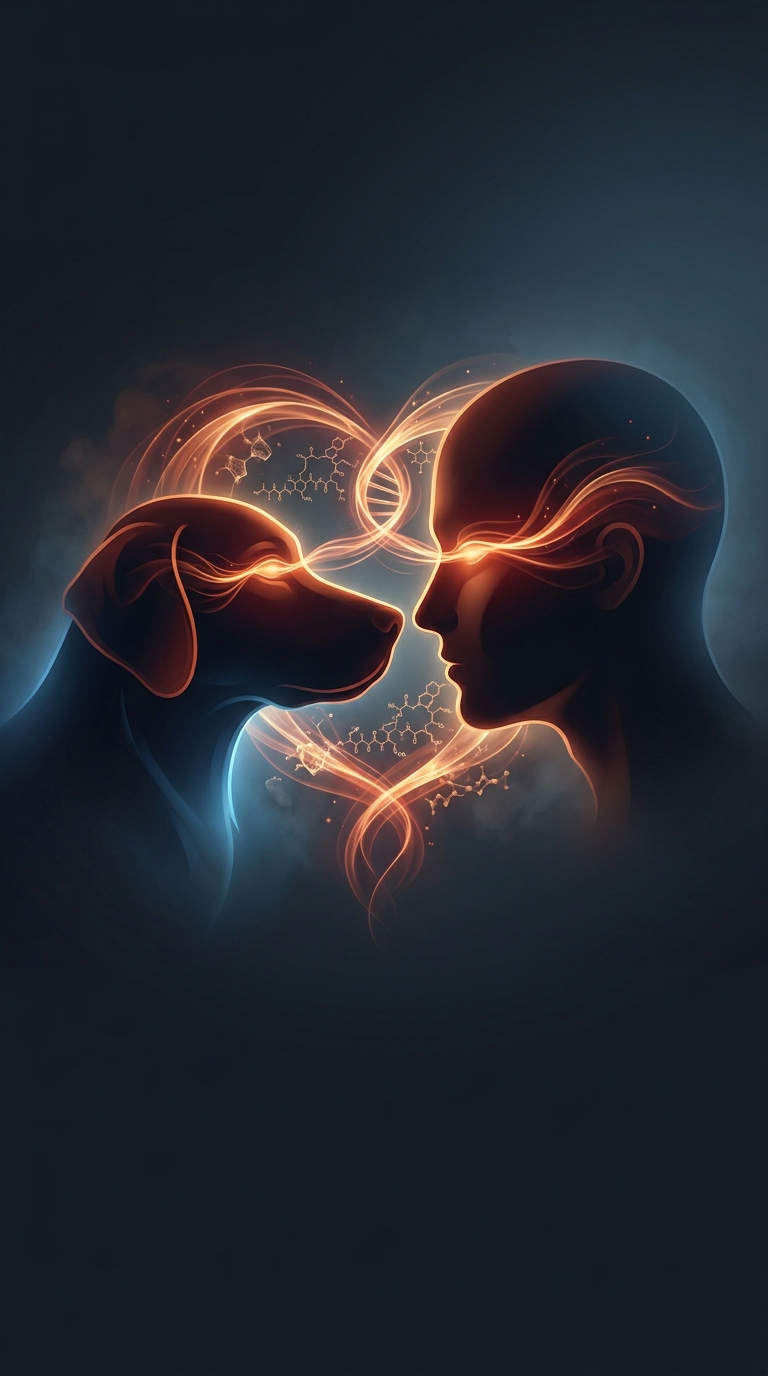
When a dog and a person gaze at each other, the interaction can coincide with a rise in oxytocin in both. Oxytocin is a hormone involved in social bonding and caregiving—not a simple chemical switch for love. Its increase may make a person more attentive and affectionate, encouraging the dog to stay close or look back. That renewed attention can strengthen the exchange.
The important part is the two-way pattern: the dog’s gaze is not merely a cue for the human. The human’s response can help sustain the contact, making eye contact part of a shared social routine.
Why dogs, not wolves?
Dogs are unusually willing to seek and hold human eye contact compared with wolves, including wolves raised around people. That difference suggests the response is not just a general effect of living near humans. During domestication, dogs became especially good at using human-directed signals; a look can help them recruit attention and cooperation.
This does not mean every dog enjoys prolonged staring. In canine body language, a fixed gaze can also feel threatening, especially from an unfamiliar person. The bonding effect is most relevant in a comfortable relationship, where eye contact is part of friendly interaction.
A small gesture with a social payoff
The exchange gives a biological dimension to an ordinary moment: a dog looks up, its person responds warmly, and both may become more engaged. Eye contact can help reinforce the bond that makes dogs attentive to people—and people attentive to dogs.