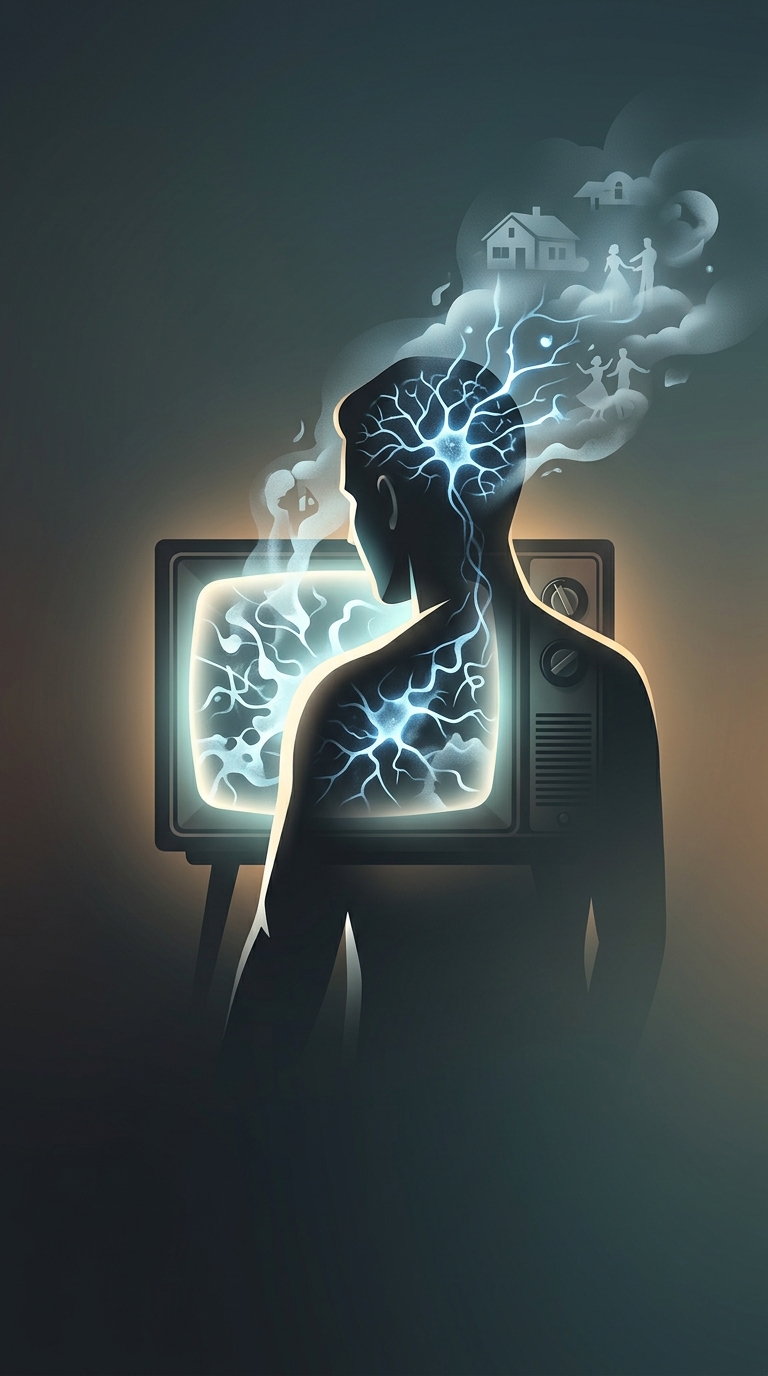
Television changed daily attention, not the human brain wholesale
The spread of television in the 1950s transformed how many people spent their leisure time: instead of imagining a story from words or following events in a shared public space, viewers could watch moving images and hear sound from home. That shift changed habits and environments. It did not suddenly rewire everyone’s brain or produce one permanent, uniform change in human cognition.
A screen can shape what the brain practices
Brains adapt to repeated experience. Watching television exercises visual attention: viewers track movement, faces, cuts, and sound, often while sitting still and receiving a stream of content chosen by someone else. Reading, conversation, and outdoor play demand different combinations of skills, such as building mental images, taking turns, or navigating a changing environment. When television takes time away from those activities, it can change which skills a person practices most.
The effect depends on what is watched, how often, the viewer’s age, and what the screen replaces. A program watched together and discussed is a different experience from hours of unattended viewing. The important mechanism is practice and substitution—not a mysterious television signal permanently reshaping the brain.
Why the change lasted
Television became part of the home routine, and later generations grew up with screens as an ordinary feature of daily life. That made its influence persistent at the level of habits, attention, and culture. But persistence is not the same as a single biological alteration lasting for decades: brains remain adaptable, and people continue to develop through many kinds of experience.
The lasting transformation was therefore less a new human brain than a new everyday environment—one in which moving images could compete with conversation, reading, and play for the same hours of attention.