Why a Long Winter Night Could Have a Middle
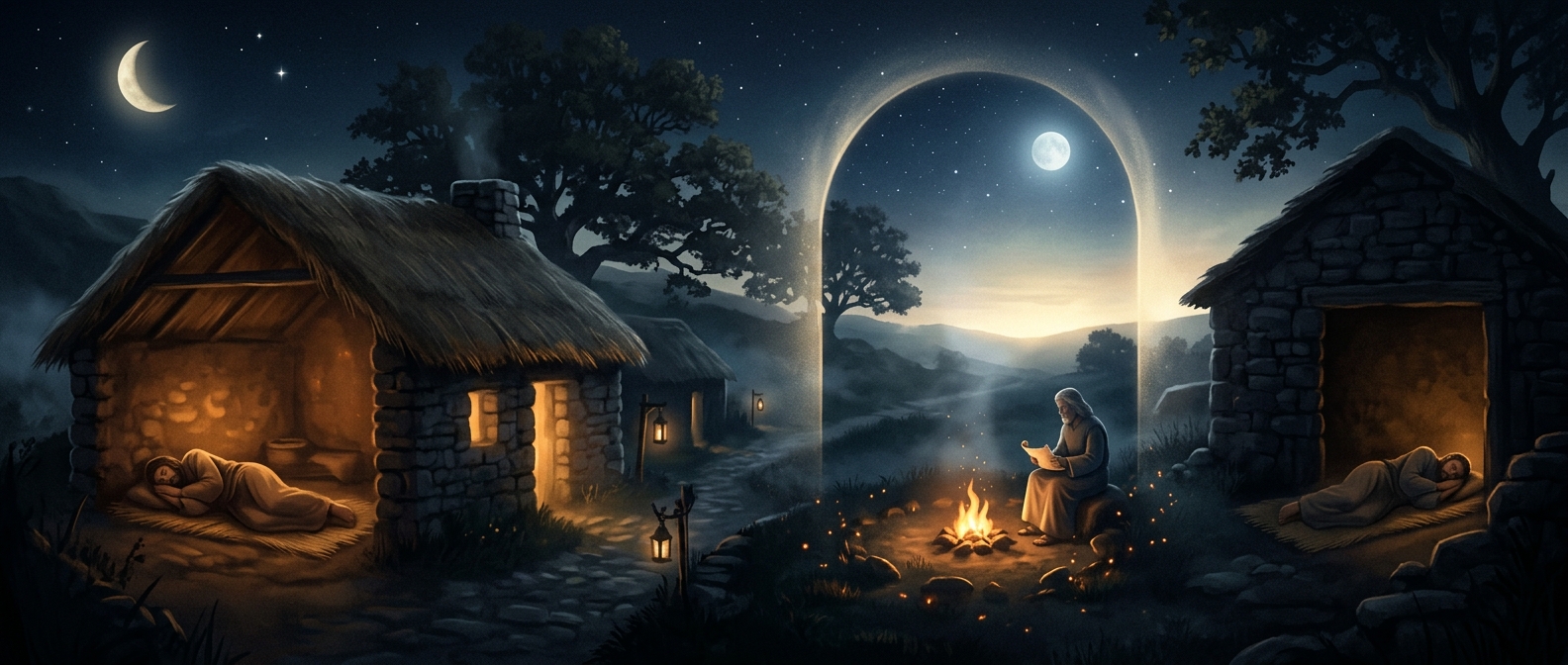
A night with an awake interval makes more sense when darkness lasts longer than the sleep a person needs. Before electric lighting, people’s evenings were shaped more directly by sunset. In some places and periods, people went to bed early, slept for a few hours, woke, then returned to sleep until morning. This was a pattern some people followed—not a universal schedule shared by everyone.
The pause could be ordinary time rather than a sign that sleep had failed. In a quiet, dark home, a person might pray, tend a fire, talk with family, or simply lie awake. Then, as sleepiness returned, they went back to bed.
The Body Can Wake Without Ending the Night
Sleep is not one unbroken state. People naturally move through stages of lighter and deeper sleep, and brief awakenings can happen between them. Whether someone falls back asleep quickly depends partly on sleep pressure—the growing drive to sleep after time awake—and on the body’s daily timing system, which helps regulate sleepiness and alertness.
A longer stretch awake in the middle of the night is different from a momentary stirring. But in a setting where the night was expected to include quiet wakefulness, that interval did not necessarily carry the same meaning as lying awake while worrying that sleep had gone wrong.
How the Expectation of One Stretch Took Hold
Artificial light made it easier to stay up after dark, while fixed work and school schedules made morning wake-up times less flexible. Together, those changes helped make a single, consolidated night’s sleep the familiar ideal. That expectation can shape how people interpret waking: the clock may say it is the middle of the night, and the mind may immediately label it a problem.
The historical pattern does not mean everyone should adopt a split schedule. It does show that the shape of a “normal” night has depended partly on how people lived and organized their time. A quiet waking interval, by itself, is not proof that the night’s rest is over.