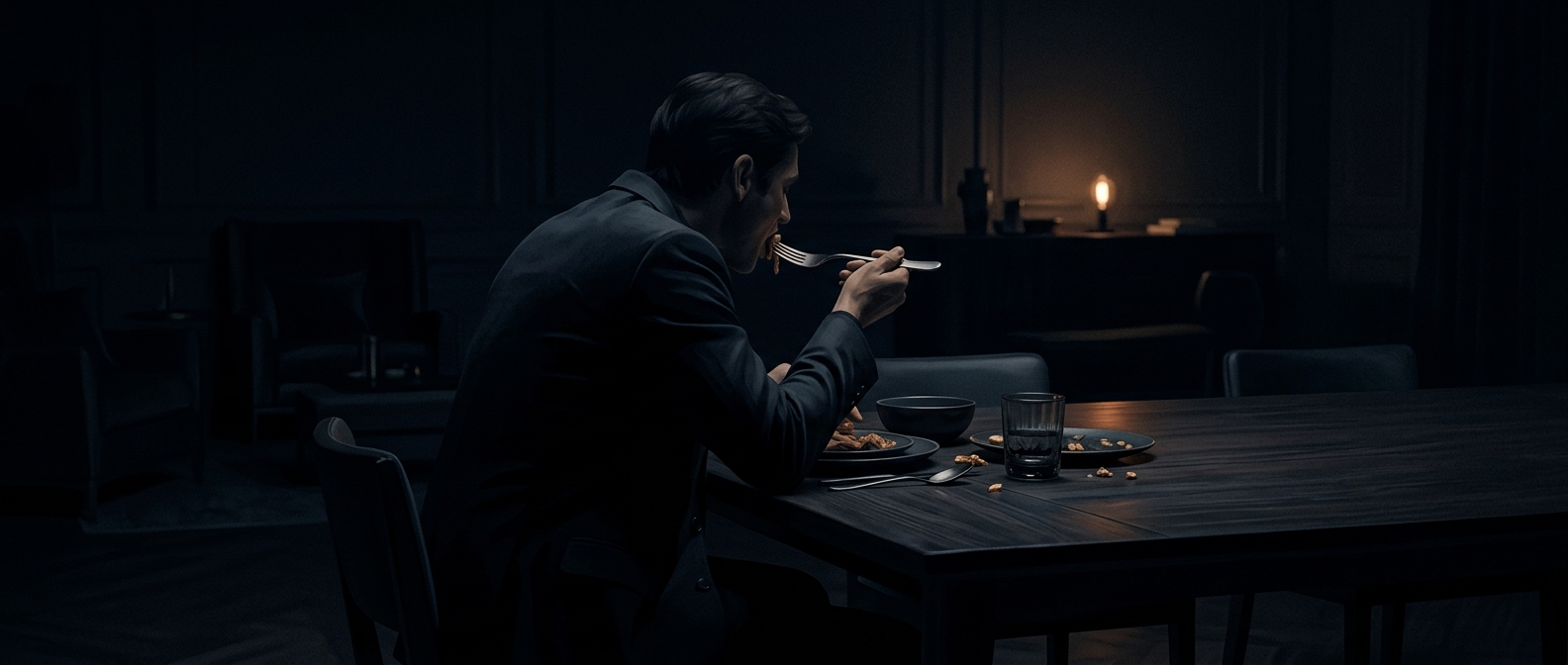
How a dim room disrupts the meal’s visual cues
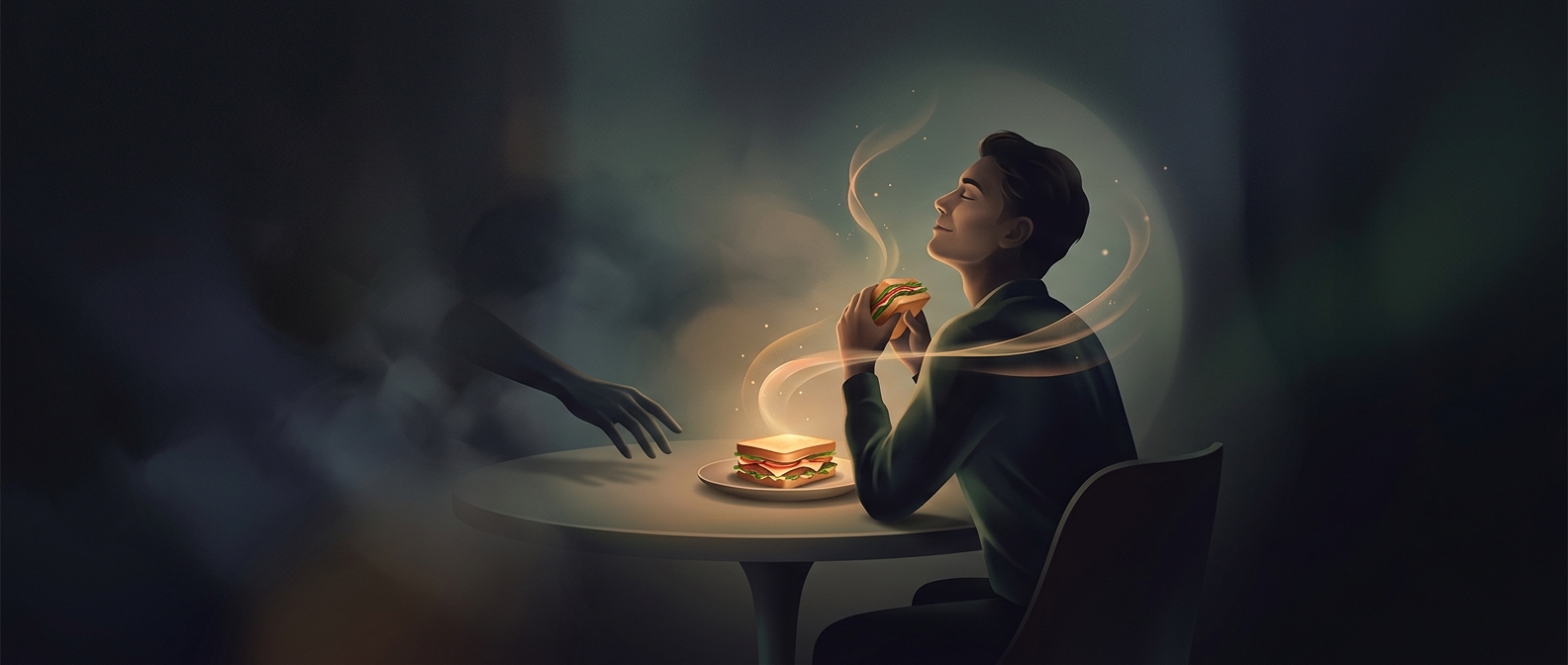
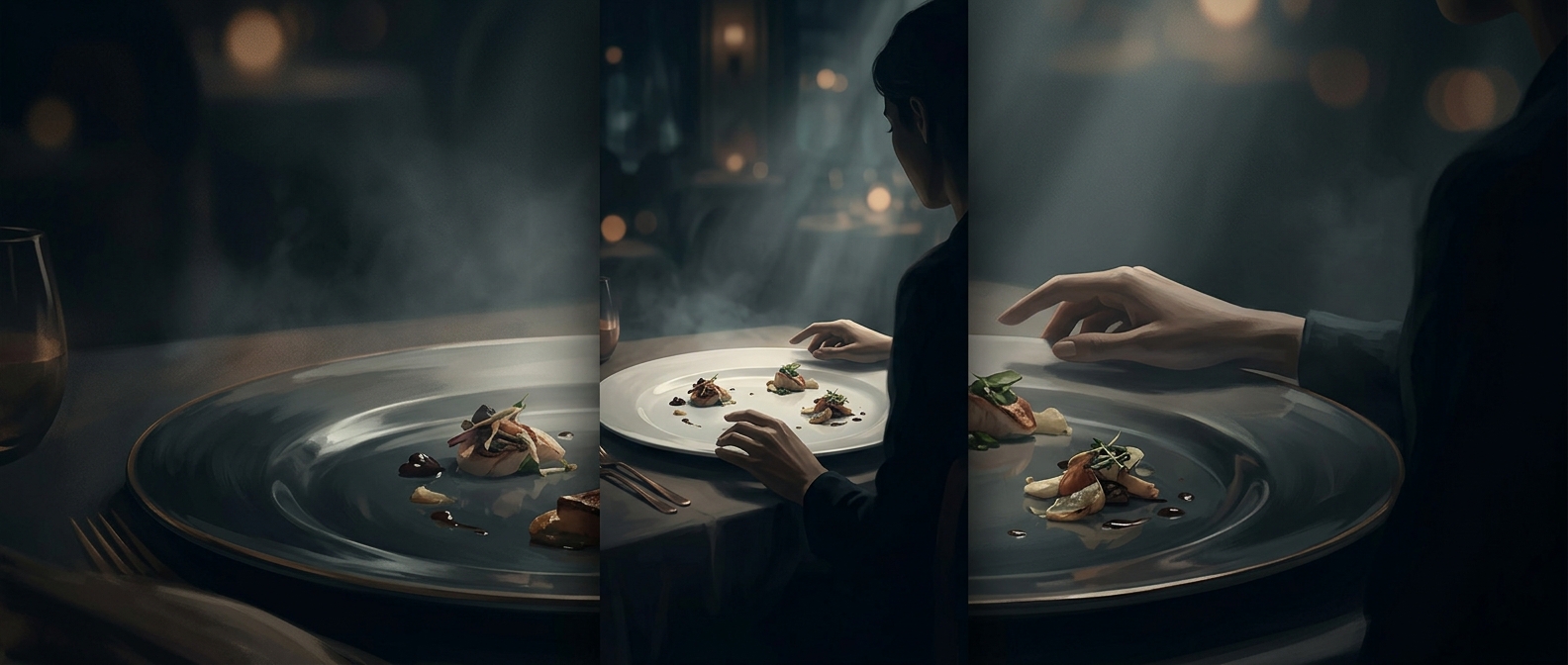
Eating is partly a visual task. Between bites, people can glance at a plate to judge what remains, notice whether they are serving themselves again, and see how quickly the meal is disappearing. In low light, those checks become less reliable—especially when food blends into the plate or the plate is hard to distinguish from the table.
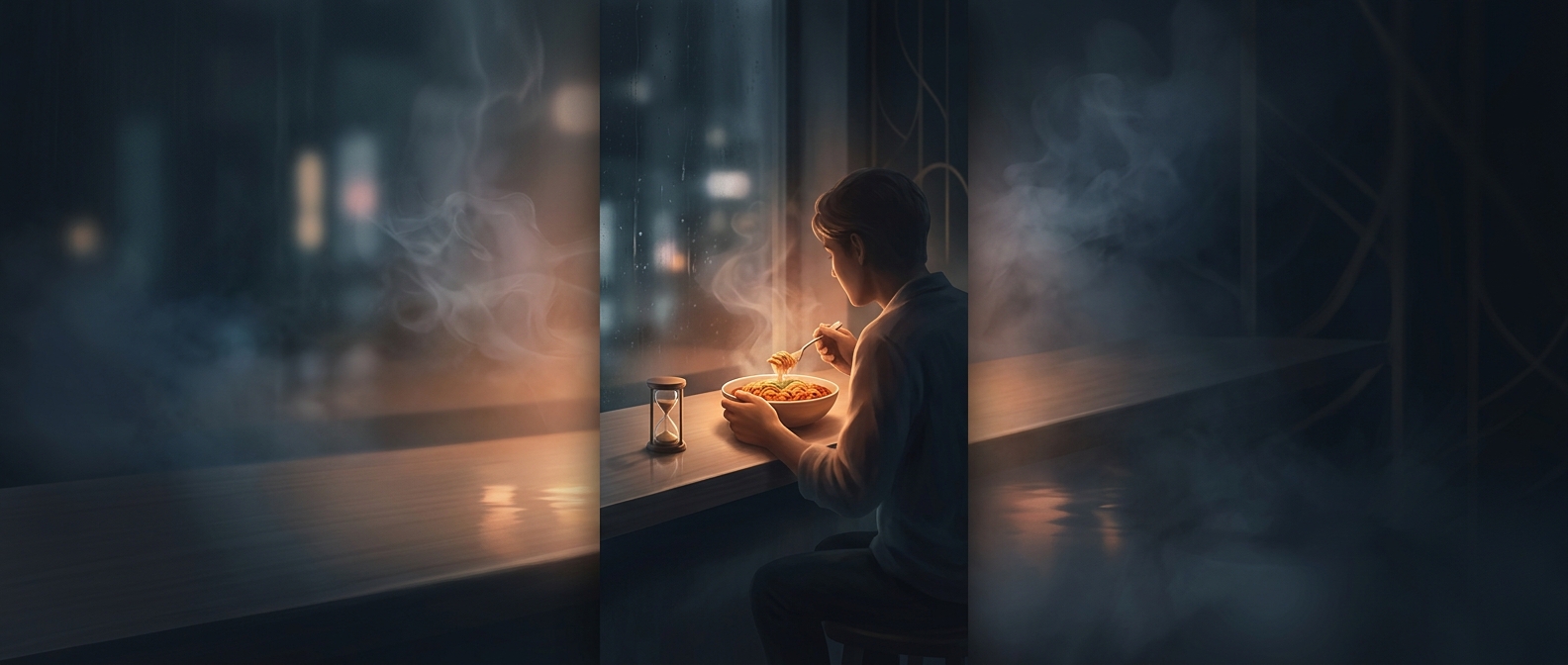
That matters because fullness does not arrive as an instant signal. It builds while a person eats, so visual information can help guide decisions in the meantime: whether to take another bite, slow down, or stop. When the plate gives less readable feedback, it is easier to lose track of the meal’s progress and continue eating without deliberately choosing a larger portion.
A change in monitoring, not a change in hunger
Dim lighting does not necessarily make the body hungrier. The more direct explanation is that it weakens an everyday form of self-monitoring. Someone focused on conversation, a screen, or the food itself may pay even less attention to how much has been eaten; poor visibility removes another way to keep track.
The effect is not automatic. Hunger, portion size, eating speed, and attention still matter, and a person may stop when comfortably full regardless of the lighting. But when visual cues are already doing some of the work, making the plate harder to read can shift the meal’s stopping point. A simple detail—the food disappearing clearly from view—can help turn an unplanned extra serving into a decision made on purpose.