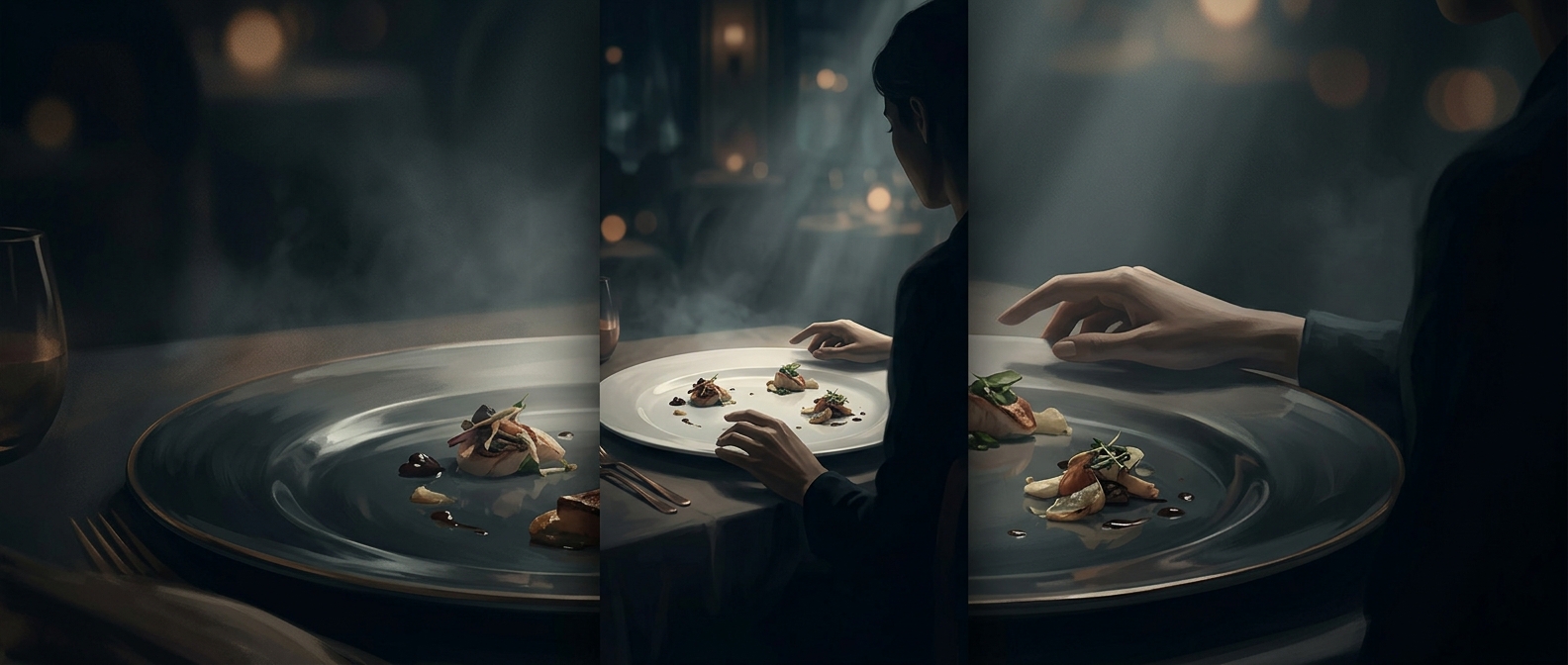
The plate becomes part of the portion
Your visual system does not measure food in isolation. It judges a serving against nearby boundaries and empty space—a contrast effect often called the Delboeuf illusion. The same circle can look larger or smaller depending on the ring around it; on a broad plate, food may occupy less of the visible surface and seem less substantial.
That first impression can shape what happens next. Before you taste anything, appearance helps set expectations about how much you have served and whether the meal feels like enough. If the portion looks modest, you may be more inclined to keep eating or add more, even though the quantity itself has not changed.
A cue, not a command
The plate does not directly control appetite. Hunger, the food, attention, and the setting all matter, and people do not respond identically. But visual cues can influence judgments without announcing themselves: a diner may experience a serving as “small” rather than consciously notice the empty space around it.
That is why plate size can matter at the moment a portion is chosen. The useful takeaway is not that a large plate guarantees overeating, but that the same food can tell a different visual story depending on what surrounds it.