A Landscape You Have to Sketch Into View
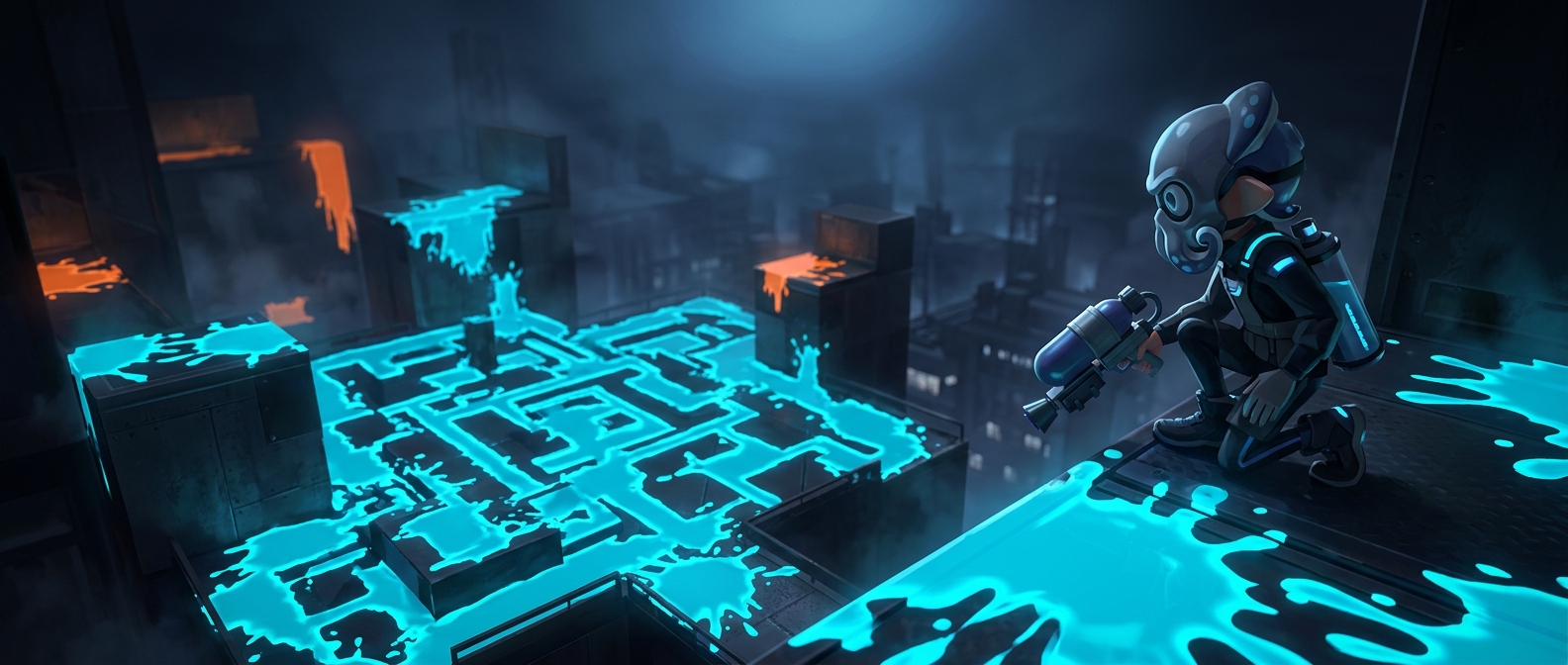
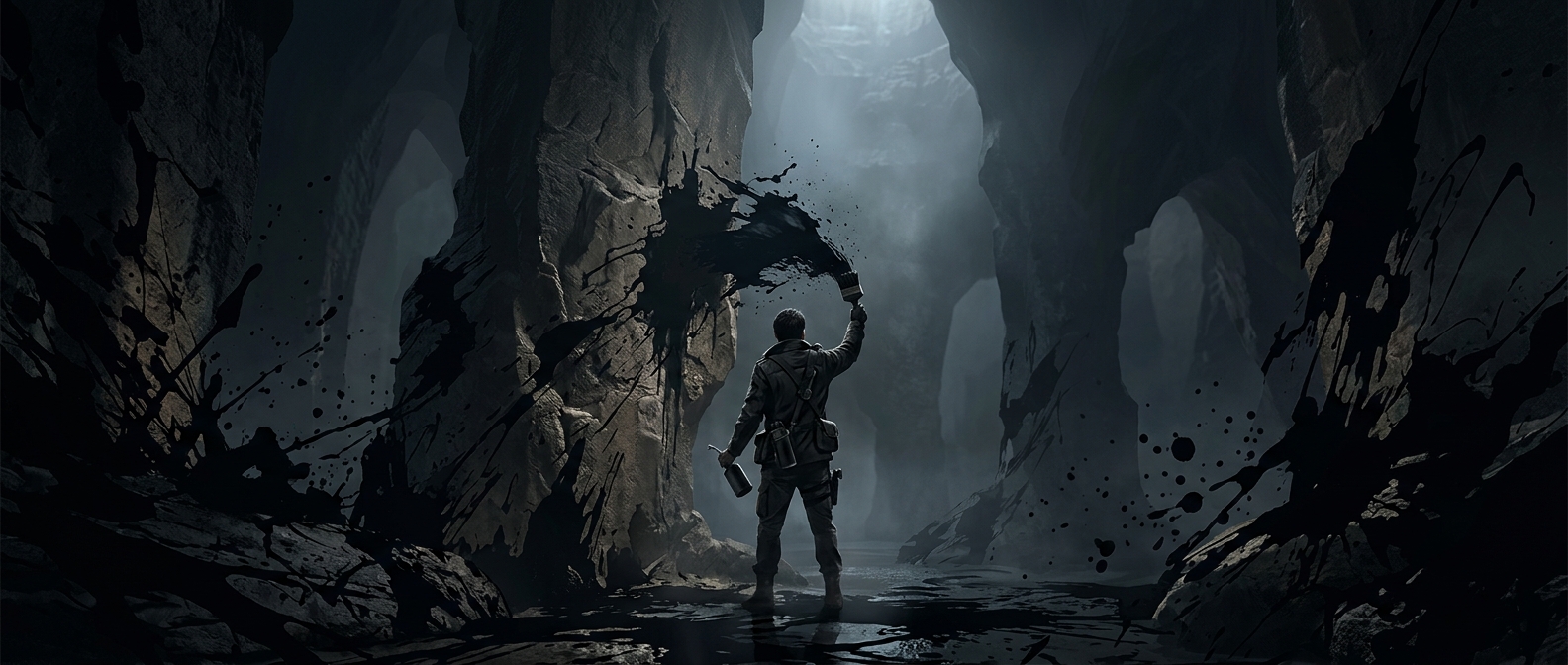
At the start of The Unfinished Swan, the world offers almost no visual landmarks. A white wall, a white floor, and the empty space between them can look nearly identical. Each thrown glob of ink makes a small patch of that hidden scene visible: a splash on a wall outlines its surface, while a mark on the ground can show where the floor begins.
That turns movement into a process of testing. Players aim at uncertain space, watch where the ink lands, then use the resulting shapes to judge distances and choose where to go next. The splashes are not tidy outlines; their irregular edges make the revealed architecture feel discovered rather than neatly diagrammed.
Seeing Becomes Part of the Puzzle
The mechanic makes information something the player produces. Aiming high can reveal a wall or column; aiming low can clarify the path underfoot. When the scene is hard to read, another throw may help—but it also adds more marks to the image. Progress comes from building enough visual evidence to navigate, not from painting every surface.
This is a deliberate reversal of a familiar game convention: instead of scanning a richly detailed environment for clues, players begin with almost no detail and create their own. The blankness is both an obstacle and a design tool. It makes each splash useful, and lets a simple action—throwing paint—teach players how the space is shaped.
The result is that exploration leaves a record. A route becomes easier to recognize as ink accumulates, so the player’s earlier guesses remain visible in the landscape they are still trying to understand.