A Save Point You Had to Reach
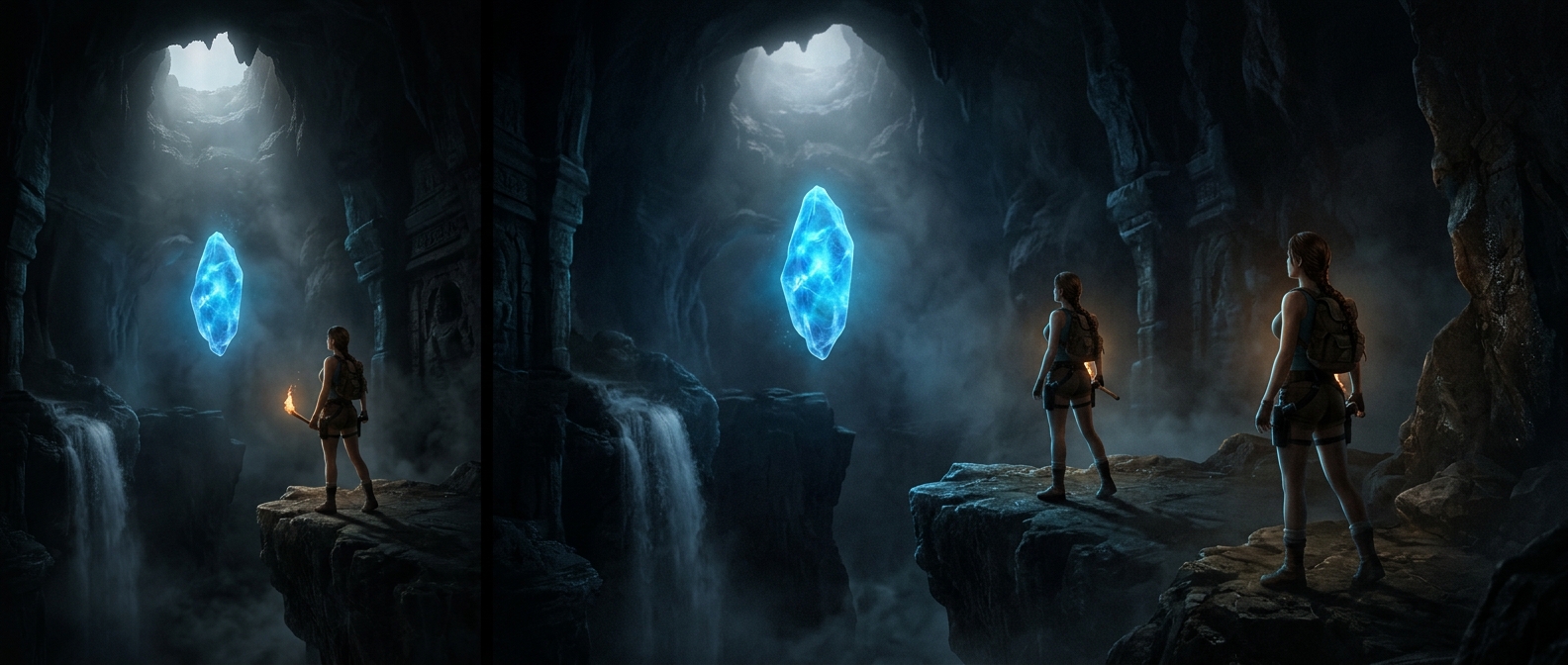
A spinning blue crystal turns a menu command into a destination. In Tomb Raider games that use save crystals, reaching one is part of surviving the level: until Lara touches it, a fall, trap, or enemy can erase the progress made since the previous save.
That changes how players move through a cave. A narrow ledge is not merely a jump to get past; it may be a risk taken before the next chance to preserve progress. The crystal gives the player a visible landmark and a reason to explore, while the unsaved stretch gives mistakes a cost.
Why Make Saving Part of the Challenge?
A save point is a design boundary. Placing crystals along a route lets designers control how much ground a player must cover before getting a safety net. A long gap between them can make a sequence feel tense; a crystal after a difficult passage can provide a satisfying pause.
In versions where crystals are limited or tied to particular locations, saving also becomes a decision rather than an automatic habit. Use a chance to save now, or keep going and risk losing more? The tradeoff makes the player weigh caution against the possibility of pressing deeper into the level.
The system is not the same across every Tomb Raider game or version. But where it appears, the crystal makes a normally invisible act—recording progress—part of the world Lara has to navigate. You do not just decide when to save; you have to get somewhere safe enough to do it.