Vincent Vega’s bathroom breaks become a running timing joke
In Pulp Fiction, Vincent Vega’s trips to the bathroom repeatedly put him out of position just as events take a dangerous turn. The pattern is funny because it turns an ordinary need into a suspense cue: when Vincent disappears, the audience has reason to wonder what trouble will be waiting when he comes back.
Three absences, three kinds of trouble
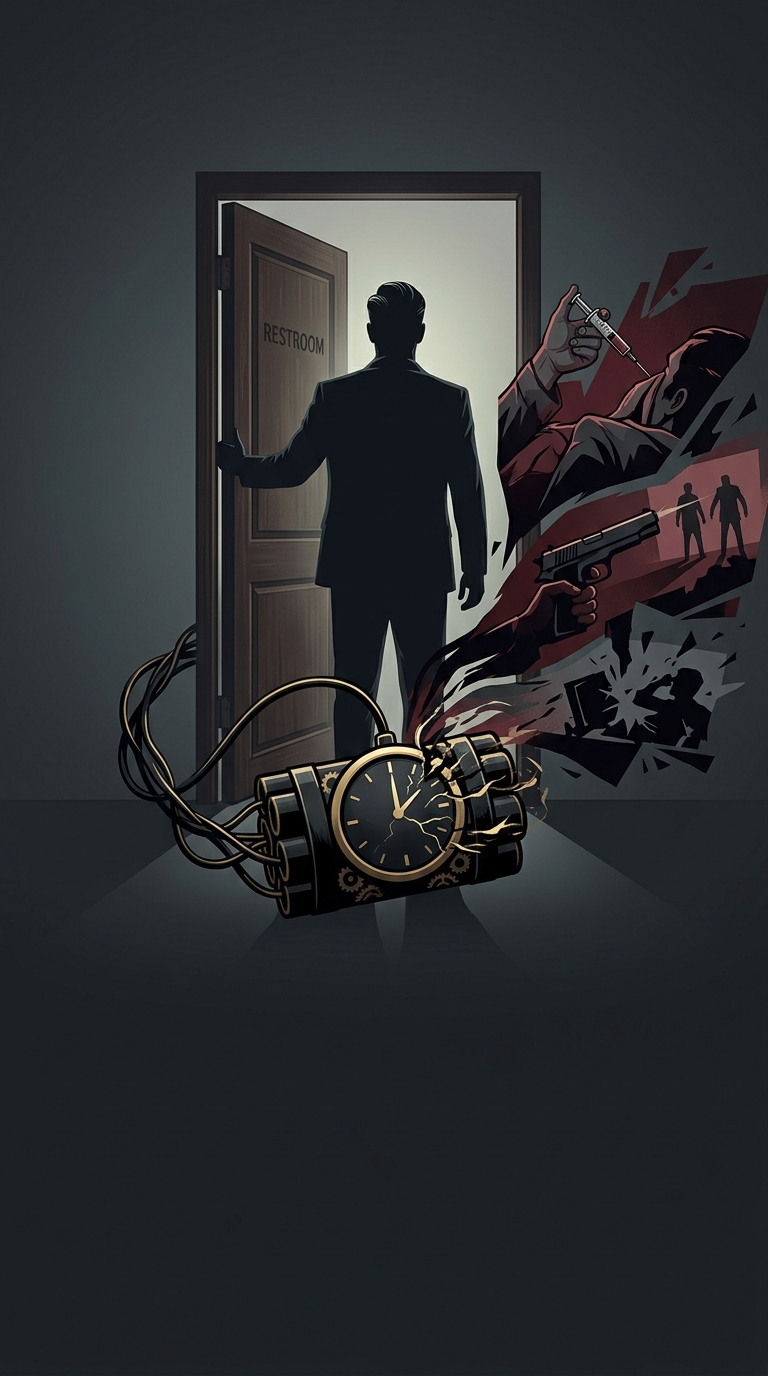
At the apartment he shares with drug dealer Lance, Vincent takes heroin in the bathroom. When he returns, Mia Wallace has mistaken his heroin for cocaine, overdosed, and needs an emergency injection. The bathroom break does not cause the crisis, but it leaves Vincent absent at the moment it begins.
Later, while Vincent is in the restroom at a diner, Pumpkin and Honey Bunny launch their robbery. He comes back into a room held at gunpoint, with his own gun still in the bathroom. And at Butch’s apartment, Vincent is on the toilet when Butch returns unexpectedly and finds him there. This time, Vincent does not get another chance to step out.
Why the pattern works
The joke depends on dramatic irony: viewers recognize a pattern before Vincent does. A bathroom is usually private and mundane, but here it becomes a blind spot in a story where danger can erupt in the next room—or arrive while someone is away. The film’s out-of-order structure makes the pattern feel like a recurring rule even as the incidents differ in cause and consequence.
It is safer to describe this as a pattern the film invites viewers to notice than to claim a documented intention behind every instance. Either way, the payoff is concrete: the one time Vincent cannot simply come back from the bathroom, he is sitting on the toilet when Butch walks in.