Why some revolutionaries wanted more than atheism
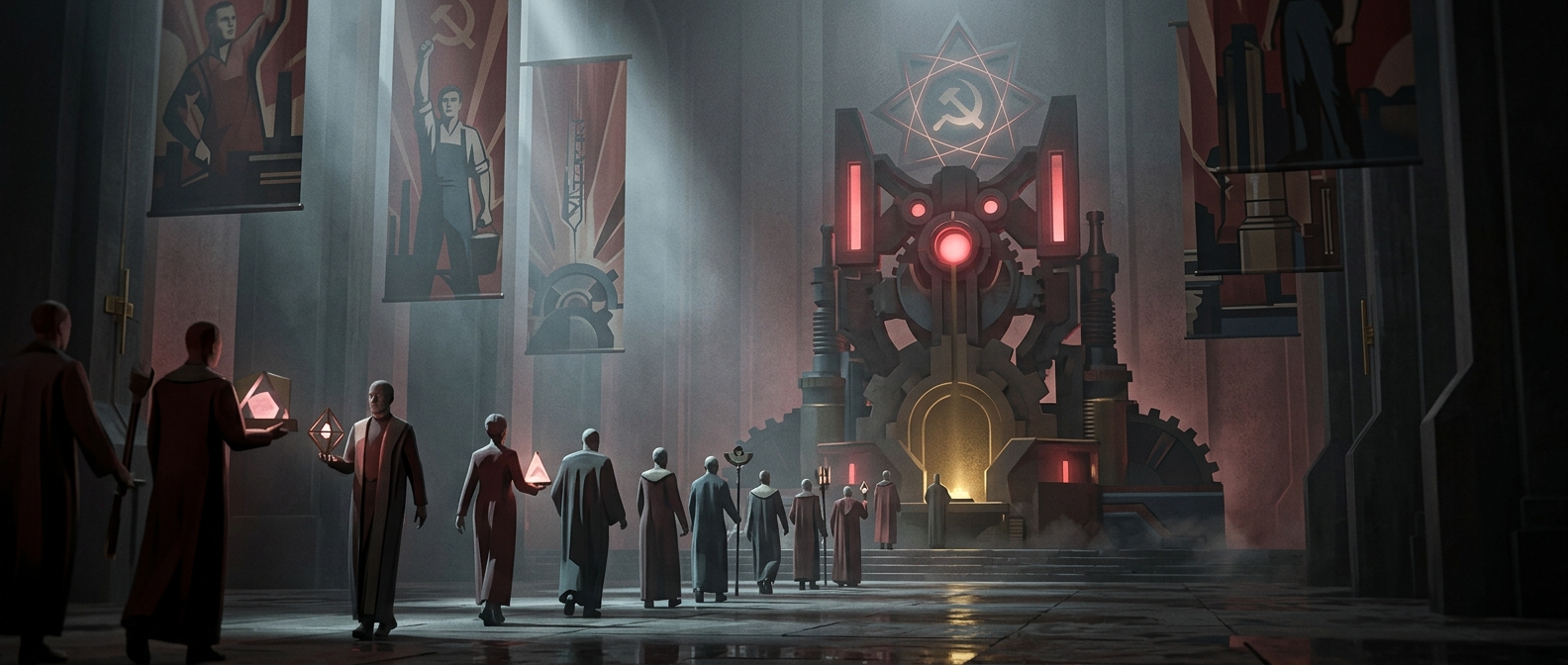
For a number of Russian Marxist thinkers, rejecting God did not answer a practical question: what could give people the shared purpose, emotional intensity, and sense of belonging that religion had long provided? They imagined that communism might do more than explain society or reorganize its economy. It could become a collective faith, with humanity—and its future—taking the place of a supernatural deity. This idea became known as God-building.
Turning collective effort into an object of devotion
The proposal was not simply to tell workers that industrialization was important. Its appeal lay in treating the work of building socialism as a meaningful common undertaking: individuals could see themselves as part of a vast human project whose achievements belonged to everyone. That framing could make hardship and sacrifice feel connected to a larger purpose, much as religious communities draw meaning from shared beliefs and practices.
But the analogy also exposed a tension. A movement founded on material explanations and opposition to religion risked recreating religious authority and rituals under a new name. Many Marxists rejected God-building for that reason; Lenin, in particular, opposed attempts to reconcile Marxism with religious ideas.
A vision, not a replacement religion
God-building remained a contested intellectual current, not a successful mass conversion. Its importance is what it reveals about the revolutionaries’ ambitions: they wanted to reshape not only who owned factories, but also what people felt bound to and what they considered worth living for. The striking twist is that some atheists saw religious fervor not merely as an obstacle to socialism, but as a powerful human force they hoped to redirect toward collective industrial goals.