Thule’s myth and Munich’s political fringe
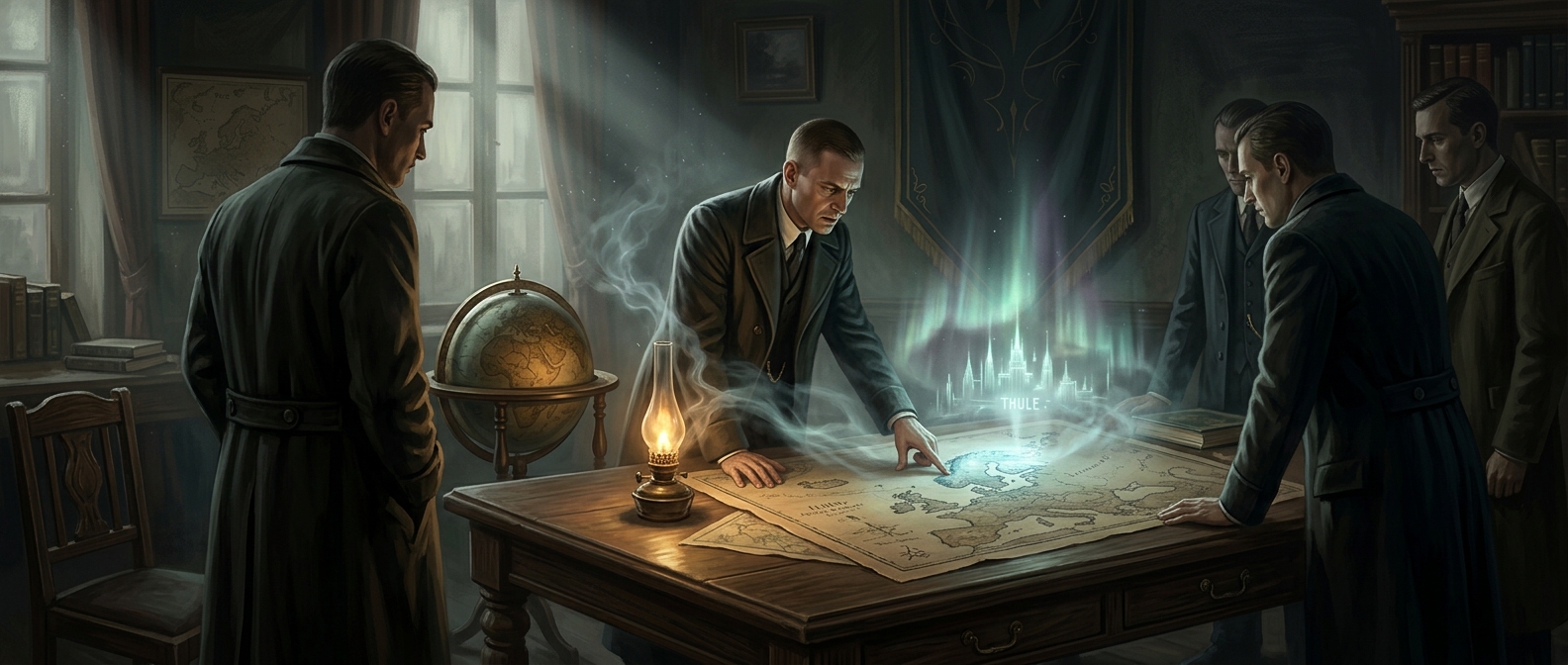
The Thule Society was a short-lived nationalist group founded in Munich in 1918. Its members mixed German nationalism and antisemitism with occult interests. The society took its name from Thule, a legendary far-northern land described in ancient writing and later imagined by some writers as a vanished homeland of an “Aryan” people. That supposed ancestry was a racial myth, not an established historical finding.
The idea mattered because it dressed political claims in the aura of ancient destiny. To Thule adherents, the myth could suggest that Germans belonged to a superior, embattled people. Their occult beliefs were part of a wider nationalist subculture, not a doctrine shared by all Germans or even by every early Nazi.
From a society to a political party
Thule members helped create the German Workers’ Party (DAP), the small Munich organization that Adolf Hitler joined in 1919. The society offered connections and support in the city’s far-right milieu; the party later became the National Socialist German Workers’ Party, or Nazi Party. Hitler rose within it and reshaped it into a mass political movement.
That link is real, but it was not a simple handover from occult club to Nazi regime. The Thule Society and the Nazi Party were separate organizations, and Hitler was not a Thule Society member. The society’s importance lies in the network it helped foster at the Nazi movement’s beginnings—not in a magical plan that dictated what came next. Its strange lost-continent myth shows how fringe fantasies could mingle with political organizing, while the party’s subsequent power came through modern propaganda, recruitment, and force.