How a submerged bulge changes the water ahead
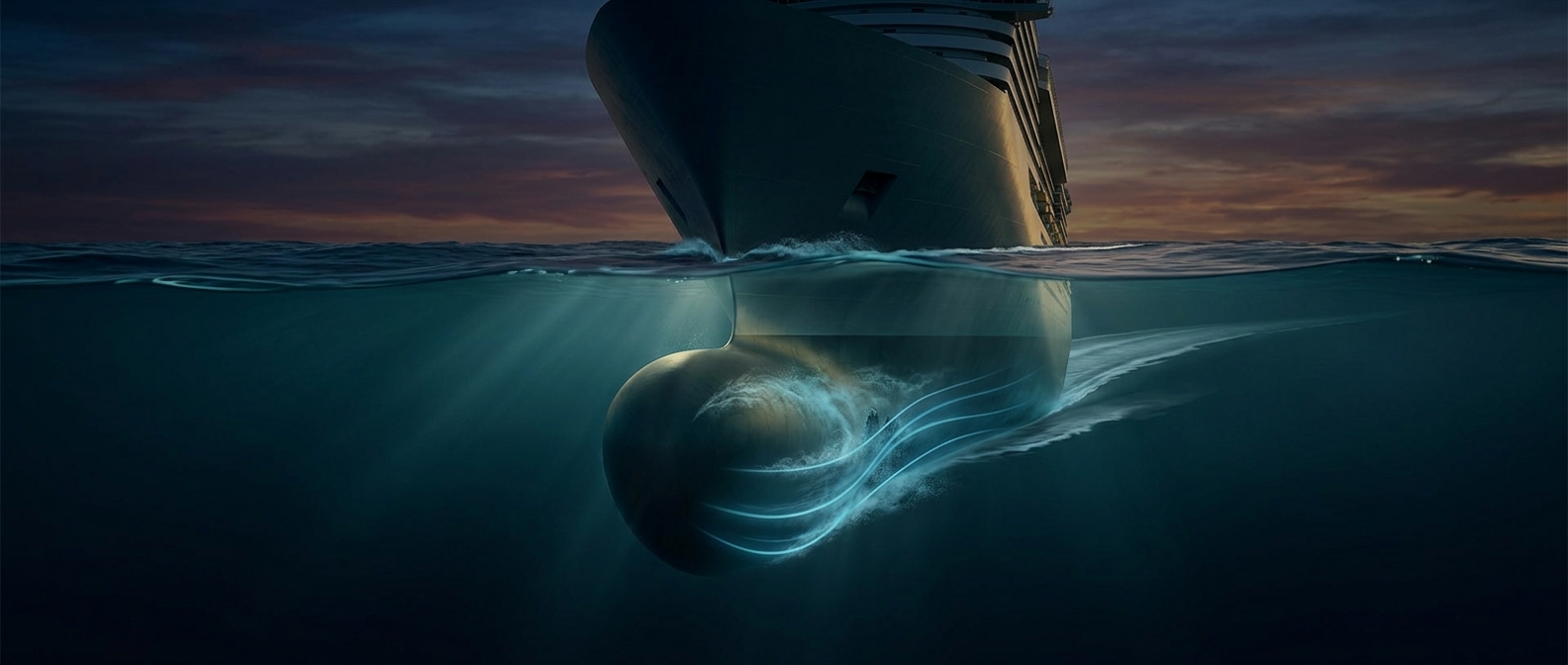
A ship’s hull pushes water aside as it moves, building waves along its sides and at the bow. Those waves carry away energy; making them costs the ship power. On many large vessels, a bulbous bow—a rounded extension beneath the waterline—reshapes the flow before it reaches the main hull.
As the bulb moves through the water, it creates its own wave pattern. Designers position and size it so that, at the ship’s intended cruising speed, parts of that pattern meet the hull’s bow wave out of step. The wave crests and troughs then partly cancel, much as overlapping ripples can flatten one another. The bulb does not eliminate waves; it reduces some of the wave-making that would otherwise demand extra power.
A benefit tied to speed and loading
The effect depends on the ship’s size, shape, speed, and how deeply it sits in the water. A bulb that works well at a steady ocean-cruising speed may be less helpful when the vessel moves slowly, accelerates, or rides unusually high or low. Its shape is therefore designed for the ship’s expected operating conditions, rather than as a universal add-on.
When the match is right, the hull encounters less resistance and needs less propulsion power to maintain speed. That can reduce fuel use over long voyages. The tradeoff is that the bulb adds structure and must be incorporated into the bow’s design; its value comes from fitting the whole ship, not from the rounded shape alone.