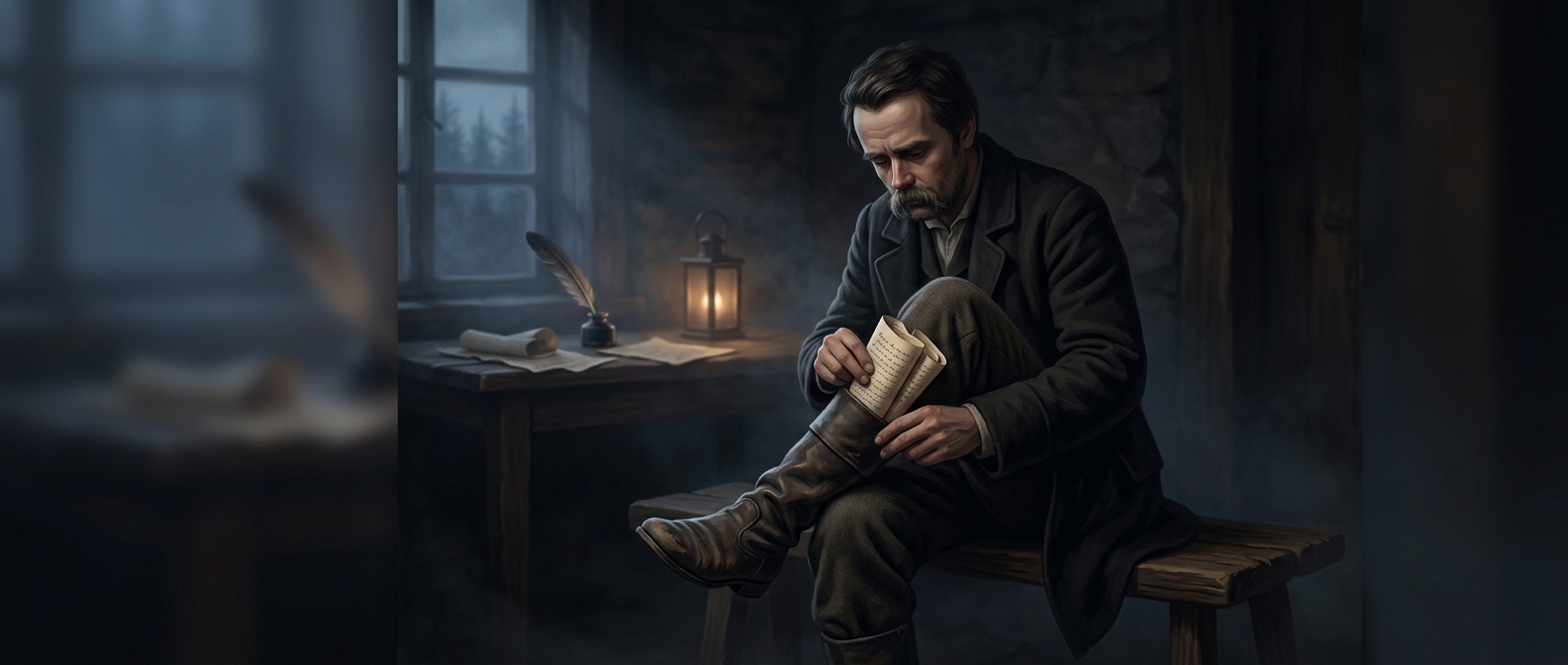
A hiding place for words he was forbidden to write
After his arrest in 1847, the Ukrainian poet and artist Taras Shevchenko was sent into military service in the Russian Empire’s Orenburg region. The punishment came with an especially severe restriction: he was forbidden to write or draw. Authorities also kept him under surveillance, making ordinary paper and notebooks risky places to store new work.
Shevchenko continued composing in secret. His leather boots offered an unlikely place to conceal personal writings: they traveled with him, but were less conspicuous than a notebook that might be found during a search. The hiding place did not remove the danger; it gave his words a chance to remain out of sight.
Concealment helped preserve a forbidden body of work
The years of military exile were a period of continued literary creation, despite the ban. Keeping poems hidden mattered because discovery could mean their confiscation and further punishment, while losing them would erase work he could not safely publish or keep openly.
The boots were more than a clever hiding spot. They show the practical problem behind Shevchenko’s secret writing: under surveillance, preserving a poem could require treating an everyday object as a private archive.