Why temperature changes a pour’s sound
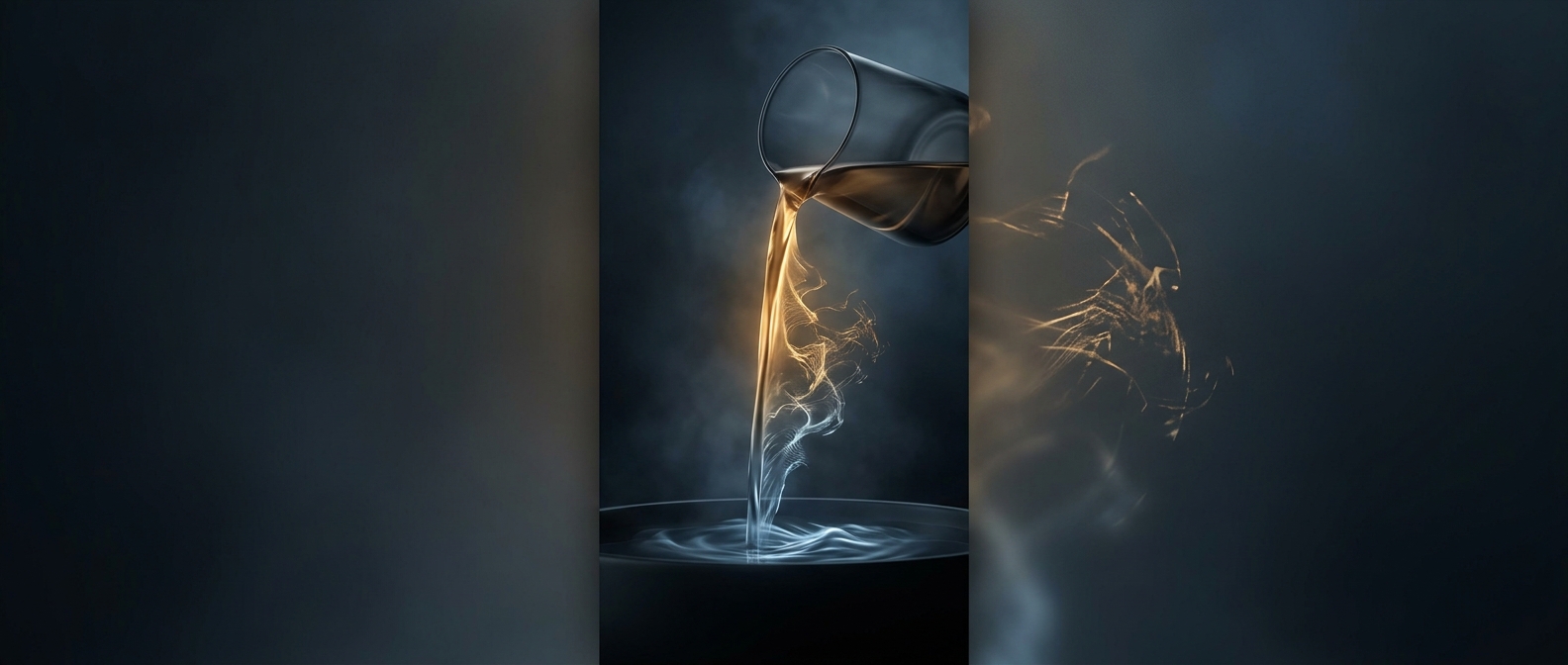
Water molecules move faster as water warms. That makes warm water less viscous: it offers less resistance to flowing than cold water does. As a result, it can stretch into thinner streams and break into droplets differently when it hits a cup or sink.
Those changes shape the sound. A pour is not one steady noise but a shifting mix of splashes, bubbles, and vibrations from the stream and the surface it strikes. Temperature can alter that pattern, giving hot and cold water subtly different acoustic signatures.
Your ears are detecting a pattern, not a temperature
The difference is easy to miss because the sound also depends on how high and how fast the water is poured, the shape of the container, and how much water is already inside it. A thin stream landing in an empty metal sink may sound unlike a broad pour into a full glass, even at the same temperature.
With those other factors held roughly constant, people may be able to hear which pour is warmer. But the clue is not precise enough to measure temperature: a familiar sound can suggest hot or cold, but it cannot tell you how hot the water is.