Why an Explosion Needs Something to Shake
An explosion can release energy as light, heat, and rapidly expanding matter. But the familiar boom is a pressure wave: one patch of material is compressed, then pushes on the next, passing the disturbance along. In air, that chain of tiny pushes reaches an eardrum and makes it vibrate. In a vacuum, there are too few particles to carry the chain, so the blast has no audible report.
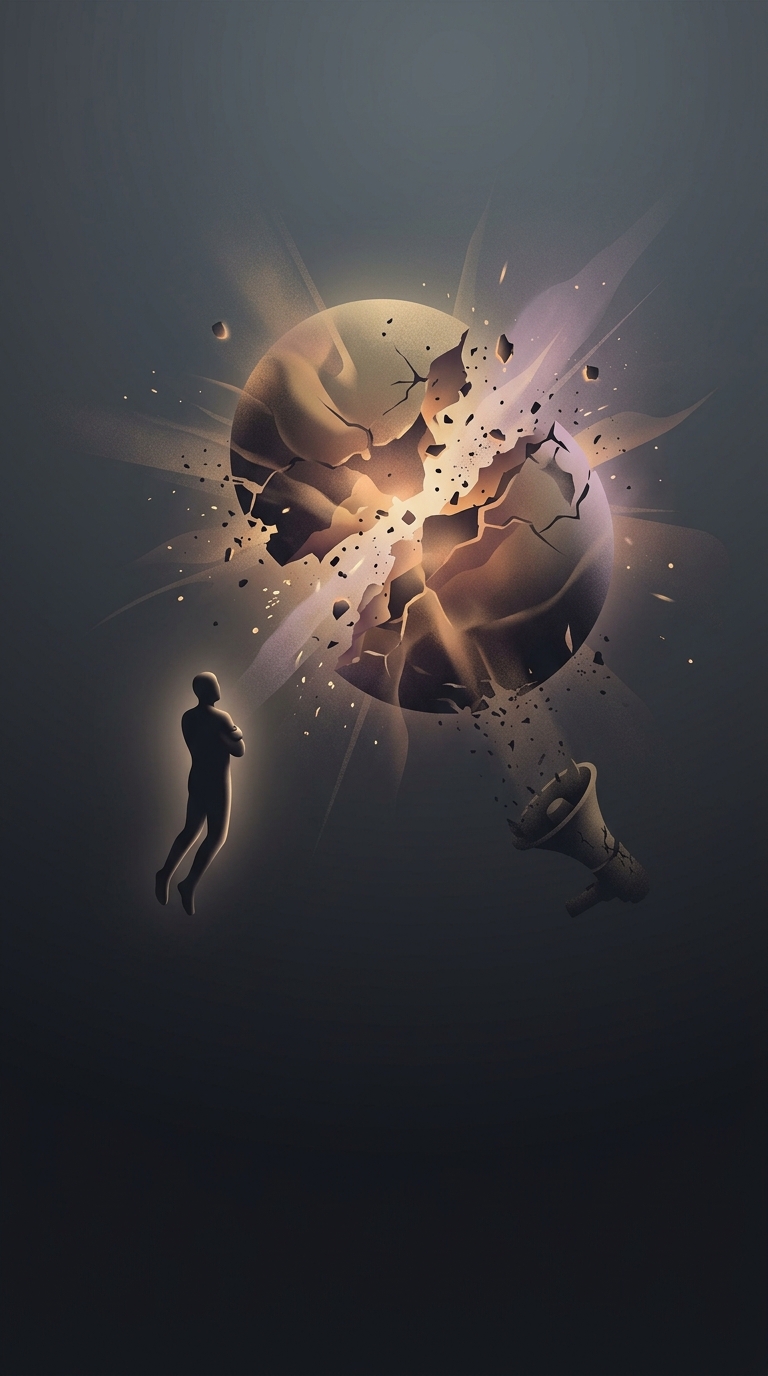
That does not mean an explosion in space would be invisible or harmless. It could still produce a brilliant flash, radiation, and debris moving at high speed. Those effects can damage a spacecraft even though no sound reaches someone outside it. Inside a ship, an impact might be heard if it makes the hull vibrate; the metal then carries those vibrations to the air and ears within.
What “Sound” in Space Recordings Means
Space is not perfectly empty. Thin gas and plasma—gas whose particles carry electric charge—exist between stars and galaxies. They can support pressure disturbances, but the material is so sparse that many such waves are extraordinarily low in frequency, far below the range of human hearing. They are not the crisp bangs or rising whines heard in films.
When scientists present these disturbances as audio, they can shift their frequencies into the audible range or translate other measurements into sound. That makes patterns easier to perceive, but it is a sonification of data, not a microphone recording of space.
Why Films Give Space a Soundtrack
A silent battle would be harder for an audience to follow: weapons, impacts, and moving ships would provide no audible cues. Filmmakers add sound to communicate action and scale, not to reproduce how pressure waves travel through a vacuum. The real contrast is striking: a spacecraft could flash, break apart, and scatter debris while an observer drifting nearby heard none of it.