How bass can disturb a flame
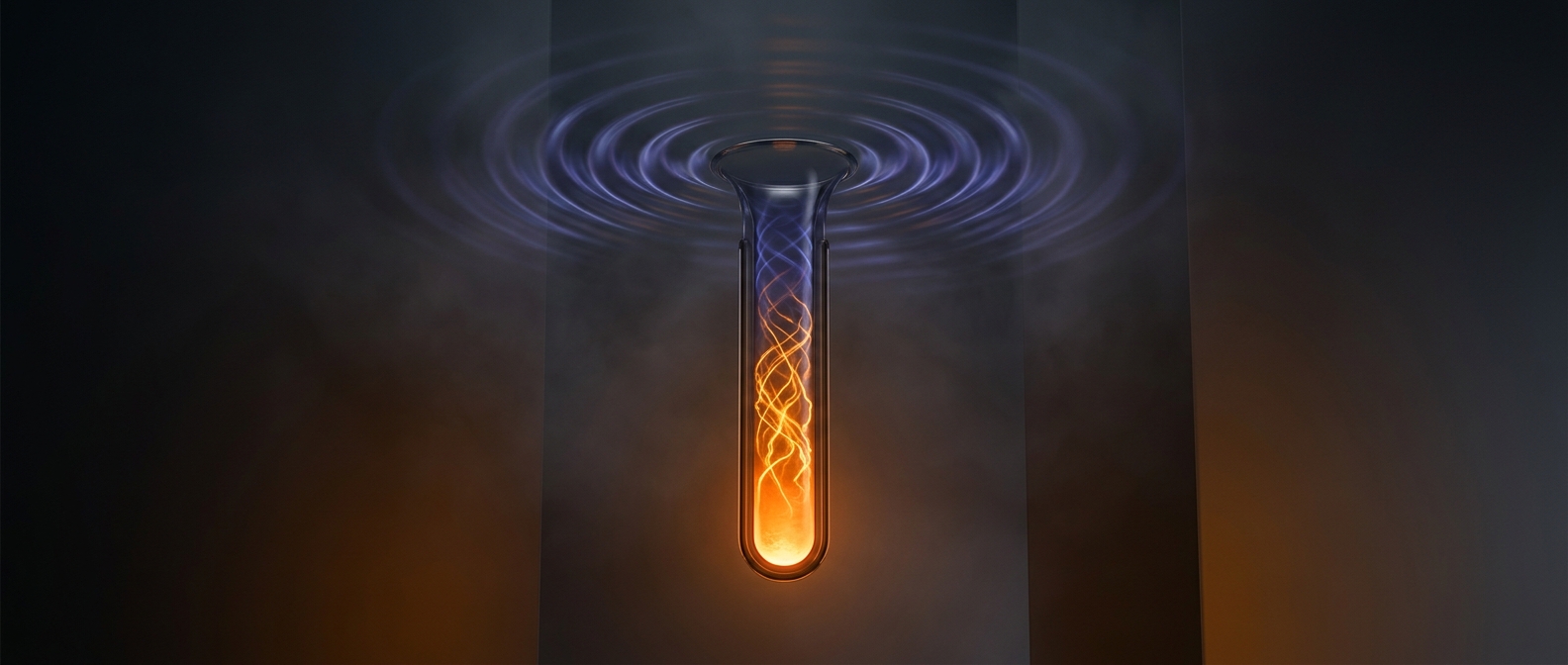
Sound is a pressure wave: it makes air alternately compress and spread out. At low frequencies, those changes can move relatively large volumes of air back and forth. If the wave is strong enough near a small flame, that motion can bend and shake the flame, disrupting the thin region where fuel vapor and oxygen meet and combustion continues.
A flame is not a solid object that sound simply knocks over. It persists because heat keeps vaporizing fuel and the surrounding air supplies oxygen. Vigorous airflow can stretch the flame away from its fuel source or carry heat away quickly enough that combustion can no longer sustain itself. In that sense, sound works by creating air motion—not by the bass note chemically canceling fire.
Why it works only in a narrow setup
The effect depends on the sound’s intensity and frequency, the distance from the speaker, and the flame’s size and shape. A small, exposed flame is easier to disrupt than a larger fire, and a room’s walls and objects can alter how sound travels. The sound must also produce enough movement at the flame; ordinary music may be loud to a person without creating the right conditions there.
That makes acoustic extinguishing a specialized demonstration, not a general fire-control method. It does not reliably remove hot fuel, stop a fire from spreading, or replace an extinguisher suited to the burning material. Even if a small flame goes out, the fuel may still be hot enough to ignite again. The striking part is that a sound wave can put out a flame only by doing practical work on the air around it.