The energy bill for becoming vapor
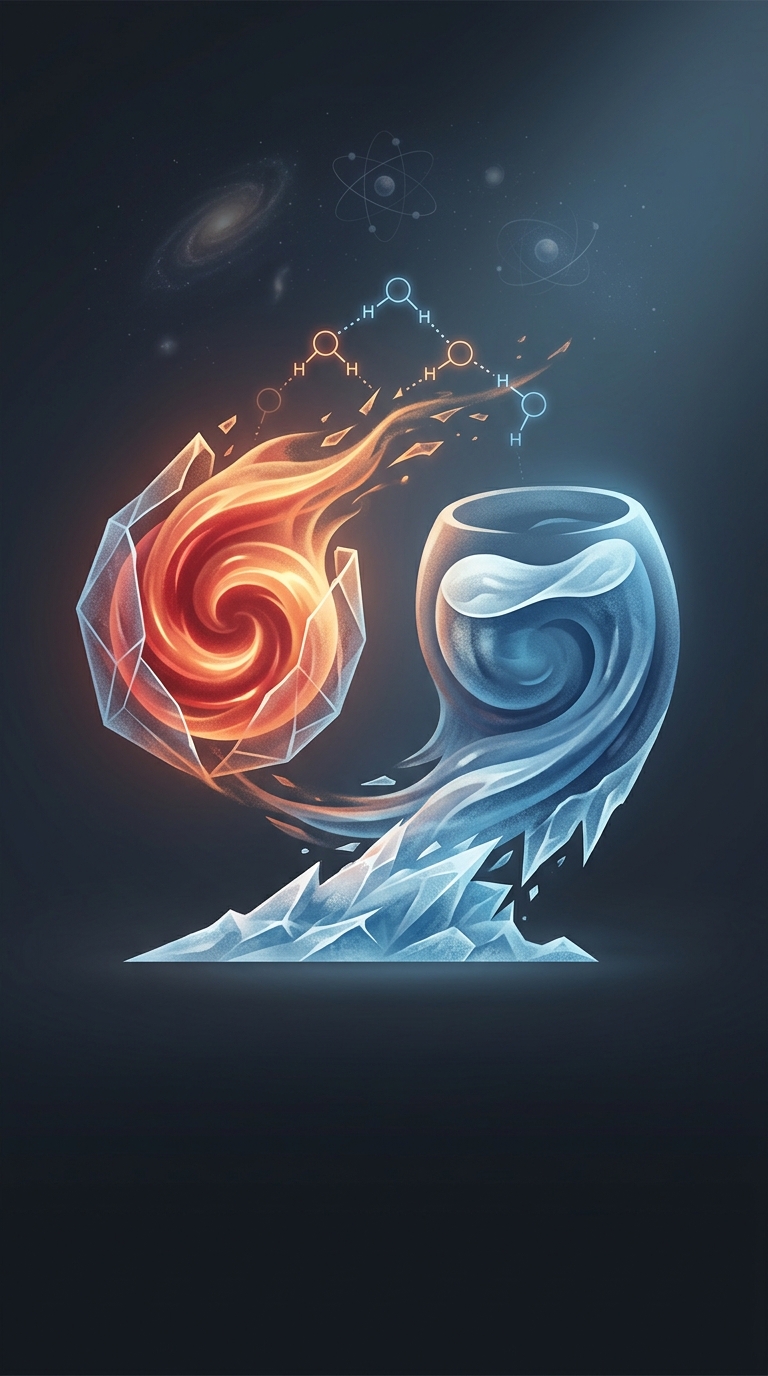
A liquid does not need to be heated to its boiling point for molecules to escape. Even at ordinary temperatures, some molecules at its surface have enough energy to break away into the air. Turning liquid into vapor takes energy, and those escaping molecules carry it with them.
That energy comes partly from the liquid and, when it rests on something, from the nearby surface. As energy leaves, the remaining liquid and surface have less thermal energy, so their temperature falls. The energy required for this change of state is called latent heat: heat used to turn liquid into vapor rather than to raise its temperature.
Why sweat cools only when it can evaporate
Sweat cools skin when it evaporates, not simply because it is wet. The skin supplies some of the energy needed to turn the sweat into vapor, and losing that energy cools the skin. If sweat instead drips away or is wiped off while still liquid, much of that cooling opportunity is lost.
The surrounding air matters. Humid air already contains substantial water vapor, so sweat evaporates more slowly; moving air can carry vapor away from the skin and make room for more evaporation. That is why the same sweat can feel more effective in dry, breezy conditions than in still, humid air.
The useful detail is that a wet surface is not automatically a cooling surface: cooling depends on liquid actually escaping into the air, taking energy along with it.