Why a Boiling Pot Stops Getting Hotter
Before water boils, added heat makes its molecules move faster, which raises the liquid’s temperature. At the boiling point, however, bubbles of water vapor can form throughout the liquid and rise to the surface. Further heating mostly supplies the energy needed for more molecules to break free from the liquid and become vapor.
That energy is called latent heat of vaporization: heat absorbed during a change of state without a corresponding rise in temperature. The water and the steam forming from it remain near the boiling temperature, provided the surrounding pressure stays steady.
Where the Energy Goes
Molecules in liquid water attract one another. To escape into the gas phase, they must overcome those attractions. Heat supplies that energy, so while boiling continues, energy is being spent changing liquid into steam rather than speeding up the molecules that remain in the pot.
A burner can still make the water boil away faster. It increases the rate at which energy arrives, allowing more water to turn into vapor each second. But it does not substantially raise the temperature of the boiling liquid. Once the liquid is gone, the same heat can make the pot and any remaining vapor much hotter.
Pressure Sets the Boiling Point
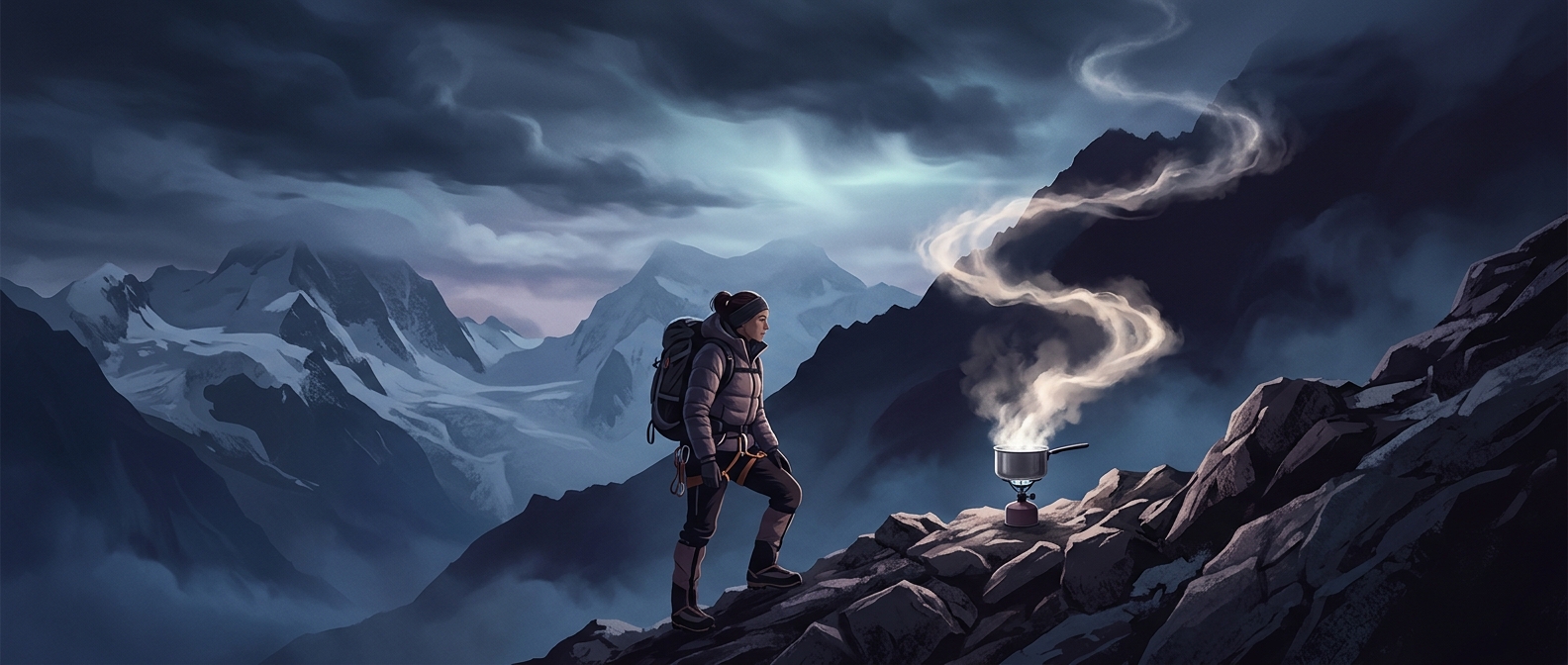
Boiling begins when water’s vapor pressure—the pressure its molecules exert as they escape—matches the pressure pushing down on the liquid. At higher elevations, the surrounding air pressure is lower, so that match happens at a lower temperature. Water can therefore boil vigorously while still being cooler than it would be at sea level.
This is why a vigorously bubbling pot is not always as hot as expected: boiling signals a change of state, not a single temperature that applies everywhere. Higher-elevation cooking can take longer because the boiling water transfers heat to food at a lower temperature.