How a Typewriter Put Ink on Paper
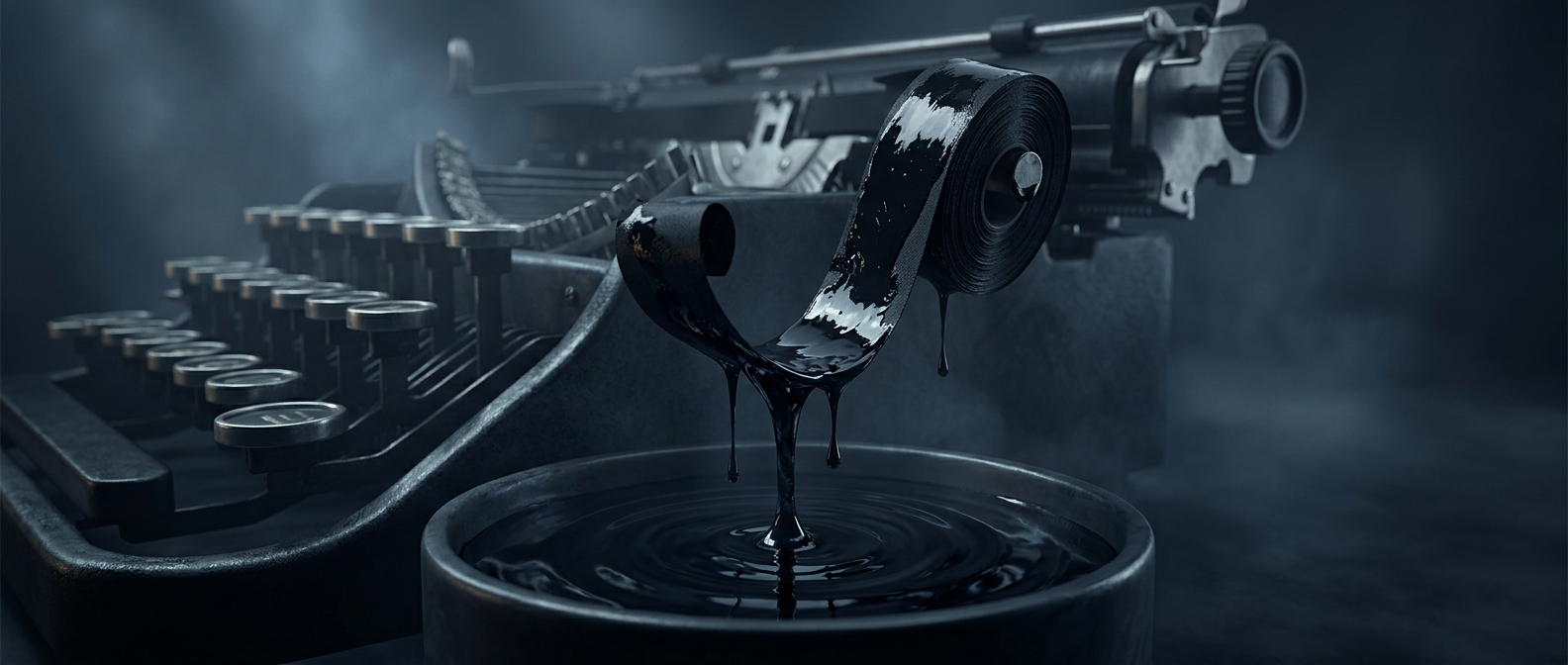
A typewriter did not carry a separate ink pad for each key. Instead, a strip of inked fabric ran between the paper and the machine’s metal type. When a typist pressed a key, a typebar swung forward and struck the ribbon against the paper. The pressure transferred ink in the shape of the letter, much like pressing a stamp onto a surface.
The ribbon had to be routed through guides so it stayed in the narrow space between type and paper. As typing continued, the machine advanced the fabric, bringing a fresh section into position. That steady feed mattered: repeatedly striking one patch would make the impressions fade as its ink was used up.
The Mess Was Part of the Mechanism
The ink had to remain available on the fabric so each impact could leave a mark. Handling and threading the ribbon therefore meant touching material coated with ink; fingers could pick it up before the machine ever produced a page. The ribbon was a working consumable, not a sealed cartridge, and replacing or repositioning it involved direct contact with the part that carried the ink.
That arrangement made typing possible without dipping each letter into ink, but it also tied a clean page to a messy strip of cloth. The familiar black marks on a typist’s fingertips were, in effect, evidence that the machine’s ink supply had been threaded by hand.