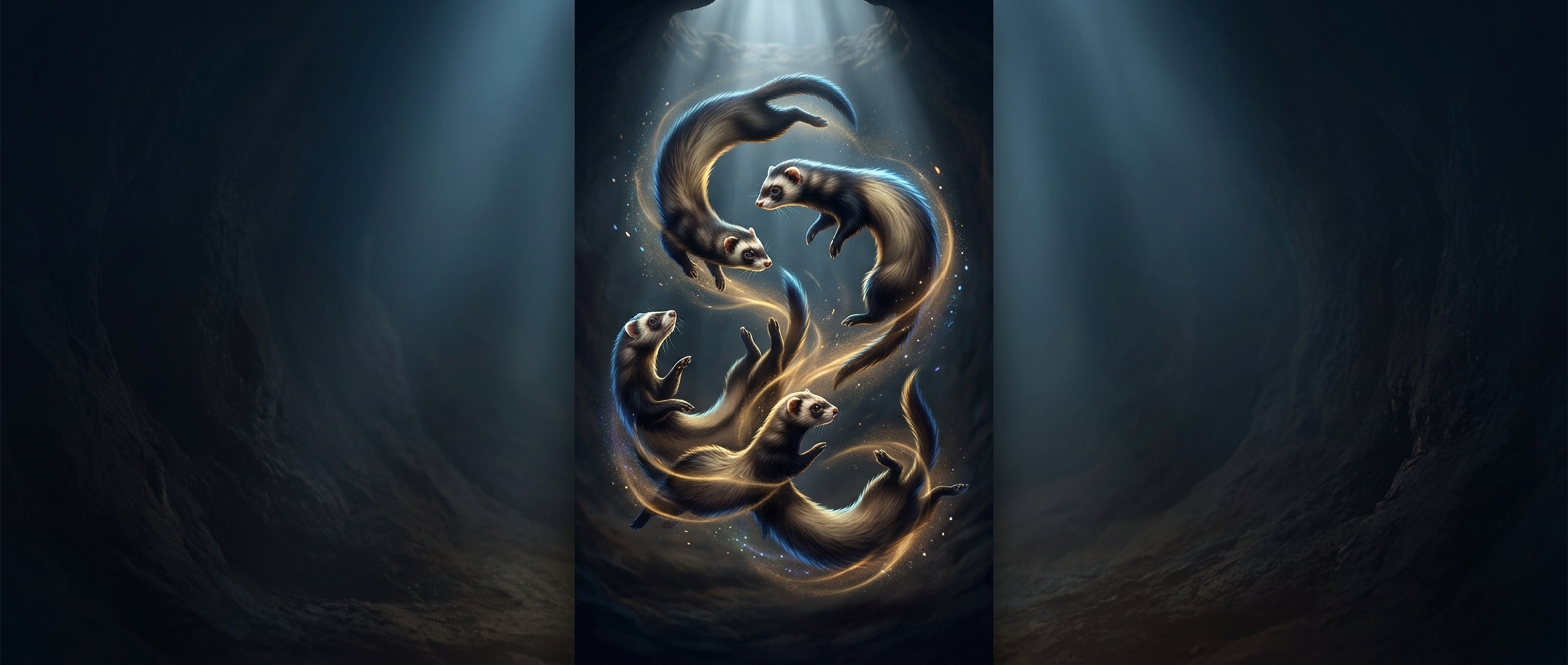
Why a Ferret’s Play Can Look Like a Fight
The “weasel war dance” is a burst of high-energy movement: a ferret may arch or twist its body, hop sideways, toss its head, and dart about. The name describes the spectacle, not a combat technique. During play, ferrets can exaggerate movements and make sudden, clumsy turns that would be startling if you expected a warning display.
The dance often appears when a ferret is excited and trying to keep play going. It may happen around another ferret, a person, or simply in an open patch of floor. The invitation can be indirect: instead of waiting for a playmate, the ferret launches into the performance nearby.
Read the Whole Interaction
A single hop or tumble does not tell you exactly what a ferret intends. The surrounding behavior matters. Loose, bouncy movement and repeated attempts to re-engage are more consistent with play than with a serious threat. A ferret that is trying to create distance, holding itself tensely, or repeatedly resisting contact is giving a different kind of message; it is sensible to pause and let it choose whether to approach.
That context also explains why the dance can end in a collision. Rapid turns and leaps are part of the exuberance, and the ferret may bump into toys, furniture, or a nearby person while playing. The apparent chaos is often the point: the dance is an invitation to join the action, not a miniature battle plan.