A light beam checks the pickup tray
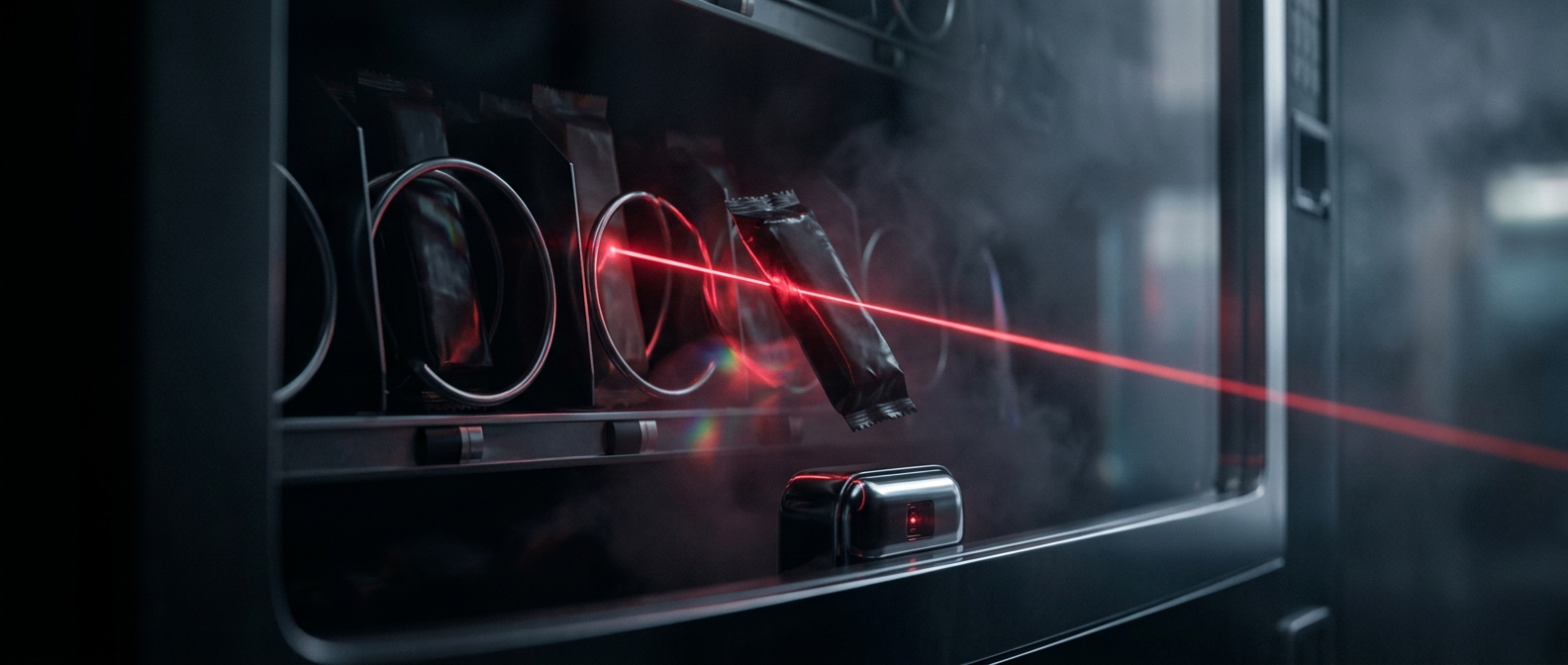
A vending machine can’t assume a snack was delivered just because its motor ran. In machines with a drop sensor, a small light source aims a beam across the pickup area at a receiver on the other side. When a product falls through the beam, it briefly blocks the light. The machine’s controller treats that interruption as evidence that an item reached the tray.
The sensor is a simple form of a break beam: it detects an object crossing a path, not the object’s identity. It does not need to recognize a bag of chips or a candy bar; it only needs to register that something passed through the expected spot.
What happens when nothing crosses
A common vending mechanism uses a rotating coil, or auger, to push one product forward. If the machine runs the coil but the beam stays clear, its controller may try another turn. The extra movement is a response to missing delivery evidence—not proof that the first turn failed in every case. A snack could have shifted or become stuck before reaching the sensor.
This check helps distinguish “the motor operated” from “the product appears to have fallen.” It gives the machine a chance to respond when a package catches, while keeping the process automatic. The decisive moment is not the coil’s spin; it is the brief interruption of light as the snack drops past the beam.