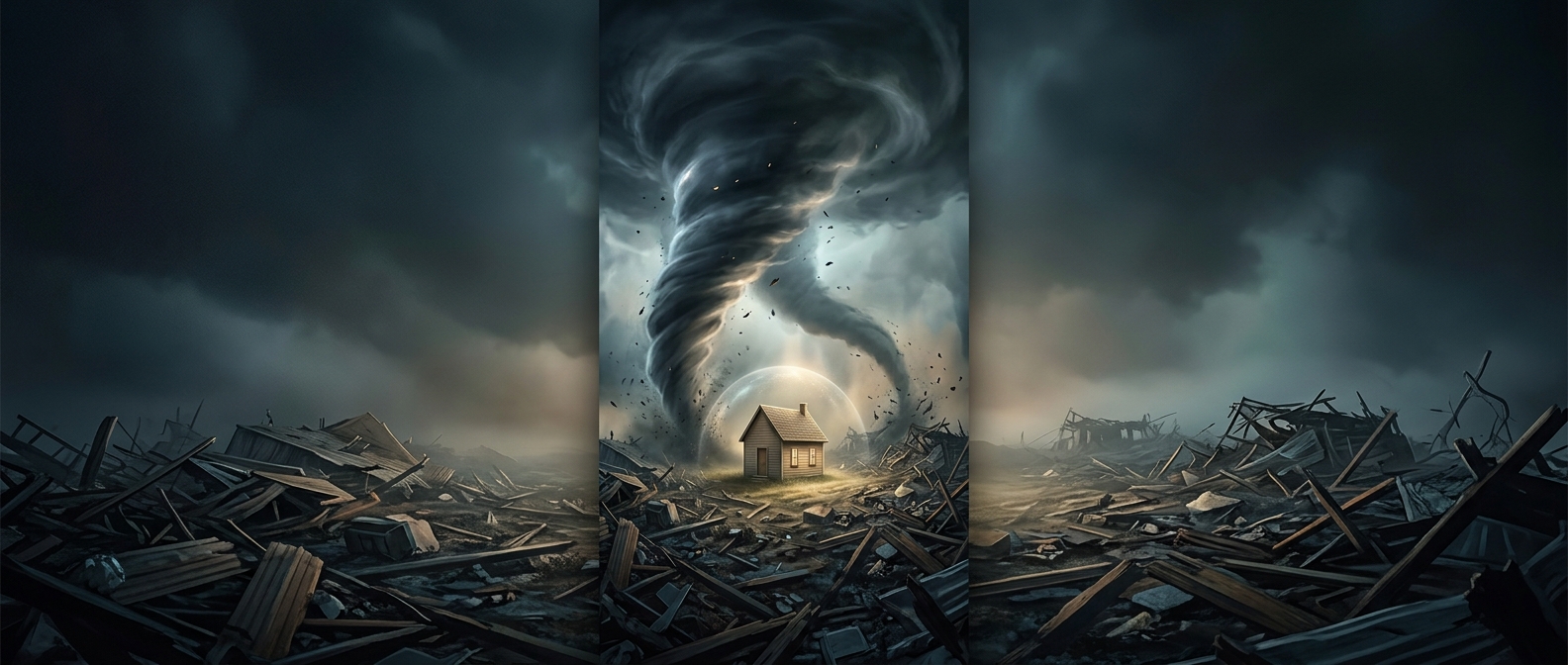
Why a tornado can miss a nearby home
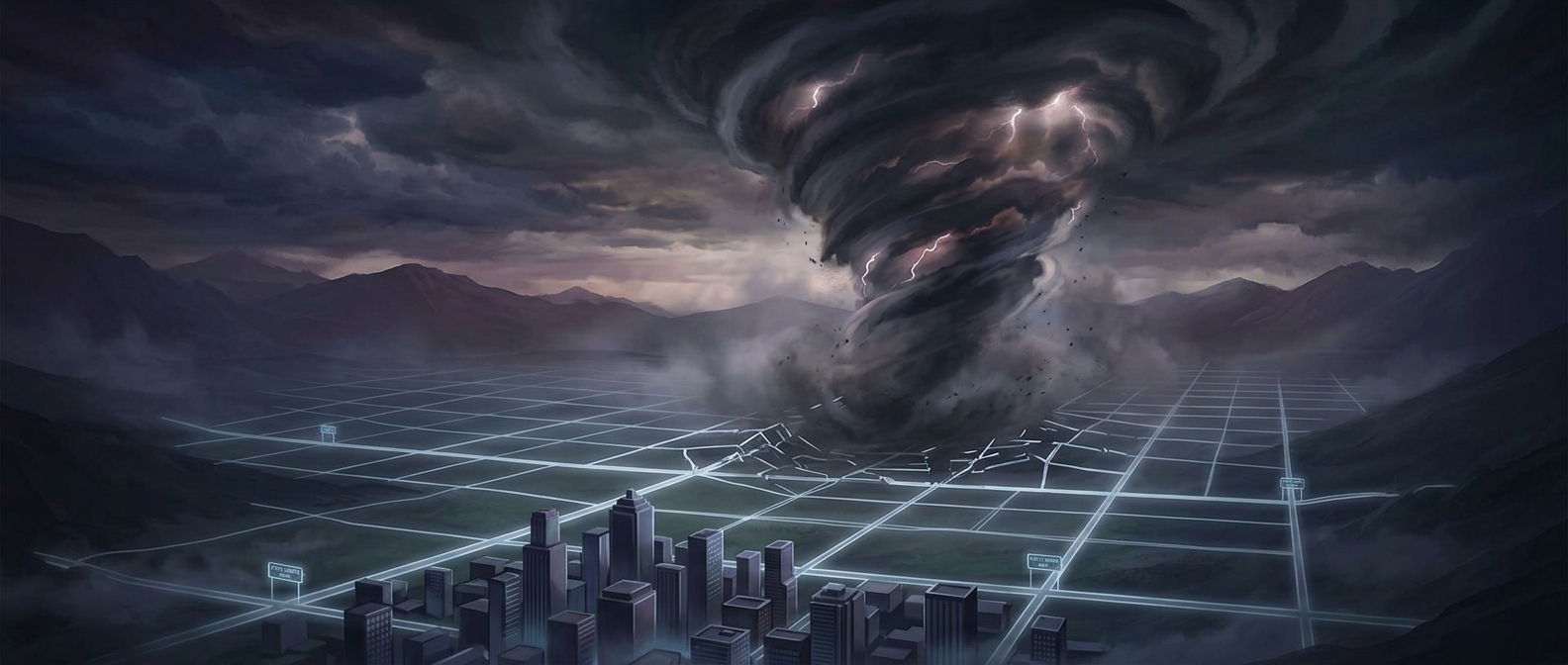
A tornado is not a solid funnel sweeping across the ground. It is a rotating column of air whose strongest winds and debris are concentrated unevenly. As the circulation moves, its direction and strength can shift, and the most damaging winds may occupy only part of the visible funnel. A road, field, or building just beyond that intense zone can experience a very different outcome from one in its path.
The mark left behind is also shaped by what the winds encounter. A house, a stand of trees, and an open field respond differently, so damage can look patchy even across a single neighborhood. Debris carried by the wind can cause additional damage beyond the area where structures first fail.
A narrow track is not a predictable one
A tornado’s route depends on the storm’s changing airflow, including how the larger thunderstorm steers and feeds the rotating column. Those conditions evolve while the storm travels. A path that looks narrow on a map is therefore not a corridor whose edges can be known precisely in advance; the tornado can change course, widen, weaken, or intensify.
That uncertainty is why a nearby place escaping damage offers no reliable protection during the next storm. The next tornado may form under different conditions, or a later storm may follow another route. A map of past tracks records where tornadoes went—not a boundary around where they can go.