How radiation-tolerant fungi stand out
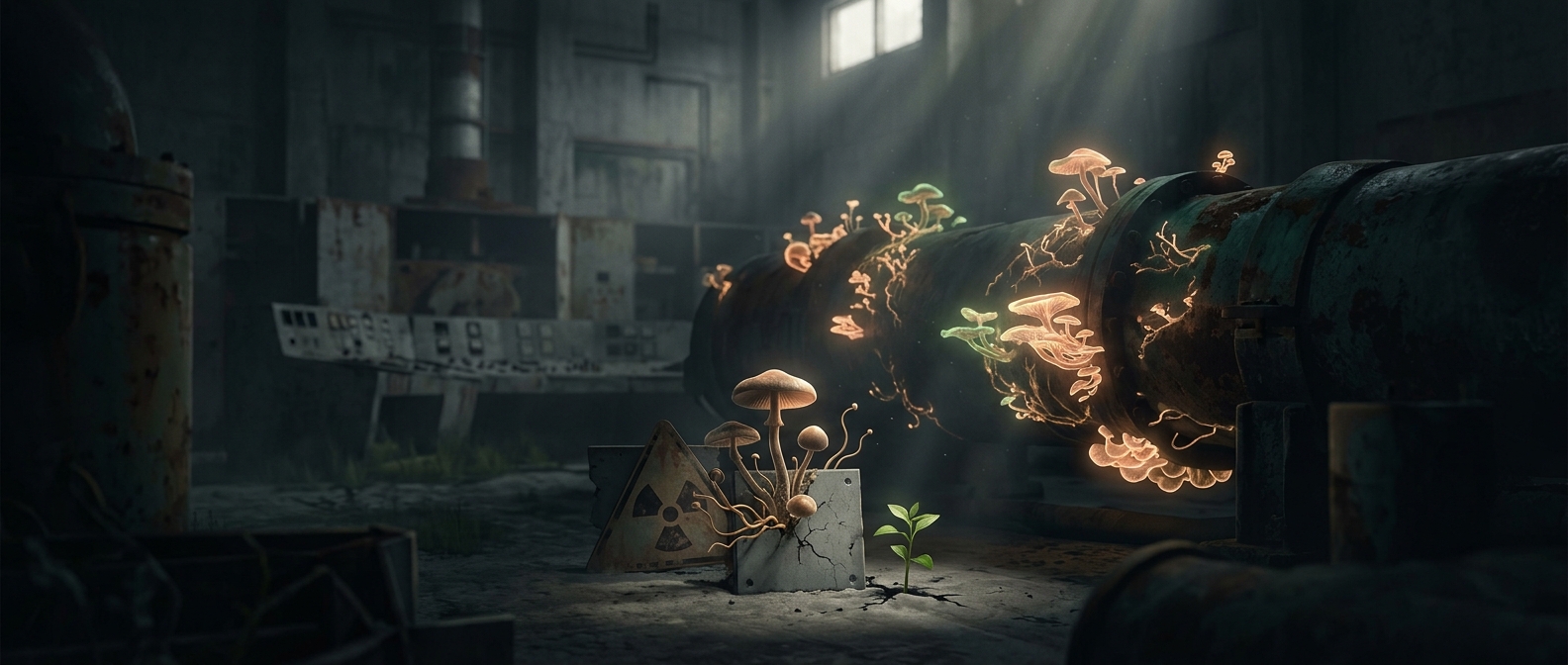
Some dark-colored fungi have been found in places with unusually high radiation, including environments affected by nuclear accidents. Their resilience is striking because ionizing radiation can damage the molecules and cell structures organisms need to survive. Melanin, the pigment that gives many of these fungi their dark color, may help protect them from that damage.
But surviving radiation and using it are different abilities. The fungi still need ordinary sources of nutrients; they are not known to live on radiation alone.
The proposed link between melanin and growth
In laboratory experiments, exposure to radiation has been associated with increased growth in some melanized fungi. That result raises a deeper question: might radiation do more than harm them? Researchers have proposed that radiation could change melanin’s electronic behavior in a way that helps the fungus’s metabolism—the network of chemical reactions that keeps it alive.
The idea is sometimes compared with photosynthesis, in which plants capture light energy. The comparison is suggestive, not proof: scientists have not established a pathway showing that these fungi capture radiation and convert it into usable energy.
Resilience is established; “feeding” is not
Melanin may help fungi tolerate radiation, and experiments suggest radiation can boost growth under some conditions. Exactly how that boost happens remains unsettled. The important distinction is between a fungus flourishing where radiation is present and a fungus running on radiation as food. The first is an observed ability; the second is still a research question.
That distinction matters because it points to what scientists need to explain next: whether radiation changes fungal growth indirectly, or whether melanin has a direct role in the organism’s energy chemistry.