Why radio belongs to the light family
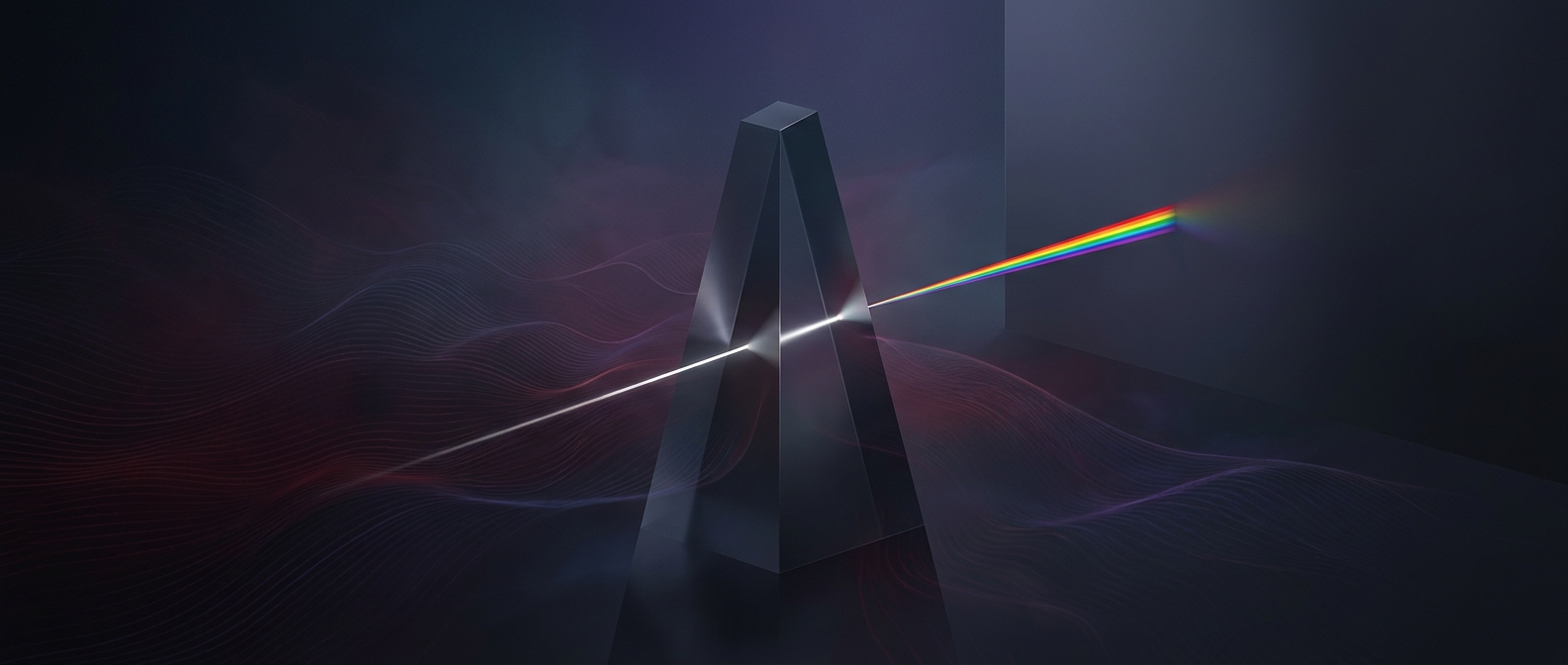
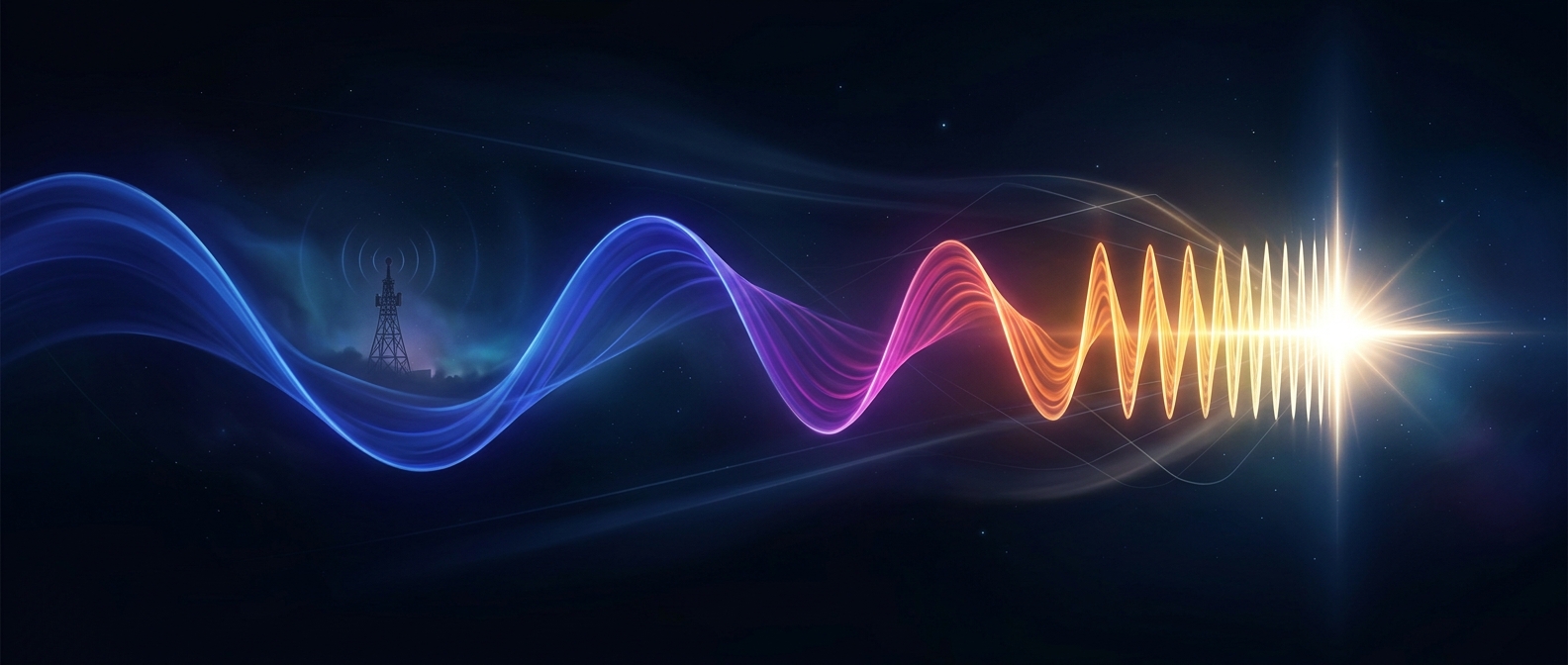
“Light” in physics means electromagnetic radiation, not only the colors our eyes can see. Radio waves, infrared, visible light, ultraviolet, X-rays, and gamma rays are all traveling patterns of electric and magnetic fields. They differ mainly in wavelength and frequency: radio waves have long wavelengths and low frequencies, while X-rays have much shorter wavelengths and higher frequencies. Visible light occupies only a small slice of this much larger range.
How a wave becomes a broadcast
A transmitter makes electromagnetic fields that vary in a carefully controlled pattern. That pattern travels outward at the speed of light. To carry sound, the transmitter encodes the audio onto a radio-frequency wave by changing a property such as its amplitude or frequency. The radio wave itself is not sound; it is a carrier of information.
At the receiving end, the antenna’s electrons respond to the passing field, producing an electrical signal that follows the broadcast’s pattern. The receiver first selects the desired frequency—much like picking one station from many overlapping signals—then extracts the encoded audio. A speaker converts that changing electrical signal into vibrations in air, which reach the ear as sound.
Why radio travels and X-rays behave differently
Long radio wavelengths can diffract, or bend around obstacles, more readily than visible light, and some radio frequencies can travel long distances or reflect from layers of the atmosphere. Higher-frequency radiation carries more energy per photon and interacts with matter differently; X-rays, for example, can pass through soft tissue more readily than visible light. The family resemblance is real, but wavelength determines how each kind of electromagnetic radiation behaves and how we can use it.