How uranium gets into fossil bone
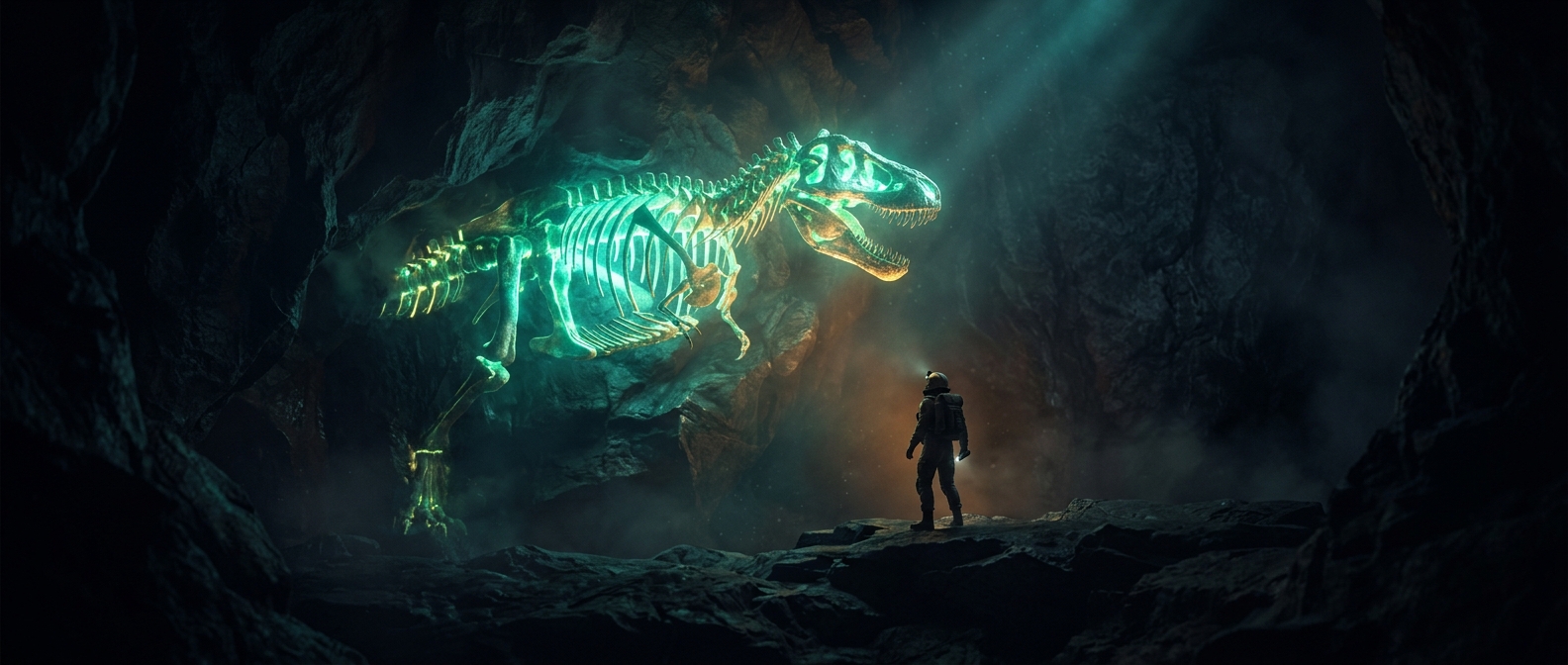
Buried bone is not a sealed container. As groundwater moves through sediment, it carries dissolved minerals into tiny pores and cracks. Uranium can attach to the bone’s mineral surfaces or become incorporated as the original bone material is gradually altered. The fossil may therefore contain uranium that arrived long after the animal died.
Radioactivity comes from decay
Uranium atoms are unstable: over time, they transform into other elements and release radiation. The amount in a fossil is usually too small to make it glow or pose an obvious hazard, but sensitive instruments can detect its radioactivity. The signal reflects the chemistry of the burial environment as well as the fossil itself.
That distinction matters when scientists use uranium to estimate age. Uranium in bone can help with dating, but it may have entered at different times or continued moving through the fossil, complicating the calculation. Researchers therefore treat the bone’s mineral history as part of the evidence—not as a simple clock that started when the dinosaur died.