How plankton became chalk
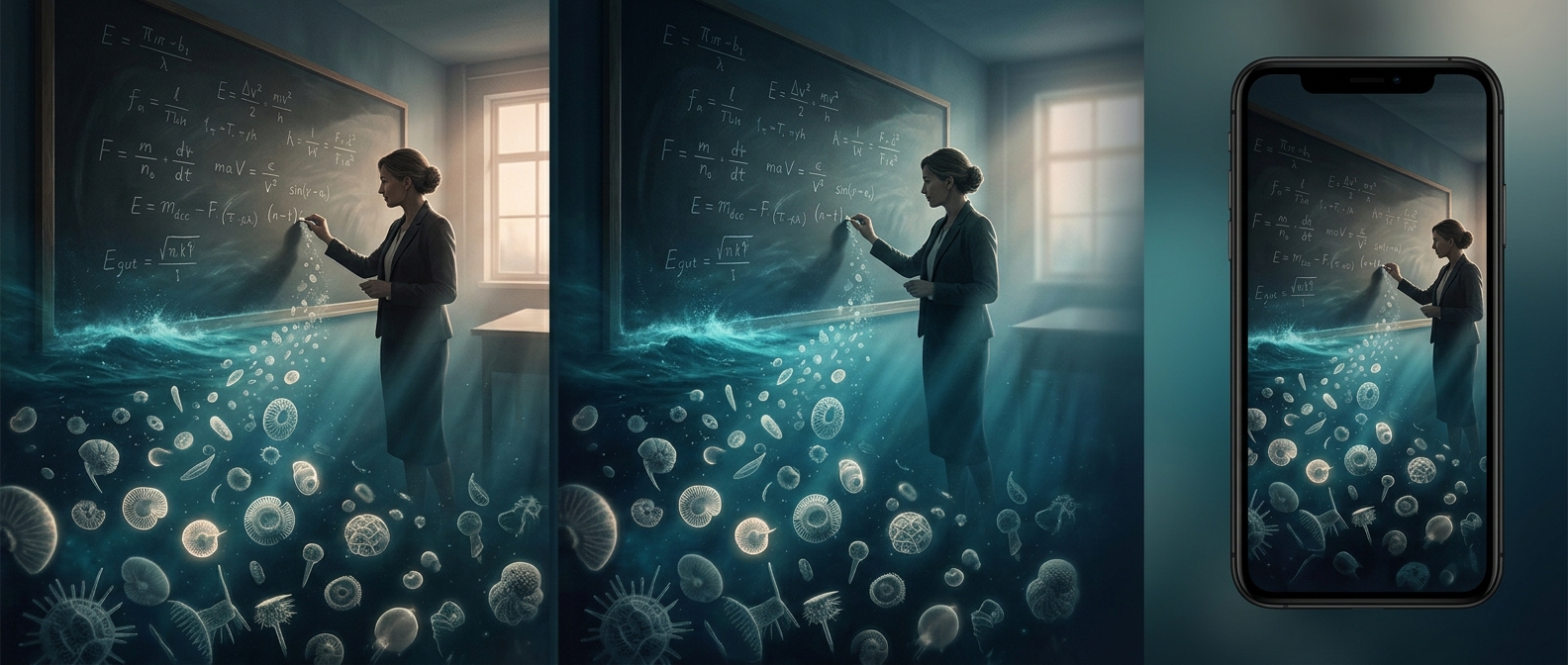
The key ingredient in much chalk is calcite, a mineral form of calcium carbonate. Many ancient marine plankton—organisms so small they drift with ocean currents—made tiny calcite plates as part of their bodies. When they died, those plates sank through the water and collected on the seabed.
From soft seabed to solid rock
In places where the seafloor kept receiving this fine material, layer after layer accumulated. The buried sediment was gradually squeezed by the weight above it. As it compacted and its particles became bound together, the soft deposit hardened into chalk. Because the original plates were microscopic, the resulting rock can look smooth and uniform even though it formed from countless separate remains.
The process required more than dead plankton: the remains had to reach the bottom faster than currents could disperse them, then be preserved and buried. That is why chalk records particular ancient marine environments rather than every patch of ocean floor.
A white rock with a crowded origin
A piece of chalk is therefore not usually a solid mass of one organism, but sedimentary rock built largely from accumulated microscopic calcite plates. Its familiar whiteness comes from the pale mineral material. The small stick used on a blackboard is a compact reminder that an ancient seafloor could be assembled from life too small to see.