A tornado follows the storm that produces it
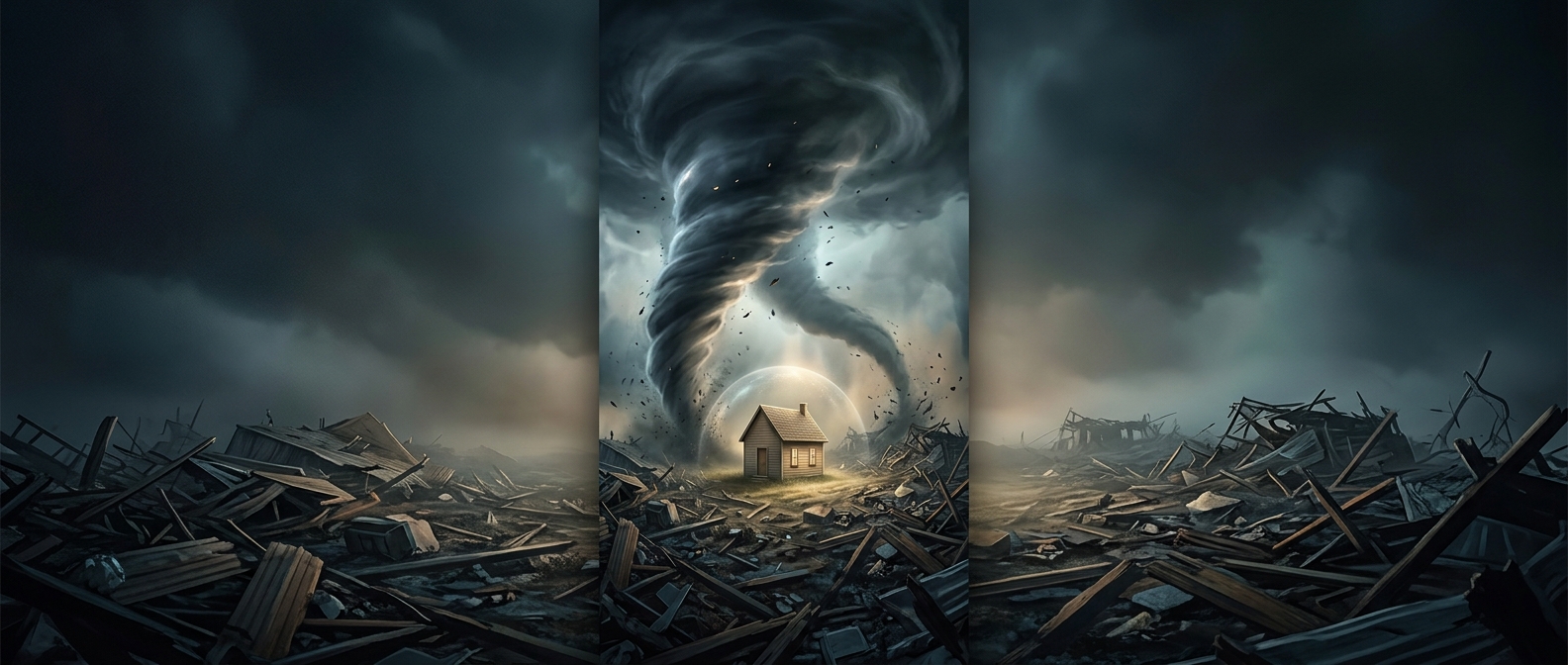
A tornado is not an independent funnel steering itself toward or away from a town. It is a rotating column of air connected to a thunderstorm, and its movement across the ground is largely carried along by the storm’s motion. Meanwhile, the storm’s winds and internal structure can change, so the tornado may shift, widen, weaken, or lift and form again nearby. Its track is therefore shaped by evolving weather—not by a route laid out on a map.
Streets and buildings are not a shield
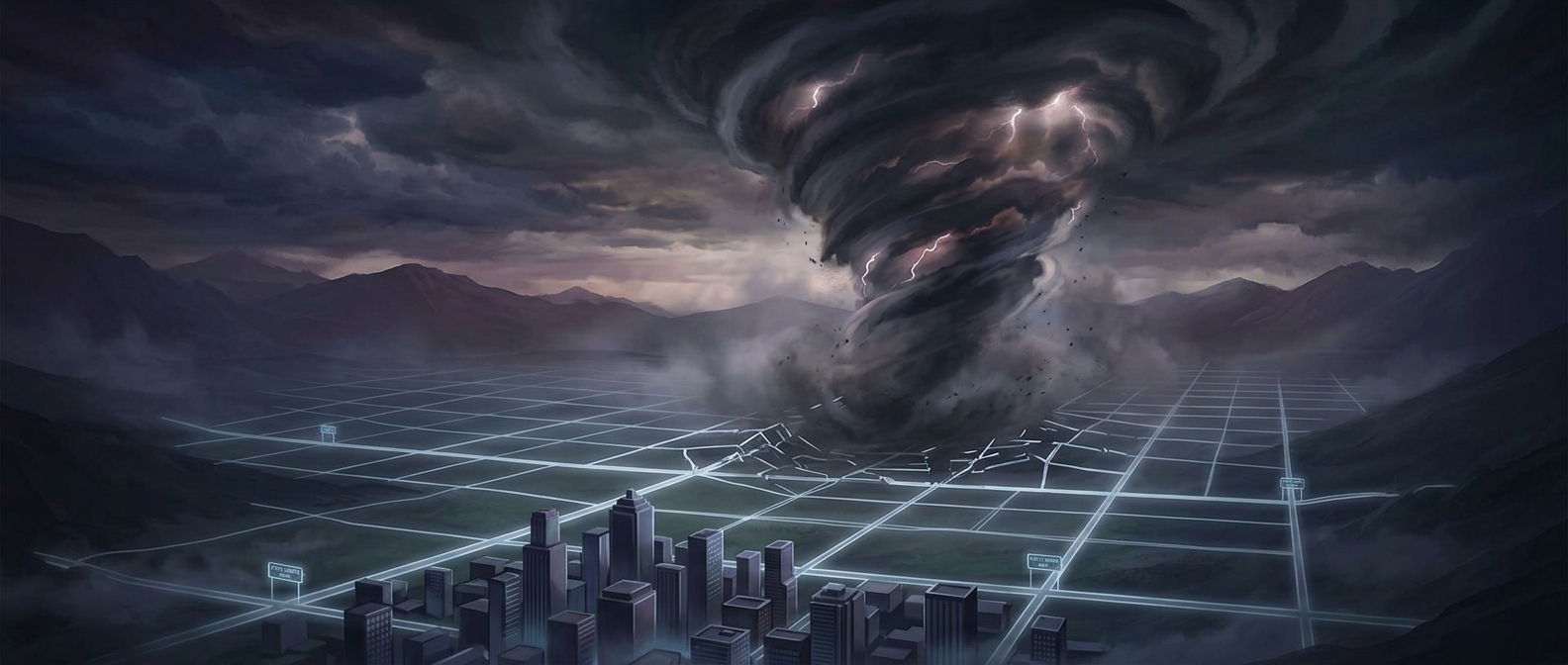
A municipal boundary is a legal line, with no physical feature for the wind to encounter. Dense construction can alter airflow close to the ground, and buildings can redirect winds or become debris when damaged. But those effects do not create a dependable barrier that stops a tornado’s larger circulation. A city’s skyline may look imposing from street level; to the storm overhead, it is simply part of the landscape.
Why the distinction matters
Because tornado paths are narrow and their movement and strength can change, a nearby town cannot assume it is safe because a storm appears headed elsewhere—or because it has crossed into an urban area. The relevant danger is the storm’s changing position, not which side of a city-limit sign it is on. A tornado can cross from open fields into neighborhoods without encountering any boundary that tells it to turn.