How reflected movement can change a phantom cramp
A phantom limb is the felt presence of an arm or leg that has been amputated. It can seem to move, itch, or clamp into a painful position even though the limb is gone. The sensation is real: the brain continues to process signals and movement plans associated with the missing limb, while muscles in the remaining limb and other parts of the body may provide no clear way to complete the movement it seems to be making.
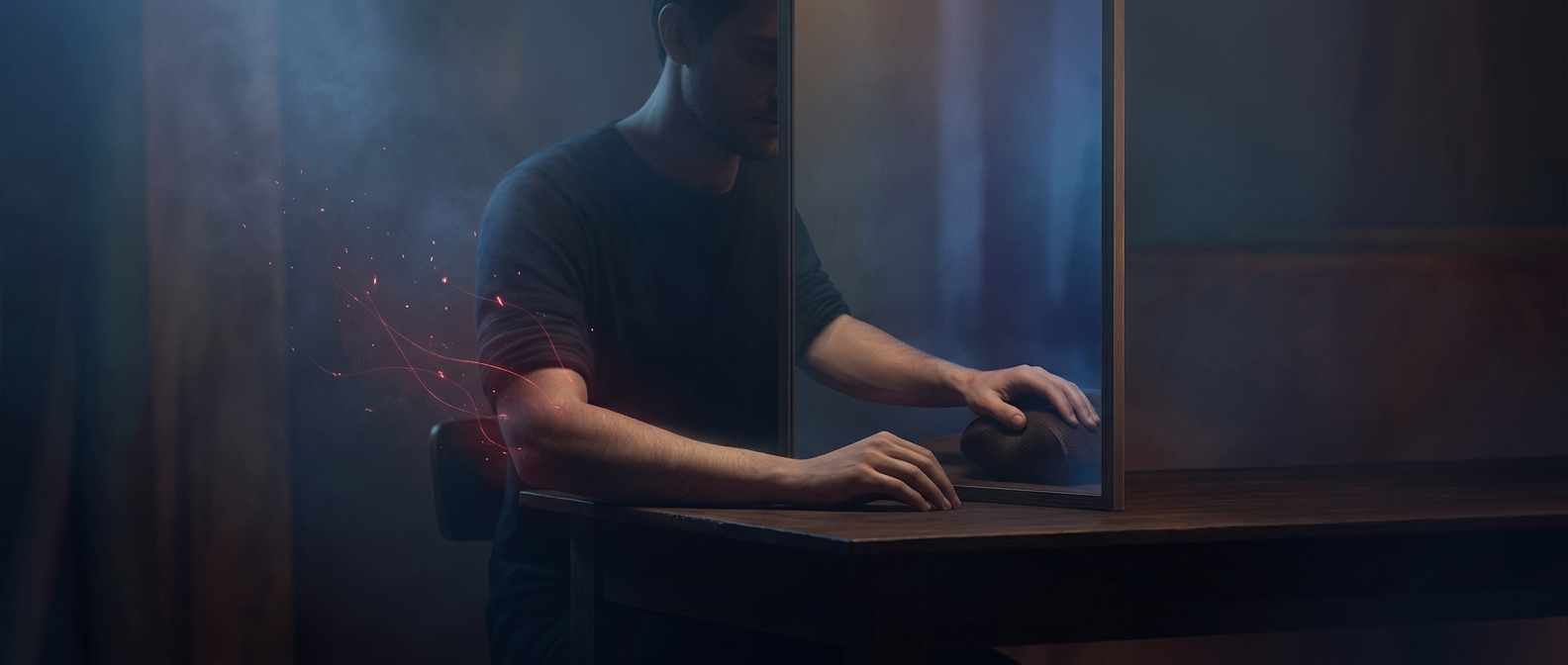
Mirror therapy gives the brain a different kind of information to work with. A mirror is placed upright between the limbs, with its reflective side facing the intact limb and its back blocking the view of the missing one. When the person moves the intact limb, its reflection appears in the place where the amputated limb would be.
Why the illusion may help
The reflection is not just a picture of a moving hand or foot. Seeing it in the missing limb’s position can create the impression that the phantom is moving too. For someone who feels the phantom clenched or frozen, watching the reflected limb open or relax may offer a visual counterpart to the movement the brain is trying to produce.
The precise reasons relief occurs are not fully settled. One plausible part of the process is that vision helps shape the brain’s ongoing sense of where the body is and what it is doing. A clear, successful-looking movement may alter the signals involved in the phantom sensation, sometimes easing the feeling of a cramp. The mirror does not repair nerves or restore the amputated limb, and it does not help everyone; its effects can vary from person to person.
That makes the mirror’s role unusually concrete: it gives the brain a view of a movement that the missing limb cannot perform, and for some people, that view is enough to loosen a phantom limb’s painful grip.