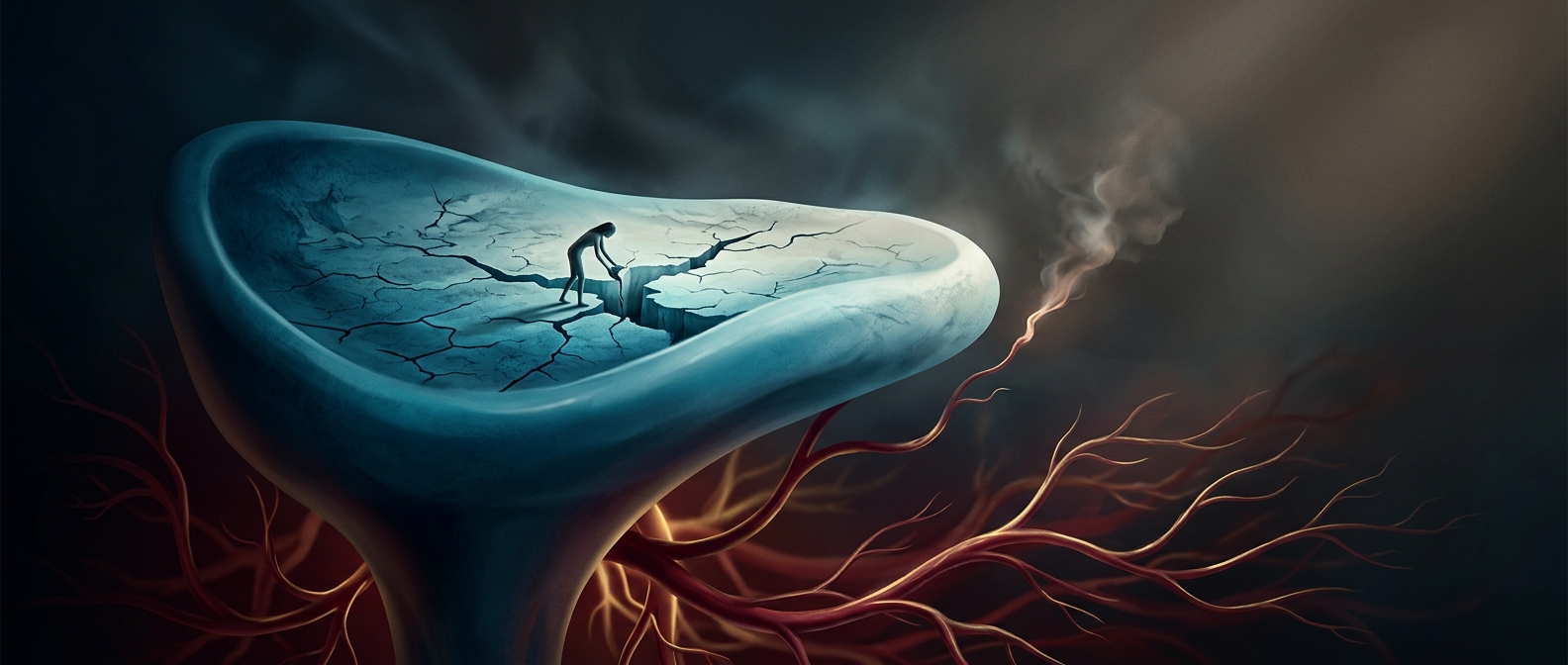
How a joint keeps its surfaces moving
A joint’s low-friction glide depends on more than a slick liquid between two hard parts. The bone ends are covered in cartilage, a resilient tissue that is mostly water held within a mesh of collagen and other molecules. Under pressure, that structure deforms slightly and helps spread forces across the joint rather than letting the bones grind against each other.
The joint’s lining also makes synovial fluid, a slippery liquid that fills the narrow space between the cartilage surfaces. Its ingredients include hyaluronic acid, which helps give the fluid its thick, cushioning character, and lubricin, a molecule that coats the cartilage and helps keep the surfaces from sticking. Together, fluid and cartilage create several layers of protection—not a simple puddle acting as grease.
Lubrication that adapts to movement
When a joint is loaded, fluid can be squeezed through the cartilage’s water-filled structure. That fluid helps separate the surfaces and distribute pressure; when the load eases, the tissue can take fluid back in. During motion, the cartilage also deforms and shifts the contact area, helping prevent the same small patch from bearing all the force.
This matters because joints must do two jobs at once: move freely and carry substantial loads. The lubrication system helps make that combination possible, while cartilage’s springy structure absorbs and spreads stress. It is one reason ordinary movement can remain smooth even when the joint is supporting the body’s weight.