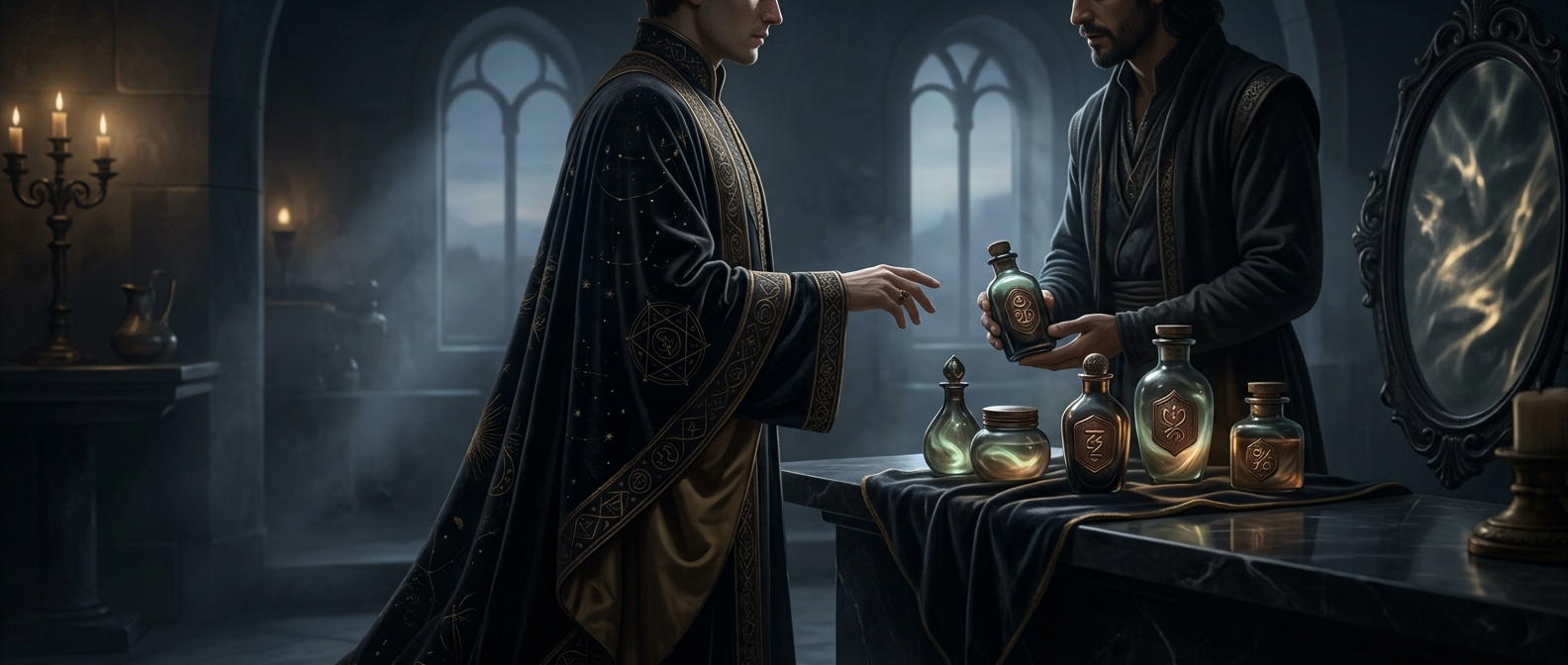
When Beauty Became an Esoteric Promise
For wealthy French clients, a cream or facial serum could offer more than a cosmetic improvement: it could be presented as a glimpse of hidden knowledge. The seller described here joined costly beauty products to exclusive European lodges—private groups associated with mystical teachings—and promised that membership or access could help members attain physical perfection.
That combination made the products part of a larger pitch. A jar of cream was tangible; the promise of transformation gave it an aura of secret power. The lodge supplied exclusivity, while the beauty treatment offered something clients could apply and hope to see in the mirror.
Selling More Than a Cream
Such marketing drew on a useful tension: the desired result was visible, but the promised means were presented as rare or mysterious. High prices and restricted access could reinforce the impression that the products belonged to an elite world rather than an ordinary shop. For aristocratic buyers, the appeal lay not only in improving appearance but in being admitted to a circle that claimed to know how.
The important consequence was a blending of luxury commerce and mysticism. Beauty products became evidence of a broader promise—that privileged knowledge could remake the body—even when the promised perfection was more persuasive as an aspiration than as a demonstrable result.