The Narrow Window Between Flight and Impact
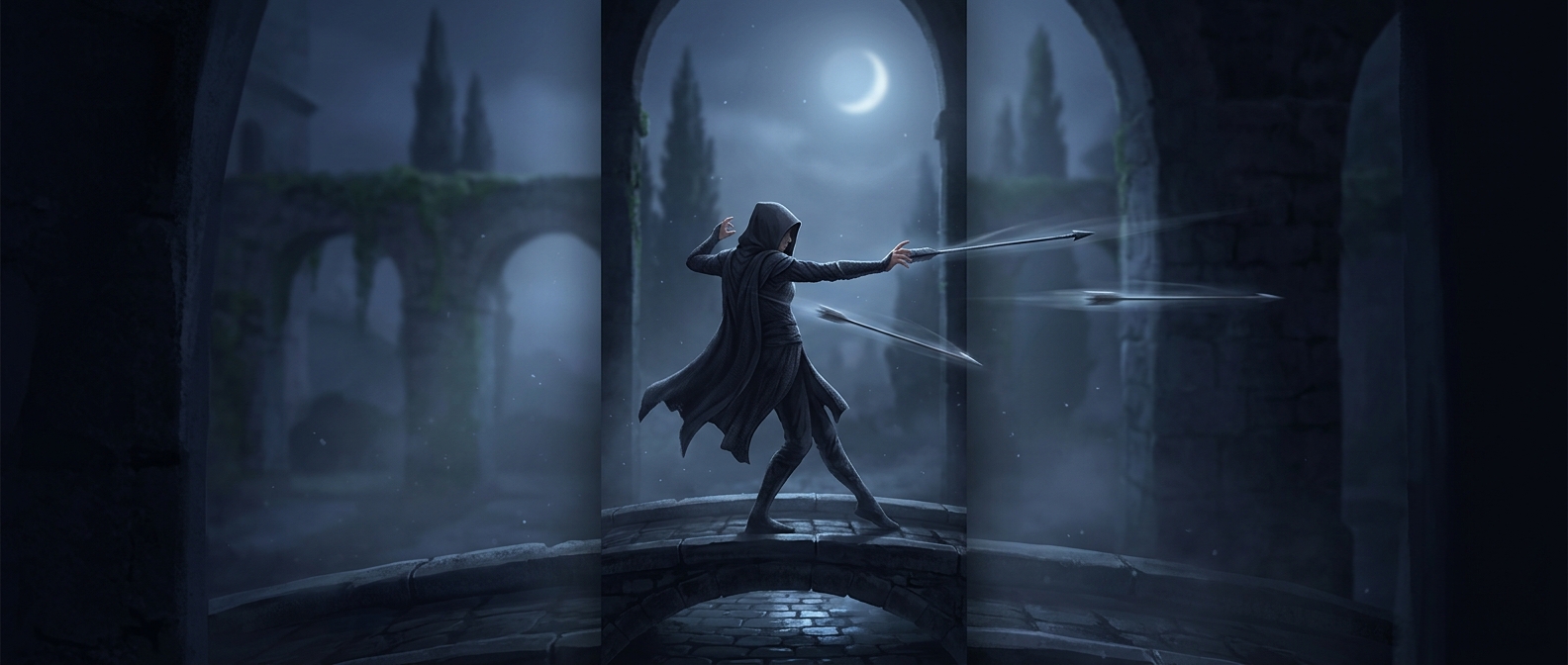
An arrow looks catchable because its flight is visible: the audience can track it from launch toward the performer. But seeing the arrow does not make the timing forgiving. A moving arrow carries momentum, and stopping it means absorbing that motion in a very short distance. A bare-handed grab can therefore injure the performer even if the hand reaches the arrow at the intended moment.
The apparent trick is not simply a test of reflexes. A staged catch has to be built around control: the launch, the arrow’s path, the performer’s position, and the point where the arrow is meant to stop must all line up. Any variation can turn a rehearsed movement into a dangerous collision. The closer the action appears to the performer’s chest, the more the audience reads the moment as a near miss.
Why Rehearsal Cannot Remove the Risk
Repeated practice can make movements consistent, but it cannot make a sharp, fast projectile harmless. The performer must respond within a narrow interval, while the archer and performer depend on the same predictable sequence. A small error in aim or timing can change where the arrow arrives—and leave little time to correct course.
That tension is the stunt’s central theatrical effect: the audience sees a genuine object moving on a real trajectory, while the performer appears to interrupt it at the last instant. The moment worth retelling is also the practical warning behind it: a catch that looks like a reflex feat depends on controlling the entire path, not merely having quick hands.