How Water Puppets Move Without Giving Away the Trick
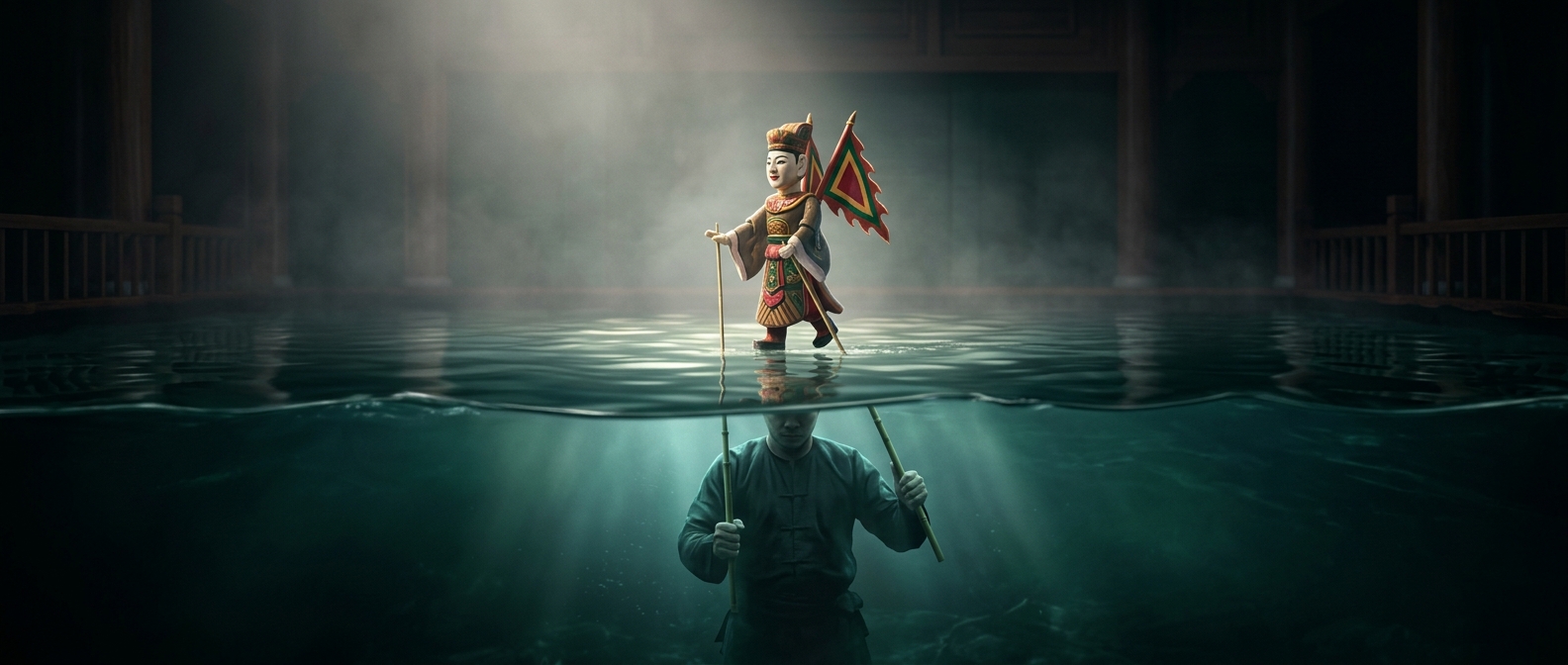
The water is both stage and hiding place. Performers work behind a screen, guiding puppets with long poles and rods kept below the surface. Because the audience cannot see the submerged mechanisms, a puppet can seem to glide, leap, or turn by itself. The water also softens the view of its movement: a small splash or ripple reads as part of the action rather than evidence of a mechanism.
The control is physical, not effortless. A performer must steer a puppet through resistance from the water while coordinating its position and timing with the other figures. The hidden rods limit what the puppet can do, so movement has to be designed around the tools: a turn, rise, or sudden dash must look clear from the audience’s side of the screen.
Why the Water Changes the Performance
On a dry stage, a visible arm or wire can explain how a figure moves. Here, concealment lets the puppet take on a life of its own—but water adds weight and drag, making precise movement harder. The performers’ skill lies in making that constrained motion look intentional and lively.
Water can also become part of the scene. A puppet’s passage can send ripples across the stage, while splashes make entrances and sudden actions more vivid. The result is an unusual kind of theatrical illusion: the same surface that hides the controls also helps make the story visible.