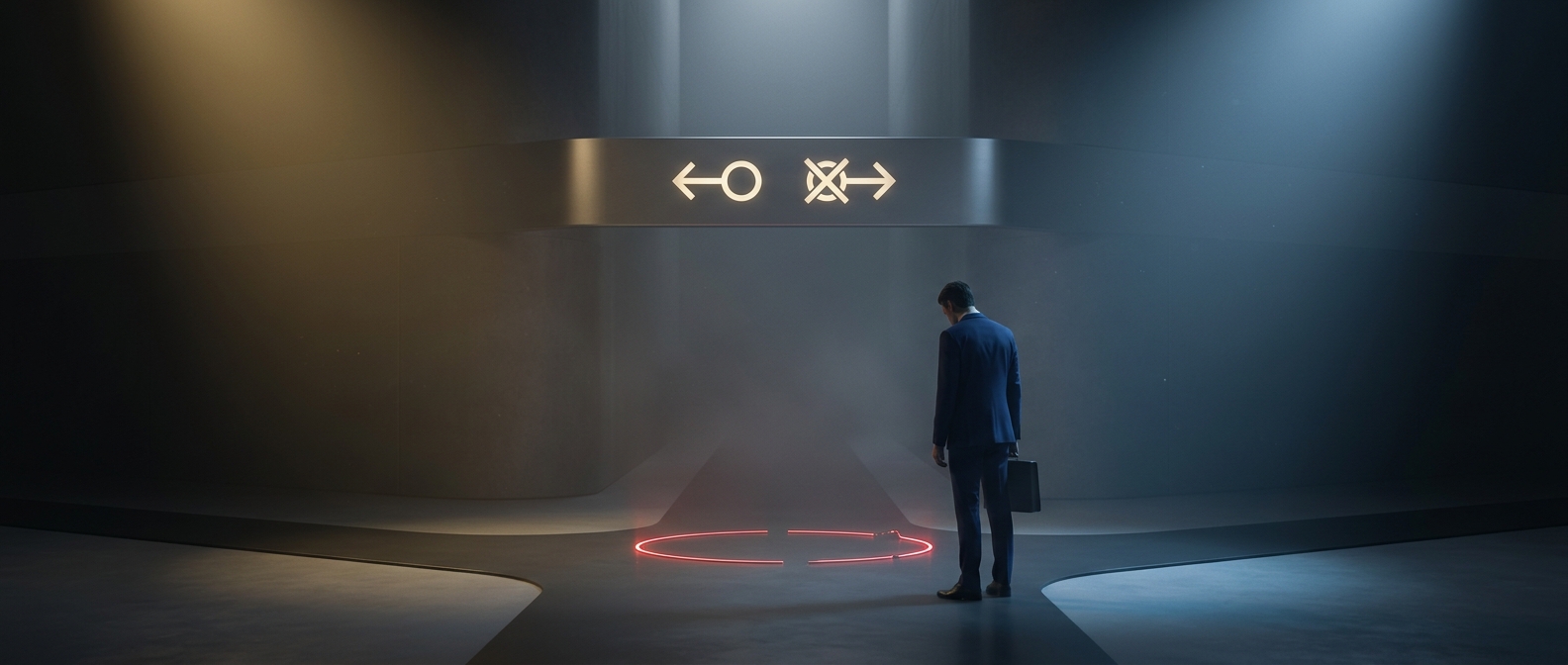
The hidden job your mind assigns to a box
A box is not just cardboard to the brain. It is an object with a familiar use: holding and carrying things. Once that use comes to mind, it can steer attention toward actions that fit—filling it, storing it, or moving it—and make other possibilities less noticeable.
Psychologists call this functional fixedness: the tendency to see an object mainly in terms of its usual purpose. It is not that a person has forgotten what a box is made of or cannot reason about its strength. The familiar label simply makes some uses easier to retrieve than others.
How a familiar purpose narrows the search
Imagine needing to reach a high shelf. A sturdy box might work as a temporary step, but if you are thinking of it only as a container, your mind may search for a chair or ladder instead. The box is visible; the alternative use is not readily available as an idea.
That distinction matters. Solving a problem often depends not only on noticing what objects are present, but on mentally loosening their usual roles. A box becomes a possible platform when attention shifts from “What is this for?” to “What could this support?”
Changing the question can reveal the option
One way past functional fixedness is to describe an object by its properties rather than its name: a firm, raised surface, for example. That description can make uses beyond storage easier to consider. In practice, the box still has to be stable and safe to stand on; seeing a new function does not change its physical limits.
The useful lesson is that a familiar purpose can act like a filter, not a rule. Sometimes the missing solution is already in the room—it is just hidden behind the first job your mind gave it.